
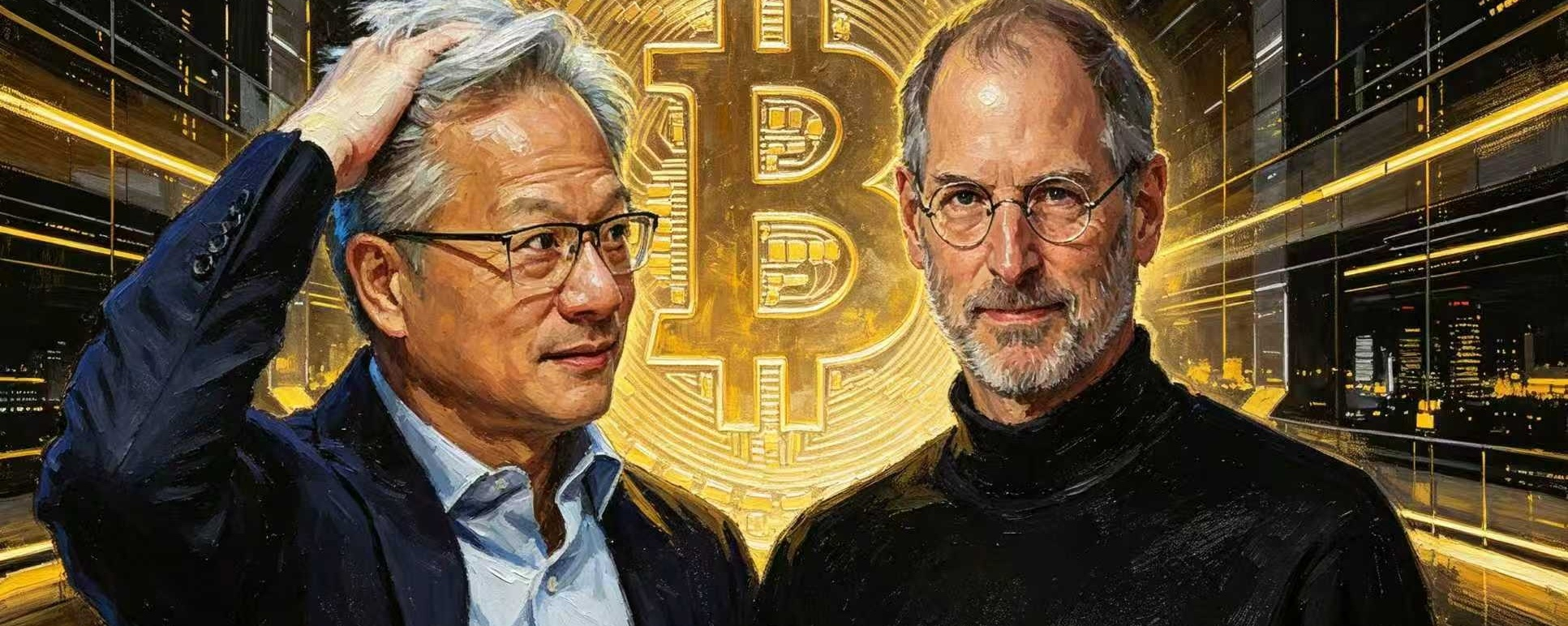

Last night, Nvidia announced that Jensen Huang had resigned as CEO, leaving the company he founded and led for 33 years. Controversy surrounding Huang’s personal relationships continued to grow, and the storm has now subsided—for the time being—with his departure from the company. It reminded me of another classic story.
In 1985, Steve Jobs was stripped of his operational authority by Apple, the company he had founded, and later left. He was only 30 at the time, and the person who pushed him to the margins of power was none other than CEO John Sculley, whom Jobs himself had recruited from PepsiCo.
The two initially worked together quite successfully, but as Apple grew, tensions gradually surfaced. Jobs had almost exacting standards for products and wanted the company to devote more resources to the Macintosh. Sculley, by contrast, focused more on sales, profits, and management, and wanted Apple to establish an operating system suited to a large corporation.
Meanwhile, Jobs’s forceful management style also made it difficult for many executives to adapt. In 1985, Macintosh sales fell short of expectations, and disagreements within the company over its business direction grew more intense.
Jobs tried to persuade the board to make changes to the management team, but he did not receive enough support. The board ultimately sided with Sculley. A few months later, Jobs announced that he was stepping down as chairman and officially leaving Apple.
For someone who had founded a company with his own hands, this was undoubtedly a heavy blow. But Jobs did not leave the tech industry. He founded NeXT and continued developing computers and operating systems, while investing in Pixar and helping it grow into a world-renowned animation company.
The turning point came in 1996. Apple was already in financial trouble, and its plan to develop a new operating system in-house was not going well. The company urgently needed a new technology solution.
Apple ultimately decided to acquire NeXT, which brought Jobs back to Apple as an adviser. Then, in 1997, after CEO Amelio left the company, Jobs gradually regained control of its management and became interim CEO.
After returning, Jobs significantly streamlined Apple’s product lineup. With the successive launches of the iMac, iPod, and iPhone, Apple gradually grew from a struggling computer company into a global tech giant.
Similar things are not uncommon in the tech industry. In 2017, Uber’s co-founder faced pressure from investors over controversies surrounding the company’s culture, workplace issues, and a series of management scandals, and ultimately resigned as CEO. In 2019, the founder of WeWork was also forced to step down as CEO.
But Huang and Jobs are clearly different. Jobs’s downfall stemmed mainly from disagreements over the company’s business philosophy and internal power struggles. Huang’s departure, by contrast, comes amid a convergence of controversy over personal relationships, corporate governance, and national security concerns.
As for whether Huang might have another chance to return to Nvidia in the future, it is still too early to tell.
Why do I want to talk about this? If a company of this scale can be swayed by political parties, imagine what could happen to the crypto industry, whose market capitalization is much smaller.
We emerged from the idea of decentralization, but ultimately we still have to return to reality. Whether it’s regulation or policy, these forces now largely dictate the crypto industry. The dragon-slaying hero eventually becomes the dragon—that’s the cycle of business, unchanged since time immemorial.