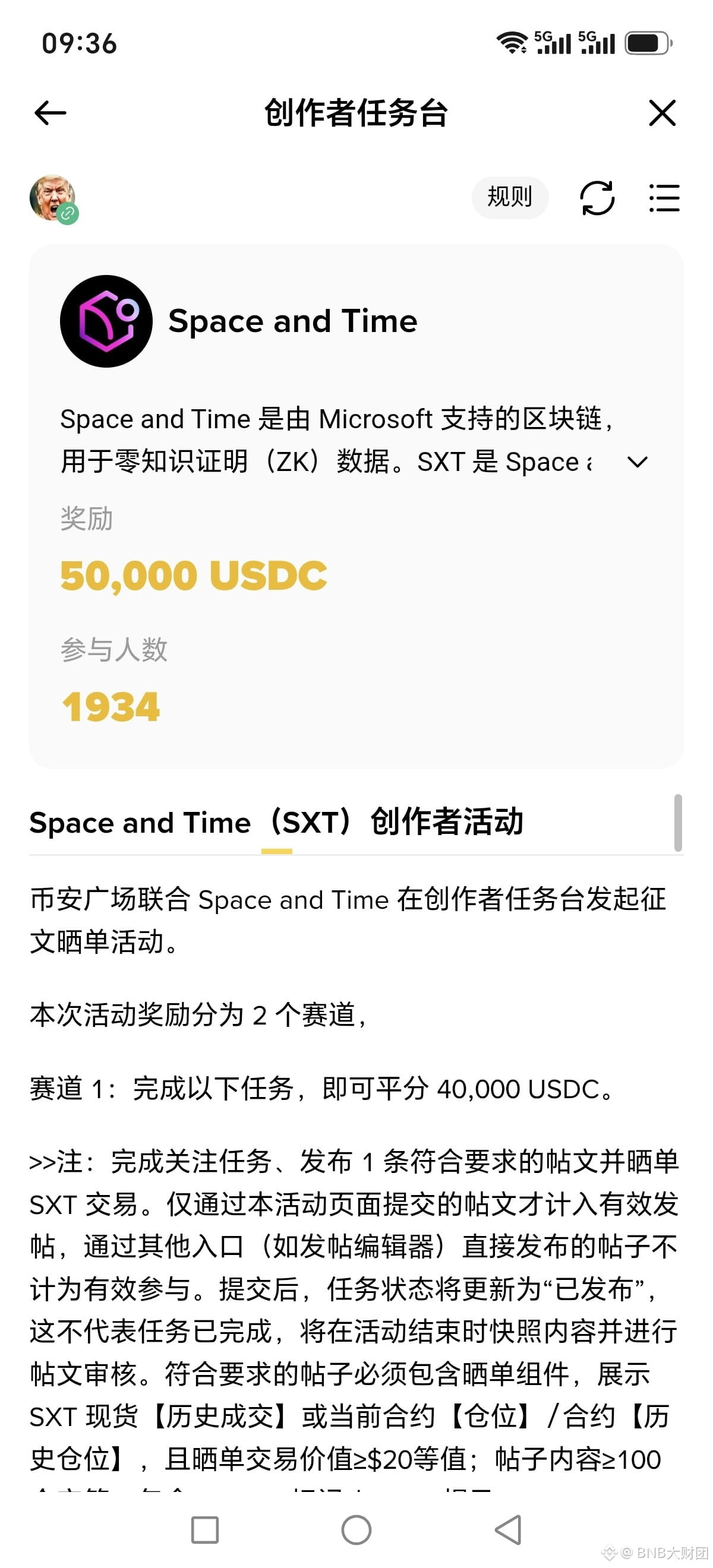
#sxt $SXT @SpaceandTime Hey folks, the SXT campaign is here! The revamped Binance Creator Task Hub is much more transparent 🔥🔥🔥
With cross-exchange collateralized lending, the problem is often not price, but timing. DEX positions can be checked on-chain at any time, while CEX proof of reserves is published on its own schedule. When the timestamps don’t line up, lenders are left with a pile of statements that are each correct on their own but impossible to verify together. The problem with snapshots isn’t accuracy—it’s that they’re already outdated the moment they’re issued.
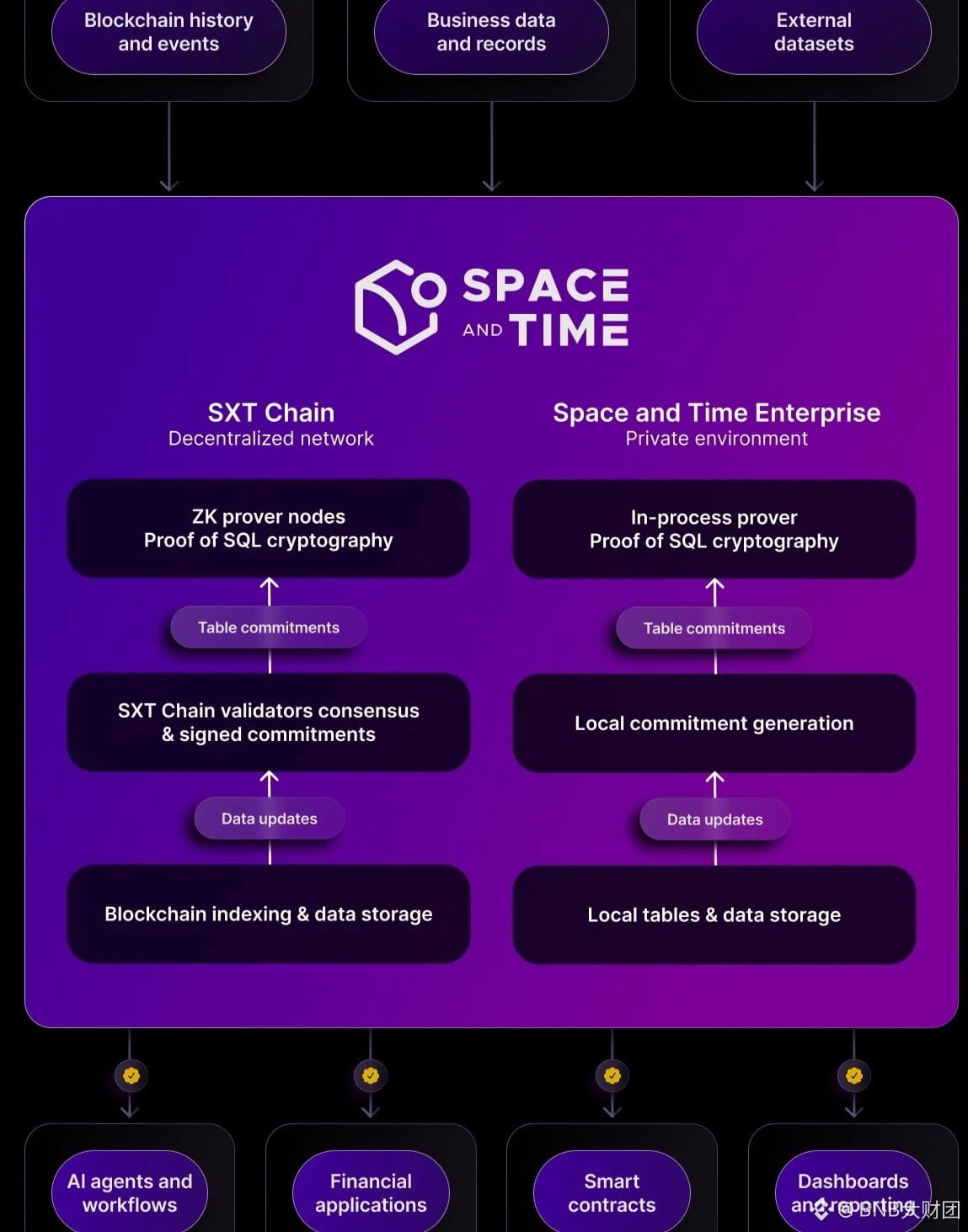
@SpaceandTime’s Virtual Vaults build verification directly into the data flow. zkTLS notaries pull balances from exchange APIs, Proof of SQL generates zero-knowledge proofs for cross-platform queries, and SXT Chain stores the state and proofs. When collateral moves, the proof lenders see updates along with it. Borrowers keep custody of their assets, and lenders no longer have to wait for a third party to relay the information. This isn’t about turning monthly reports into daily ones; it removes the “reporting” layer in between.
What I care about most is what the token actually does in this setup: SXT is used to measure real workloads such as indexing, data ingestion, and ZK proof queries. It isn’t propped up by a narrative. Grayscale has an SXT Trust, and the institutional focus is on data verification—not the AI story.
AI agents need trusted inputs, tokenized assets need auditable records, and institutional lending needs real-time collateral proofs. The requirements are essentially the same: data must be able to prove itself when it’s being used. Virtual Vaults is the most concrete application on the DeFi side. When I look at SXT, what matters most is whether it puts proofs right at the moment the data is used, rather than adding a report afterward.
#SXT $SXT @SpaceandTime
Buying SXT involves risk. Do your own research and consult a professional before purchasing any cryptocurrency.