

The charge: hoarding crypto isn’t a legitimate business.
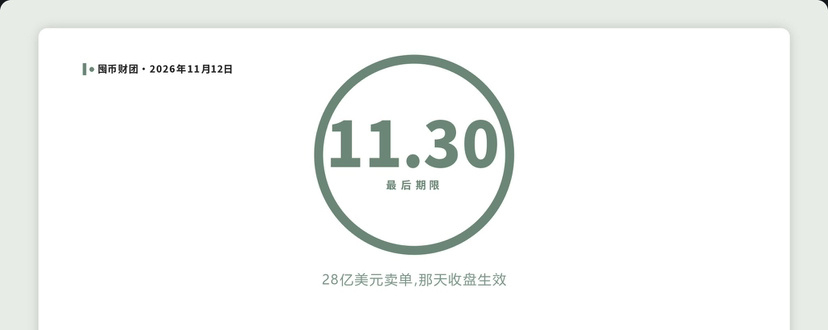
The verdict came down today: $2.8 billion in sell orders, to be executed on November 30.
The company is called Strategy, and it holds more Bitcoin than any other publicly traded company.
MSCI, the world’s largest index provider, announced today: it’s removing the company from its indices.
It fought for months, but was removed anyway.
Another company removed in the same round was a Japanese crypto hoarder.
The company holding Ethereum was placed on a watchlist.
What everyone really wants to know comes down to four things. Let’s take them one at a time.
First, how will the market move over these 18 days?
The sell orders won’t wait until the 30th to hit.
Funds have to sell in batches before it takes effect, with sales becoming more concentrated as month-end approaches.
So Strategy's stock will most likely drift steadily downward, a little at a time each day.
That's the usual pattern for stocks being removed from an index: they fall before the effective date, so by the 30th, there's no uncertainty left.
Second, will Bitcoin fall along with it?
Keep in mind, the $2.8 billion being sold is its stock, not Bitcoin.
Whether Bitcoin falls depends on the chain reaction:
The money it uses to buy Bitcoin doesn't come from its own earnings; it comes from selling stock.
With the stock falling like this, it'll be harder to raise money by selling shares in the future.
If it can't raise the money, how do you think it'll keep buying Bitcoin?
Last week, it spent just $82 million on Bitcoin, but $188 million buying back its own stock. It's already buying less, and it'll buy even less by the end of the month.
Third, what will retail investors and institutions do?
On the retail side, the fear index is already at 27.
The scariest thing to hear is: “Even the big institutions are selling.”
The most likely scenario is that the stock takes a hit, Bitcoin drops sharply along with it, then rebounds.
Institutions are split into two camps:
One camp gets in early: they borrow shares and sell them, then buy them back at a lower price after the funds dump shares at the end of the month. The difference is their profit.
The other camp is buying the dip: Barclays, the British bank that's been around for more than 300 years, just increased its Bitcoin ETF holdings by 48%.
The old financial institutions are selling, while the old bank is buying.
The players haven't changed—just the faces.
Fourth, what happens after December?
Strategy's stock will lose a group of funds that only buy and never sell. Its share price will fall until it's worth roughly as much as the Bitcoin it holds.
People used to be willing to pay extra for it because they thought it would keep buying Bitcoin.
That reason is gone now. Who would still be willing to pay extra?
For Bitcoin, let's first look at its financial cushion:
It has $4.8 billion set aside to pay interest, enough to cover more than three years.
So nothing will go wrong in the short term.
But something has already started: this year, it has sold $430 million worth of Bitcoin to pay interest.
When a company that hoards Bitcoin starts selling it to pay interest, that means the direction has changed.
It still has money to buy Bitcoin, so it can keep grinding along.
If one day it has to sell even more Bitcoin just to cover interest,
that would be the scenario everyone fears most.
We're not there yet, but the direction has already reversed.
So don't guess where Bitcoin's price will be in December. Just watch two things:
Whether it buys Bitcoin again this week.
If it buys, that means money is still flowing. If it stops, it's reached the end of the road.
Whether it sells Bitcoin again to pay interest.
If this year's $430 million figure grows, that means it's gradually selling off its hoard. If either of these two things changes, it won't be a minor development.
November 30 isn't the finish line—it's the first gate.
The real action comes after that gate.