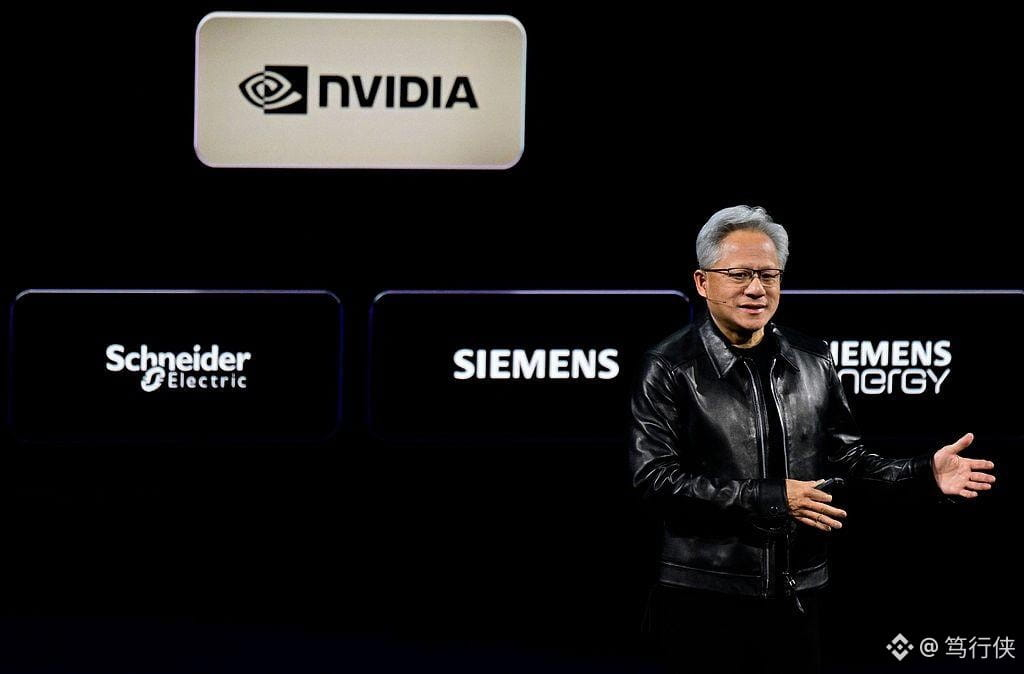
In the past, you only needed to remember one sentence: "Founder abruptly resigns = the whole sector crashes."
On November 12, that idea was half torn apart: Nvidia plunged 14% premarket, but closed down just 4.34%, wiping out $182 billion—while AMD rose for five straight sessions and Broadcom climbed for four days. Chip stocks aren’t crashing; the money is just changing hands on a massive scale.
Don’t rush to dump your AI stocks.
Look at three things:
① What’s falling isn’t demand, but bargaining power—"No one is canceling GPU orders because a CEO resigned." But "after a CEO’s sudden departure, the stock needs time to find a bottom.";
② The beneficiaries are already clear—Ming-Chi Kuo says Google’s TPU is the most direct beneficiary; Argent says, "Demand won’t decline.";
③ The chase is already crowded—AMD is up 44% for the week, Broadcom is up 24%, and retail investors have piled in with a record 111 million.
Put simply: a leadership change isn’t the end of AI; it’s a redistribution of bargaining power. Demand is growing (Cerebras rose 19% after hours), while the supply side is changing hands. Nvidia’s bottom will be determined by its November 17 earnings report.
Three moves:
1. Nvidia holders: Keep your core position, get out of leveraged trades; retail investors buying the dip in record numbers is a contrarian signal—don’t add to your position;
2. Don’t chase AMD or Broadcom: after a 44% weekly gain, the risk/reward is poor. If you want to bet on a re-rating, watch the Google TPU supply chain—but keep the position small;
3. Semiconductor supplier holders: Wait for Kress’s comments on capital spending during the earnings call before deciding whether to stay in.
The Senate is weighing an investigation, and the odds of a December rate hike are 91%. There’s only one line that would prove this thesis wrong: earnings deliver on the $108 billion guidance, and Kress confirms the roadmap is unchanged—then the "bargaining-power re-rating" thesis is invalidated.
November 17 earnings, and the successor announcement.
What Jensen Huang is taking with him is bargaining power—what remains is demand.
Stay defensive on Nvidia ahead of earnings, and don’t chase AMD or Broadcom—the answer comes on November 17.
#英伟达突发换帅,美国芯片股跌幅扩大
#黄仁勋辞任CEO,英伟达战略走向受关注