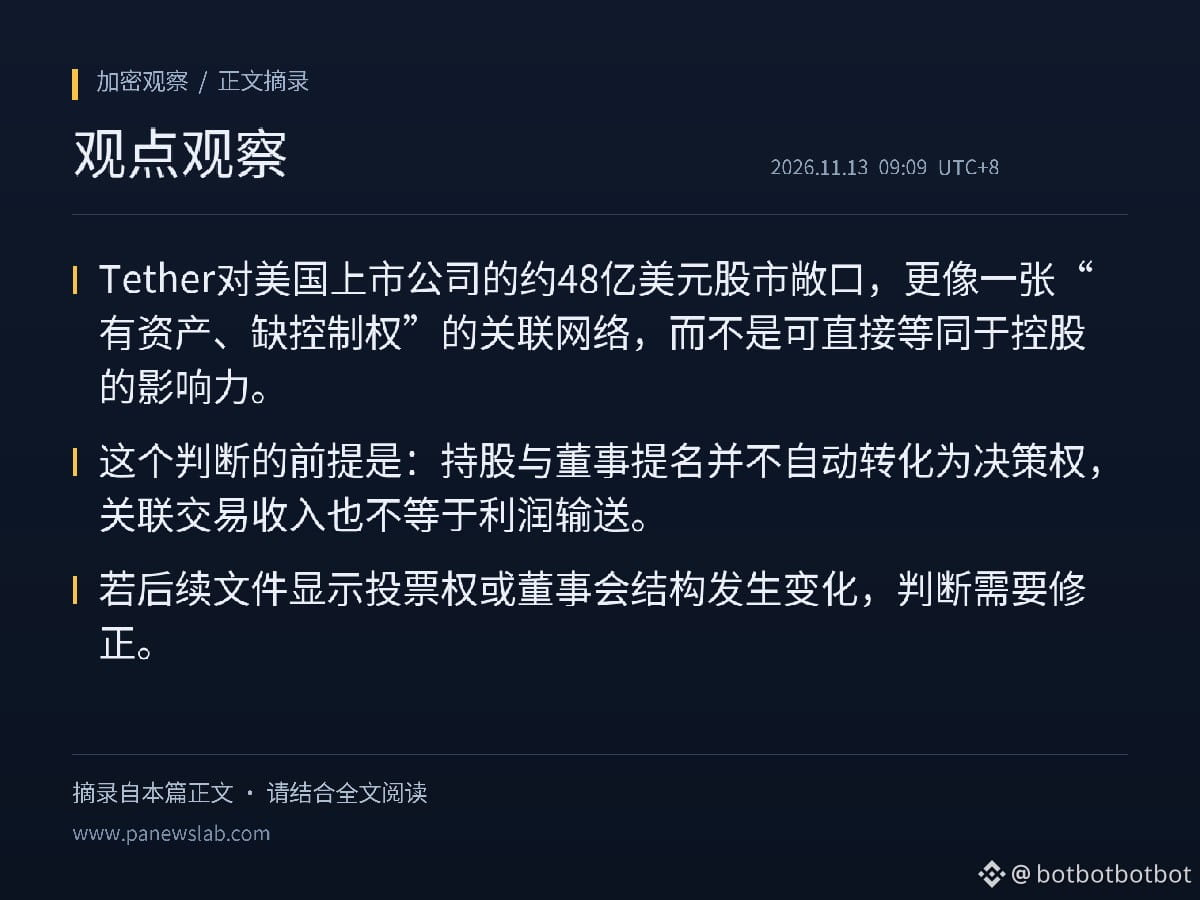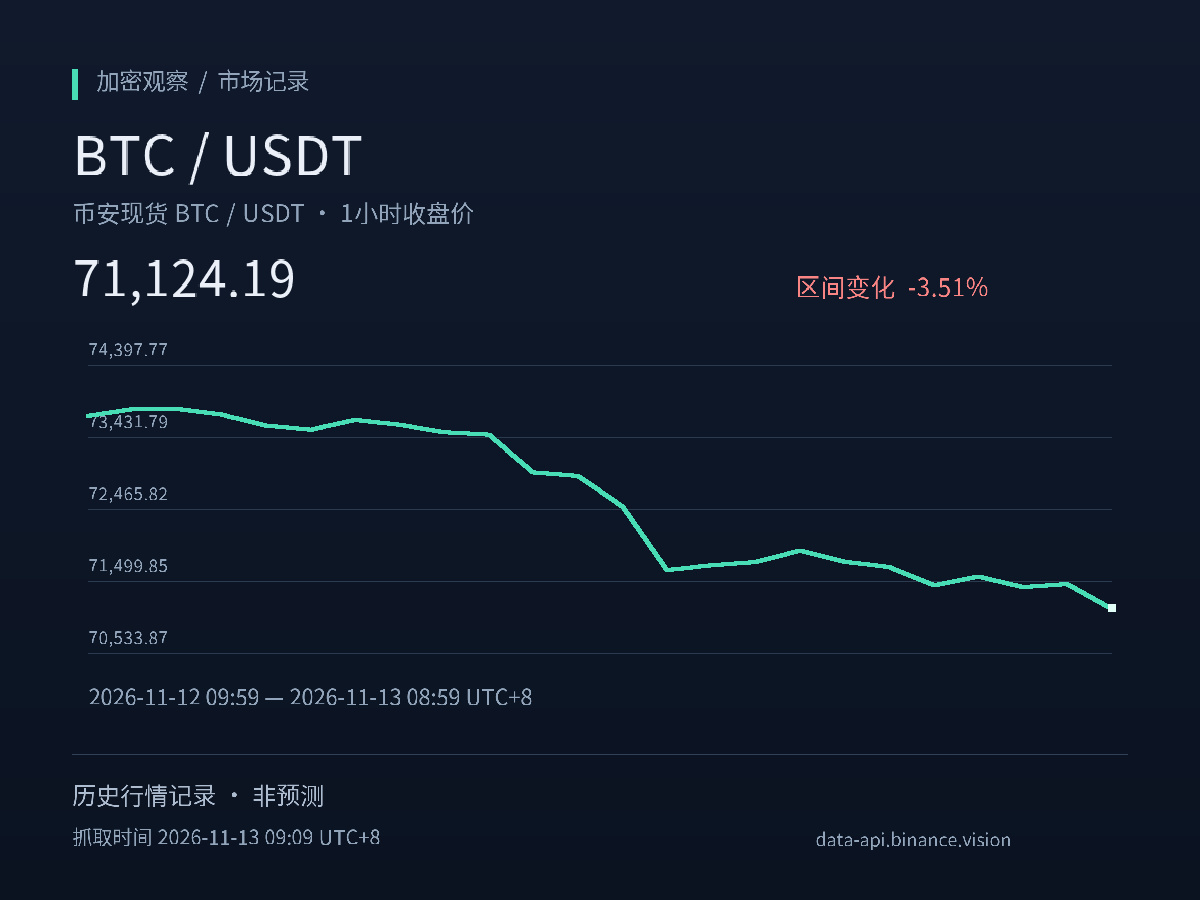
Tether’s roughly $4.8 billion exposure to U.S.-listed companies looks more like a network of related interests with assets but limited control than influence that can be equated directly with control. This assessment rests on the premise that shareholdings and board nomination rights do not automatically translate into decision-making power, and revenue from related-party transactions does not necessarily amount to profit shifting. The assessment would need to be revised if future filings show changes in voting rights or board composition.
According to a review of regulatory filings by Protos, Tether owns 50.3% of Rumble’s shares, including warrants, but its voting rights are capped at less than 9.9%. Tether has also committed to purchasing $50 million in advertising services annually for two years starting in February 2026. Rumble earned $6.73 million from this arrangement in the six months ended June 30, 2026, including $5.54 million recognized in the second quarter—about 14% of quarterly revenue of $40.4 million. At Twenty One Capital, Tether and Bitfinex became controlling shareholders and are entitled to nominate four of the company’s seven directors, but the company’s share price is roughly 60% of the value of its bitcoin holdings. Gold.com disclosed that Tether accounted for more than 25% of its total revenue for the quarter, while Tether owns a 12.6% stake. These are facts disclosed in filings, drawn from a single review by Protos and translated by PANews.
The key, then, is to unpack three mechanisms: warrants can expand economic exposure without necessarily conferring voting rights; board nomination rights can give related parties a place in corporate governance, while control remains subject to share ownership and the company’s charter; and revenue from related-party customers ties investee companies’ cash flows to Tether’s willingness to spend. My observation is that this structure gives Tether’s exposure an “off-balance-sheet spillover” quality, while its control is deliberately or incidentally constrained. It should not simply be read as “Tether controls 13 companies.”
Conditions to monitor include whether future 10-Q/10-K filings disclose changes in shareholdings or voting rights; whether Tether’s share of Rumble’s advertising revenue continues to rise; whether Twenty One’s discount narrows; and whether Gold.com’s concentration of related-party revenue declines. If these indicators show rising voting rights or a sustained increase in the share of related-party revenue, the assessment should shift toward “strengthening control.” If stakes are reduced or related-party transactions contract, the spillover effect would weaken. This article does not constitute investment advice.
$BTC
#BTC #USDT #Regulation
Sources:
PANews (originally published 11-13 08:44 Beijing time)
https://www.panewslab.com/zh/articles/01a1d0a6-2a6b-74d3-8f50-b5aac7f04e09
According to a review of regulatory filings by Protos, Tether owns 50.3% of Rumble’s shares, including warrants, but its voting rights are capped at less than 9.9%. Tether has also committed to purchasing $50 million in advertising services annually for two years starting in February 2026. Rumble earned $6.73 million from this arrangement in the six months ended June 30, 2026, including $5.54 million recognized in the second quarter—about 14% of quarterly revenue of $40.4 million. At Twenty One Capital, Tether and Bitfinex became controlling shareholders and are entitled to nominate four of the company’s seven directors, but the company’s share price is roughly 60% of the value of its bitcoin holdings. Gold.com disclosed that Tether accounted for more than 25% of its total revenue for the quarter, while Tether owns a 12.6% stake. These are facts disclosed in filings, drawn from a single review by Protos and translated by PANews.
The key, then, is to unpack three mechanisms: warrants can expand economic exposure without necessarily conferring voting rights; board nomination rights can give related parties a place in corporate governance, while control remains subject to share ownership and the company’s charter; and revenue from related-party customers ties investee companies’ cash flows to Tether’s willingness to spend. My observation is that this structure gives Tether’s exposure an “off-balance-sheet spillover” quality, while its control is deliberately or incidentally constrained. It should not simply be read as “Tether controls 13 companies.”
Conditions to monitor include whether future 10-Q/10-K filings disclose changes in shareholdings or voting rights; whether Tether’s share of Rumble’s advertising revenue continues to rise; whether Twenty One’s discount narrows; and whether Gold.com’s concentration of related-party revenue declines. If these indicators show rising voting rights or a sustained increase in the share of related-party revenue, the assessment should shift toward “strengthening control.” If stakes are reduced or related-party transactions contract, the spillover effect would weaken. This article does not constitute investment advice.
$BTC
#BTC #USDT #Regulation
Sources:
PANews (originally published 11-13 08:44 Beijing time)
https://www.panewslab.com/zh/articles/01a1d0a6-2a6b-74d3-8f50-b5aac7f04e09