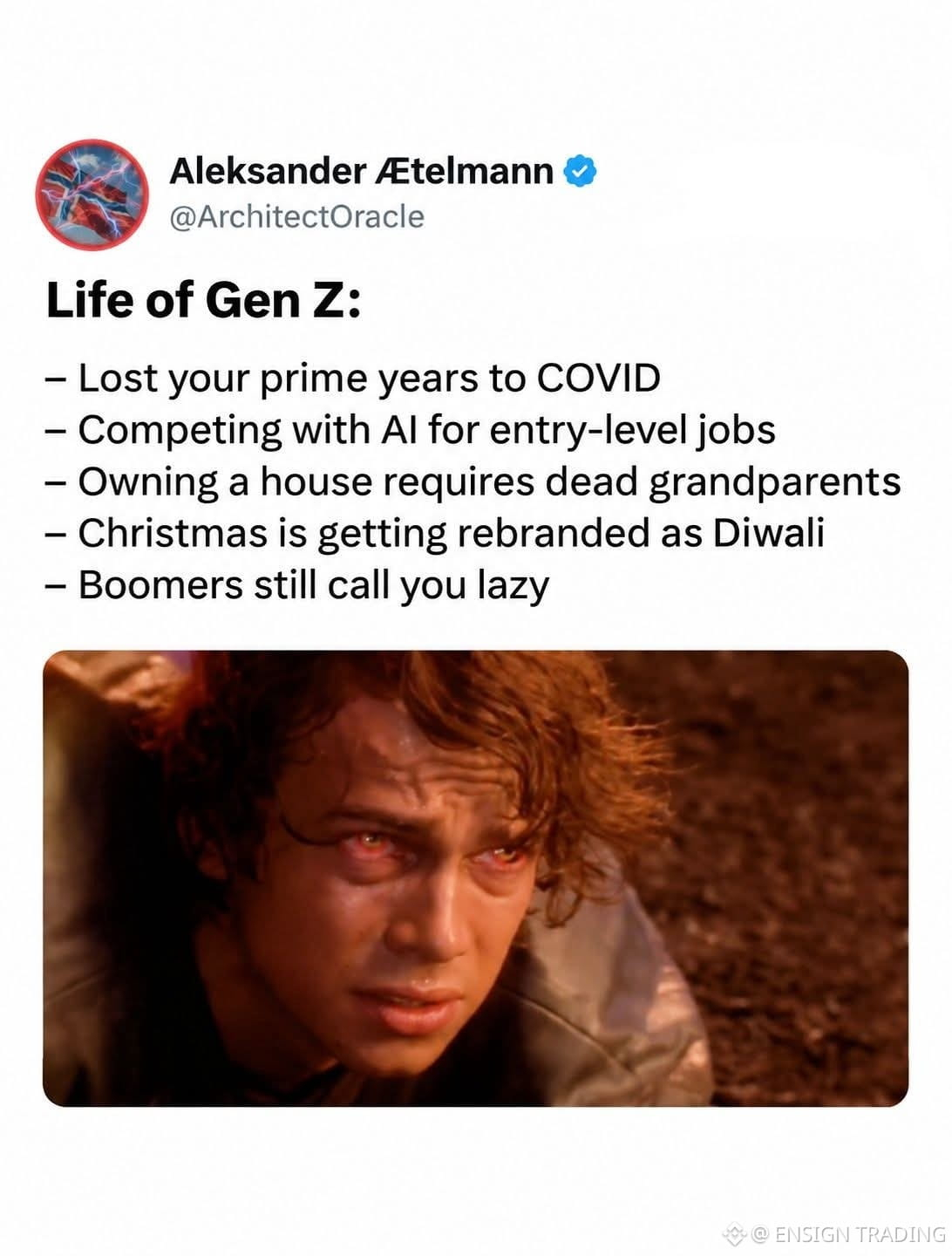
Gen Z Isn't Afraid Of Hard Work.
They're Questioning Whether Hard Work
Still Leads To Financial Security.
Imagine doing everything society told you to do.
Get an education. Earn a degree. Find a stable job. Save money. Buy a home. Build a comfortable life.
Now look at the reality many young adults are facing.
A college degree can come with years of student debt, but employers still want experience for entry-level positions.
AI is changing the skills companies need, while young workers are trying to figure out which careers will still offer opportunities five years from now.
And buying a home? For many first-time buyers, the combination of high prices, mortgage payments, insurance, property taxes, and down-payment requirements makes ownership feel increasingly distant.
Here is what worries me most:
When your financial life gets started late, the consequences can follow you for decades.
You may begin saving for retirement later. You may delay investing. You may keep renting longer than expected. You may postpone having children, starting a business, or making other major life decisions.
And remember, the cost of waiting is not just financial. It can affect confidence, independence, and the freedom to choose how you want to live.
I don't believe every Gen Z worker is struggling, or that previous generations had an easy ride.
But I do think we need to ask whether the traditional formula for financial success is still working under today's economic conditions.
A degree should create opportunities. A full-time job should offer a realistic path toward independence. And working hard should give people a reasonable chance to build something of their own.
So here's my question:
If someone is educated, willing to work, and prepared to save, but still cannot afford a home or build meaningful savings, is the problem their financial habits — or has the economic starting line moved too far away?
They're Questioning Whether Hard Work
Still Leads To Financial Security.
Imagine doing everything society told you to do.
Get an education. Earn a degree. Find a stable job. Save money. Buy a home. Build a comfortable life.
Now look at the reality many young adults are facing.
A college degree can come with years of student debt, but employers still want experience for entry-level positions.
AI is changing the skills companies need, while young workers are trying to figure out which careers will still offer opportunities five years from now.
And buying a home? For many first-time buyers, the combination of high prices, mortgage payments, insurance, property taxes, and down-payment requirements makes ownership feel increasingly distant.
Here is what worries me most:
When your financial life gets started late, the consequences can follow you for decades.
You may begin saving for retirement later. You may delay investing. You may keep renting longer than expected. You may postpone having children, starting a business, or making other major life decisions.
And remember, the cost of waiting is not just financial. It can affect confidence, independence, and the freedom to choose how you want to live.
I don't believe every Gen Z worker is struggling, or that previous generations had an easy ride.
But I do think we need to ask whether the traditional formula for financial success is still working under today's economic conditions.
A degree should create opportunities. A full-time job should offer a realistic path toward independence. And working hard should give people a reasonable chance to build something of their own.
So here's my question:
If someone is educated, willing to work, and prepared to save, but still cannot afford a home or build meaningful savings, is the problem their financial habits — or has the economic starting line moved too far away?