


Author: Curry, DeepChao TechFlow
DeepChao Editor’s Note:
On November 12, Nvidia officially announced a leadership shake-up. Founder Jensen Huang, who had led the company for 33 years, resigned from all his positions as president, CEO, and board member, with the changes taking effect immediately. CFO Colette Kress was appointed interim CEO and will continue to serve as CFO during the transition. The board also appointed Harvey C. Jones, a director since the company was founded in 1993, as its first-ever independent board chair. This major upheaval comes just ahead of the release of the company’s third-quarter results next Wednesday, and follows the board’s launch of an independent investigation into Huang’s personal relationships and the supply chain. This means that the world’s most valuable chipmaker has formally dismantled the founder-led power structure it had maintained for more than three decades, forcing Nvidia onto a defensive, stability-focused footing just before a major test of its performance.
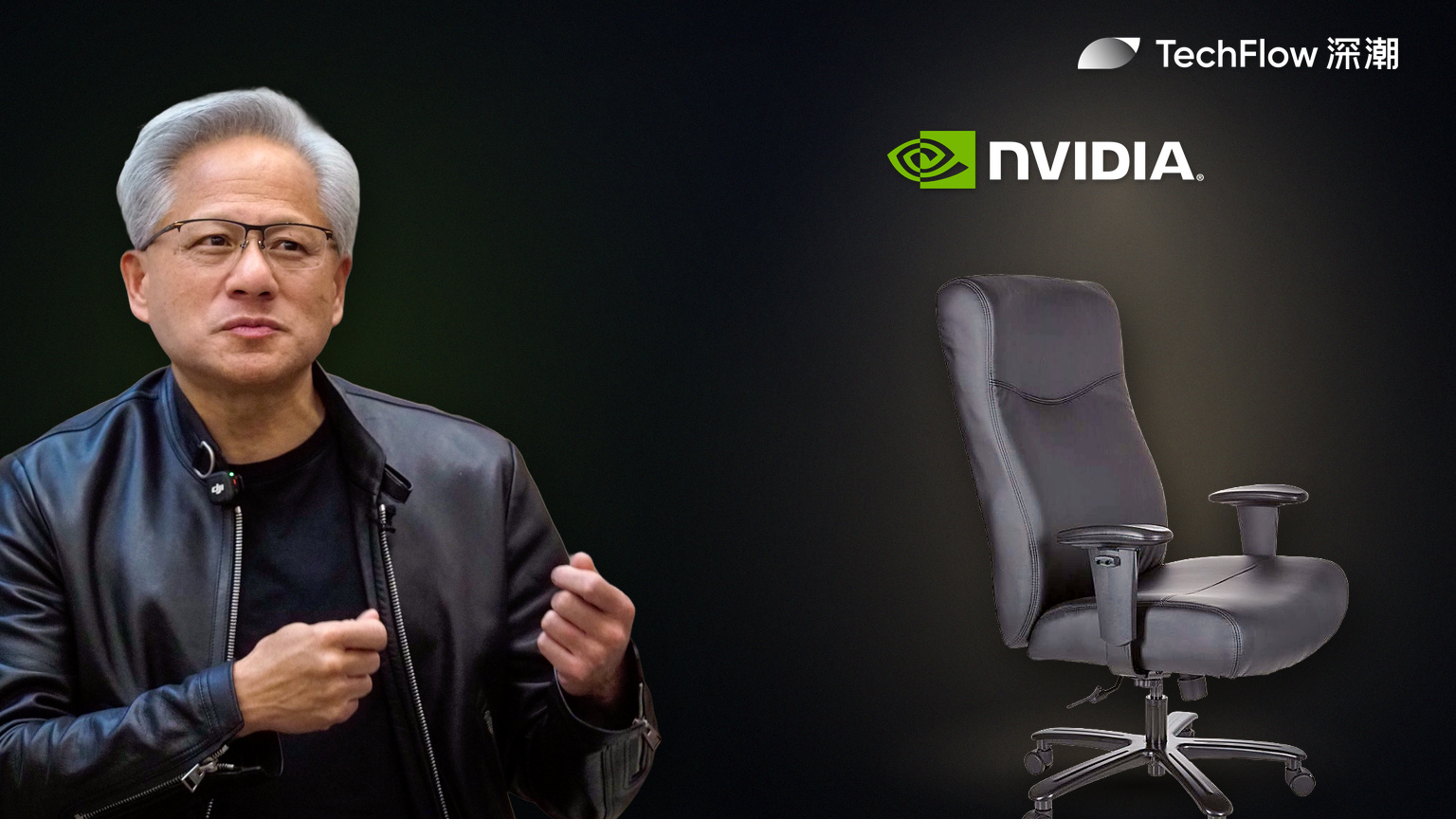
The founder who steered the core of global computing power for 33 years has completely relinquished control in a few brief announcements.
According to a November 12 announcement from NVIDIA’s official newsroom, Jensen Huang has formally resigned as the company’s president and CEO and relinquished his seat on the board, with all departures taking effect immediately. The board has also established a special committee and formally begun a global search for a permanent CEO. In response to the seismic leadership shake-up, NVIDIA shares saw sharp moves in premarket U.S. trading, at one point swinging by more than 5%.
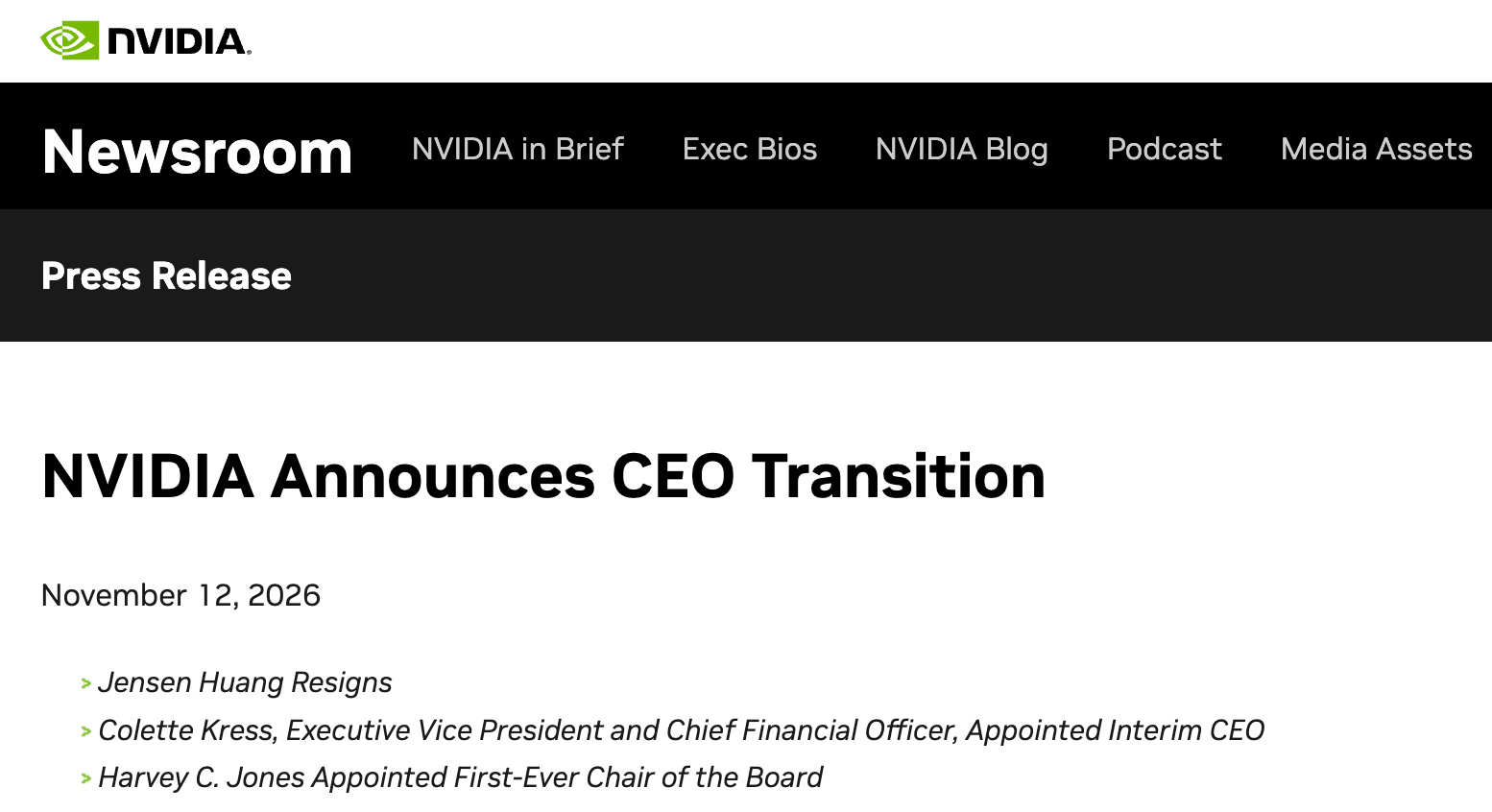
One of Silicon Valley’s longest-serving tech titans, Jensen Huang has led NVIDIA since founding it with a partner in 1993, overseeing its evolution from graphics chips for video cards to the CUDA software ecosystem and, ultimately, an empire dominating computing power for generative AI. Regulatory filings show that Huang still holds about 3.6% of NVIDIA’s shares, but after stepping down from all executive and board roles, his influence over day-to-day decisions and strategic direction at the technology giant, valued at more than $3 trillion, has come to a complete end.
33 years of founder-led control comes to an end; board moves swiftly to limit the damage
NVIDIA did not give specific reasons for the resignation in its leadership announcement, but the decision came at a critical point in the timeline of an internal investigation.
Bloomberg previously reported that on November 8, Huang wrote to all employees, publicly apologizing to his family and team over issues concerning his personal relationships. NVIDIA’s board subsequently announced an independent investigation to determine whether the company faced potential intelligence risks or compliance gaps. Meanwhile, compliance concerns surrounding NVIDIA’s computing-power leasing channels in Southeast Asia continued to intensify.
Reuters, citing people close to the board, reported that announcing the leadership change at this point was the board’s swift move to distance itself from the fallout as compliance concerns mounted and external regulatory pressure grew. Cutting off the continued spillover of Huang’s personal controversy into the publicly traded company before key results are released next week was the board’s only option to limit the damage.
CFO urgently takes over as interim chief; familiar Wall Street face tapped to guard against a sell-off
During the interim period before a permanent successor is named, NVIDIA has chosen its financial steward to take the helm.
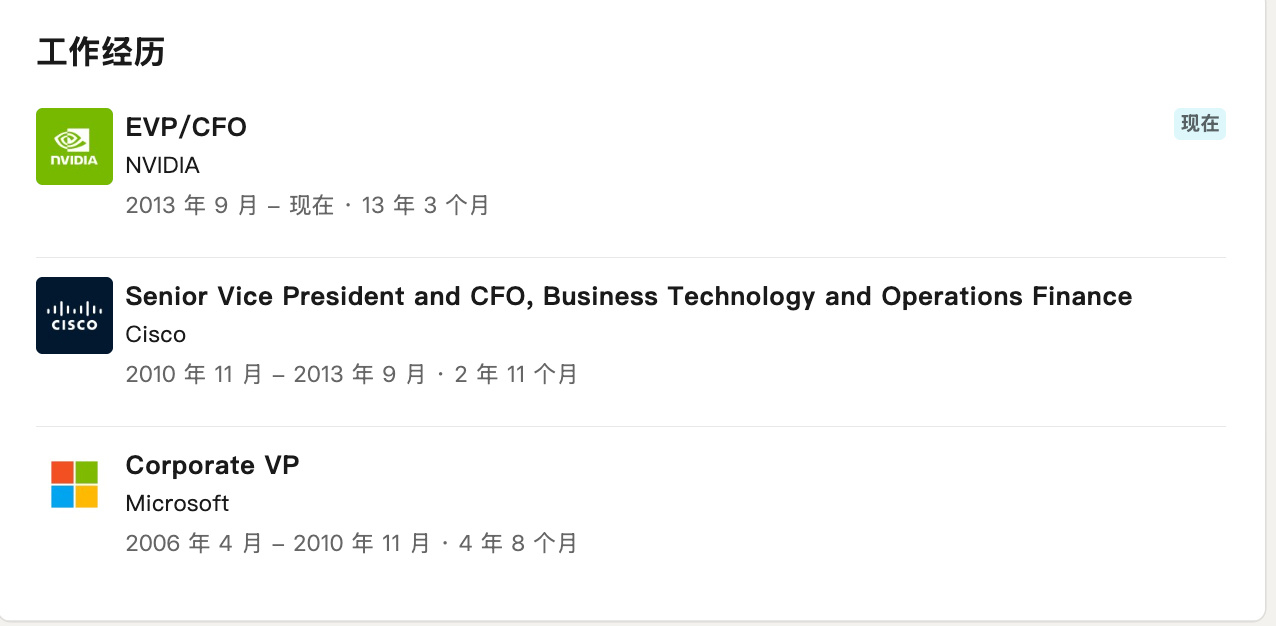
According to the announcement, Colette Kress, NVIDIA’s executive vice president and CFO since 2013, has been appointed interim CEO. She will also continue to handle all of her CFO responsibilities while the company searches for a permanent replacement.
The choice breaks with the convention at tech giants of having a senior technology executive take over. Within NVIDIA, both the head of the CUDA ecosystem and the data center hardware chief are regarded as powerful technical leaders, but the board ultimately handed the reins to Kress, whose background is purely in finance and operations.

According to an analysis in a recent report by Citigroup analysts, Kress has spent 13 years at NVIDIA, seeing the company through and managing its capital-fueled ascent from average annual revenue of $4 billion to $200 billion. She is the NVIDIA face most familiar to Wall Street and institutional investors. In the current situation, the technology roadmap is already in place; the board’s top priorities are to maintain orders from key cloud providers, secure advanced-process foundry capacity from TSMC, and guard against panic selling in the capital markets during the power vacuum.
First independent board chair appointed, formally ending one-person rule in governance
The CEO change has been accompanied by a fundamental restructuring of NVIDIA’s governance.
According to NVIDIA’s official announcement, Harvey C. Jones, former CEO of Synopsys, has been formally appointed chairman of the board. The creation of this position breaks with NVIDIA’s 33-year tradition. Since its founding in 1993, NVIDIA has never had an independent board chair; strategic planning, day-to-day operations, and the power to convene the board had long been highly concentrated in Jensen Huang’s hands.
Public records show that Jones joined NVIDIA’s board in 1993, the year the company was founded, making him its longest-serving and most senior outside director. According to the Financial Times, appointing an independent chair is not only intended to lead the external search for the next CEO, but also to sever the founder’s personal control over the board at a legal and governance level, completely separating day-to-day business authority from board oversight.
With its governance structure dismantled, NVIDIA is formally moving away from being a wartime company bearing the founder’s strong personal imprint and toward the compliance and oversight framework of a mature multinational corporation.
The first major test is already on the calendar. According to NVIDIA’s official schedule, the company is set to release its third-quarter fiscal 2027 results and hold an earnings conference call next Wednesday (November 17).
For Wall Street and global technology-stock investors, next week’s earnings call will be the first results briefing without Huang’s signature black leather jacket. For NVIDIA, now without the founder’s personal aura, the interim leadership team hastily assembled around its finance chief and outside directors will have to meet the market’s test of confidence head-on in just a few days, armed with the hardest evidence of all: chip shipment figures.