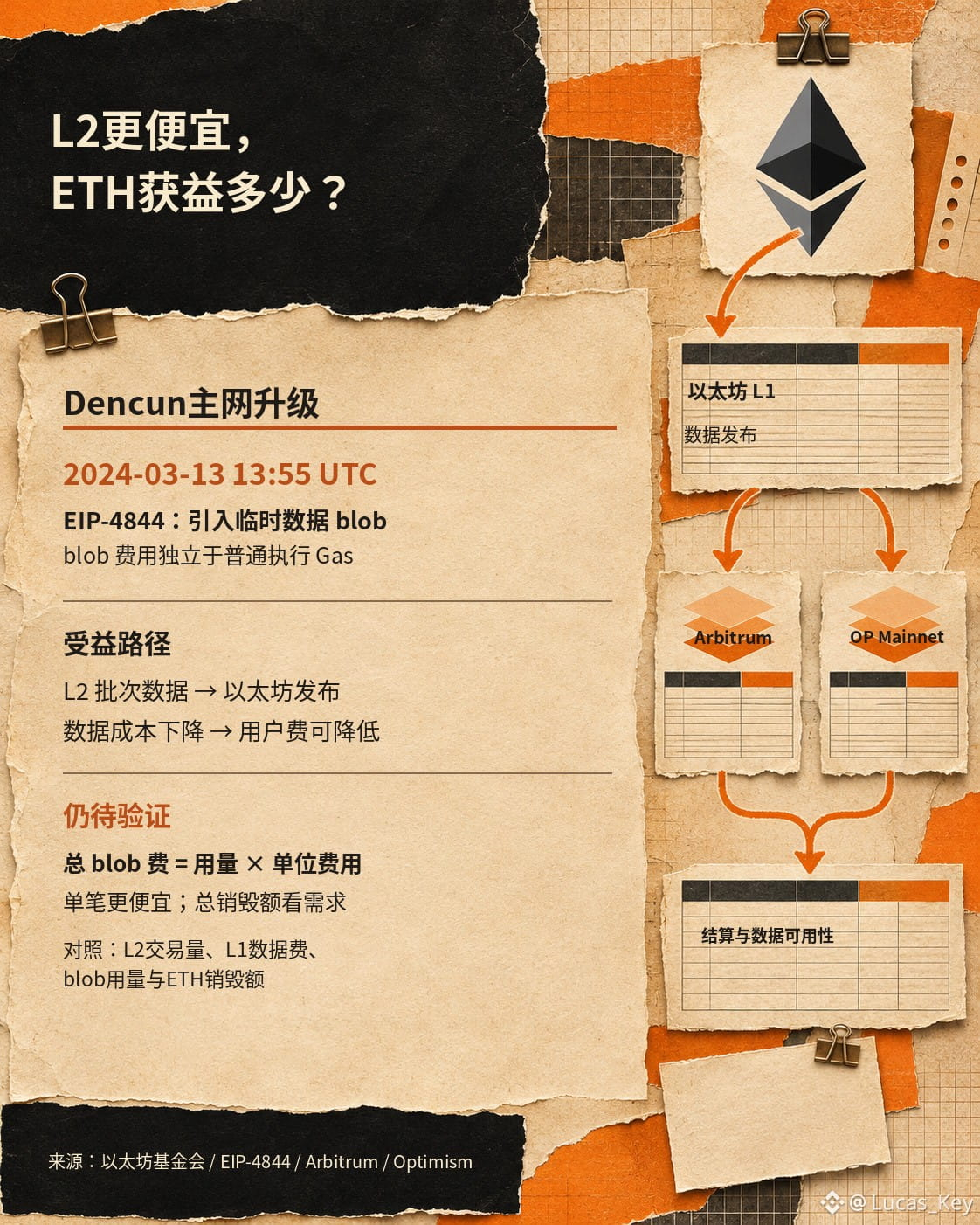
In 2024, Dencun changed how $ETH carries L2 data. $ARB and $OP , representing two Rollups, benefited from cheaper data posting. But you can’t simply leap from “L2s are more active” to “ETH must be more valuable.”
The Ethereum Foundation records that the upgrade activated on mainnet at 13:55 UTC on March 13, 2024. EIP-4844 introduced temporary data blobs and a fee market separate from regular execution gas. Arbitrum’s documentation explains that its sequencer posts transaction batches to Ethereum, and that user fees include a data fee to cover this L1 cost. OP Mainnet also posts compressed batches to Ethereum, which provides data availability and settlement. The two chains differ in execution, fees, and governance, so ARB and OP user numbers or token prices cannot stand in for ETH revenue.
The optimistic case is that cheaper data could keep more applications and transactions within Ethereum’s settlement system, and that growth in usage could make up for lower fees per transaction. The cautious case is that blob fees are priced separately, so lower prices themselves reduce the amount paid to L1 per transaction; the additional activity enabled by scaling may not translate into a proportionate increase in ETH burned. The two sides are really talking about different denominators: “price per transaction” and “total demand.”
I focus more on actual blob usage over time, blob base fees, and ETH burned, compared against transaction volumes and data fees on the two L2s. Only by looking at both total volume and unit prices can we tell whether scaling improves the user experience, or also improves L1 value capture. This historical upgrade offers context for today’s scaling debate; it is not a forecast of token prices. On-chain fees and market prices can both fluctuate sharply, so be mindful of the risks.
The Ethereum Foundation records that the upgrade activated on mainnet at 13:55 UTC on March 13, 2024. EIP-4844 introduced temporary data blobs and a fee market separate from regular execution gas. Arbitrum’s documentation explains that its sequencer posts transaction batches to Ethereum, and that user fees include a data fee to cover this L1 cost. OP Mainnet also posts compressed batches to Ethereum, which provides data availability and settlement. The two chains differ in execution, fees, and governance, so ARB and OP user numbers or token prices cannot stand in for ETH revenue.
The optimistic case is that cheaper data could keep more applications and transactions within Ethereum’s settlement system, and that growth in usage could make up for lower fees per transaction. The cautious case is that blob fees are priced separately, so lower prices themselves reduce the amount paid to L1 per transaction; the additional activity enabled by scaling may not translate into a proportionate increase in ETH burned. The two sides are really talking about different denominators: “price per transaction” and “total demand.”
I focus more on actual blob usage over time, blob base fees, and ETH burned, compared against transaction volumes and data fees on the two L2s. Only by looking at both total volume and unit prices can we tell whether scaling improves the user experience, or also improves L1 value capture. This historical upgrade offers context for today’s scaling debate; it is not a forecast of token prices. On-chain fees and market prices can both fluctuate sharply, so be mindful of the risks.