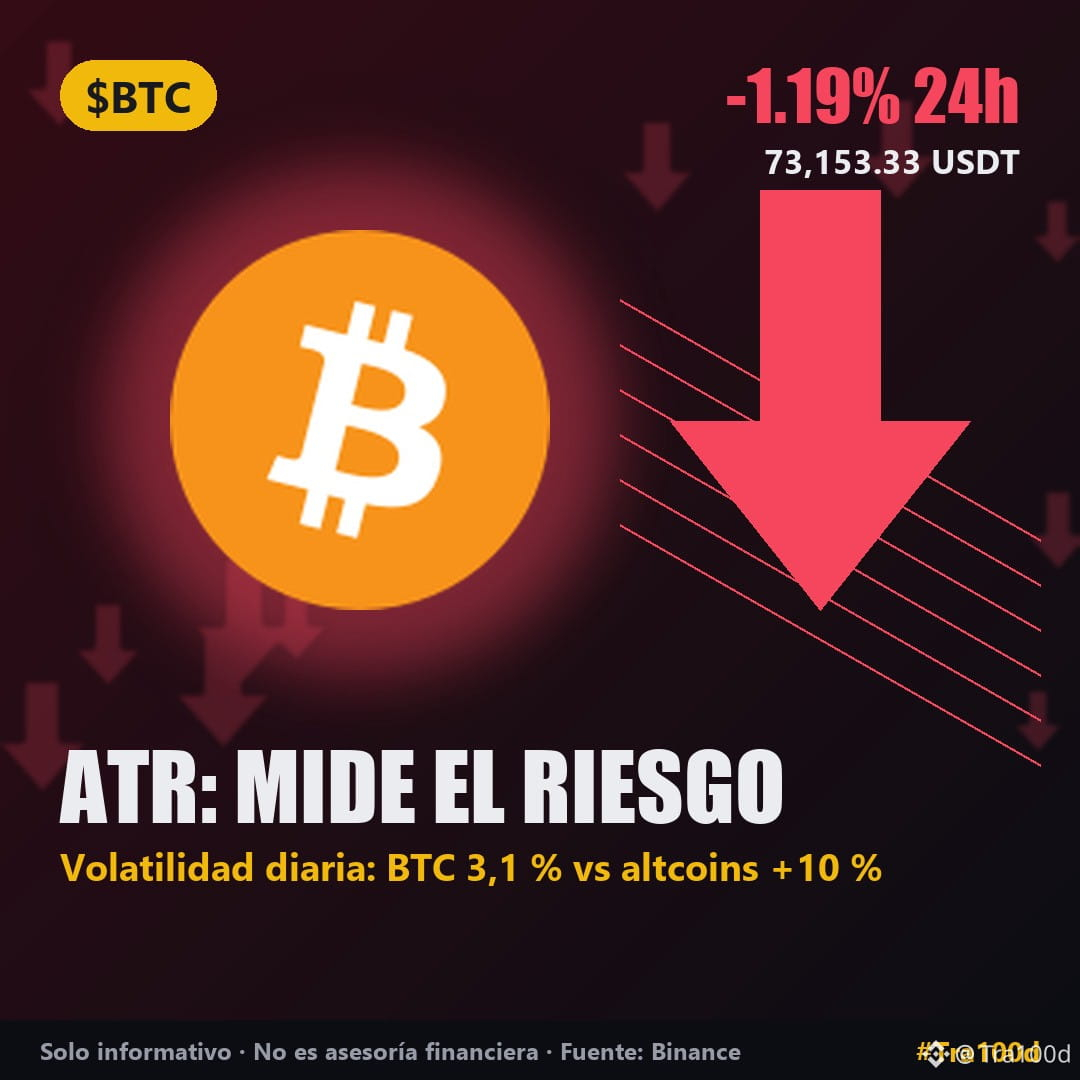
🧠 Do you use the same position size for $BTC as for an altcoin that moves 12% or 35% a day? That’s usually where the problem starts.
📘 The concept: ATR (Average True Range) measures how much an asset moves on average in each candle (for example, over 1 day). It doesn’t indicate which way the price will go, but how volatile it is.
📊 Example using today’s data (daily ATR on Binance):
• BTC: $2,270 → 3.1% daily
• $ETH: $99.3 → 4.8% daily
• PEPE: 10.7% daily (more than triple BTC’s)
• $ZEC: $122.6 → 12.7% daily
• INIT: 35.7% daily (more than 11 times BTC’s volatility)
❌ Common mistake: setting a 2% stop-loss on a coin with a daily ATR of 10% or 12%. The day’s normal noise can stop you out even if your idea was right.
✅ How to apply it: the higher the ATR %, the smaller your position size should be and the wider your safety margin.
📝 In one line: ATR tells you how much each coin “breathes,” so you can adjust your risk before entering.
Do you measure volatility before opening a trade? 👇
#EducacionCripto #AnalisisTecnico #GestionDeRiesgo #BTC #Tra100d
⚠️ For informational and educational purposes only; this is not financial advice. Cryptocurrencies are volatile: do your research and trade with caution.