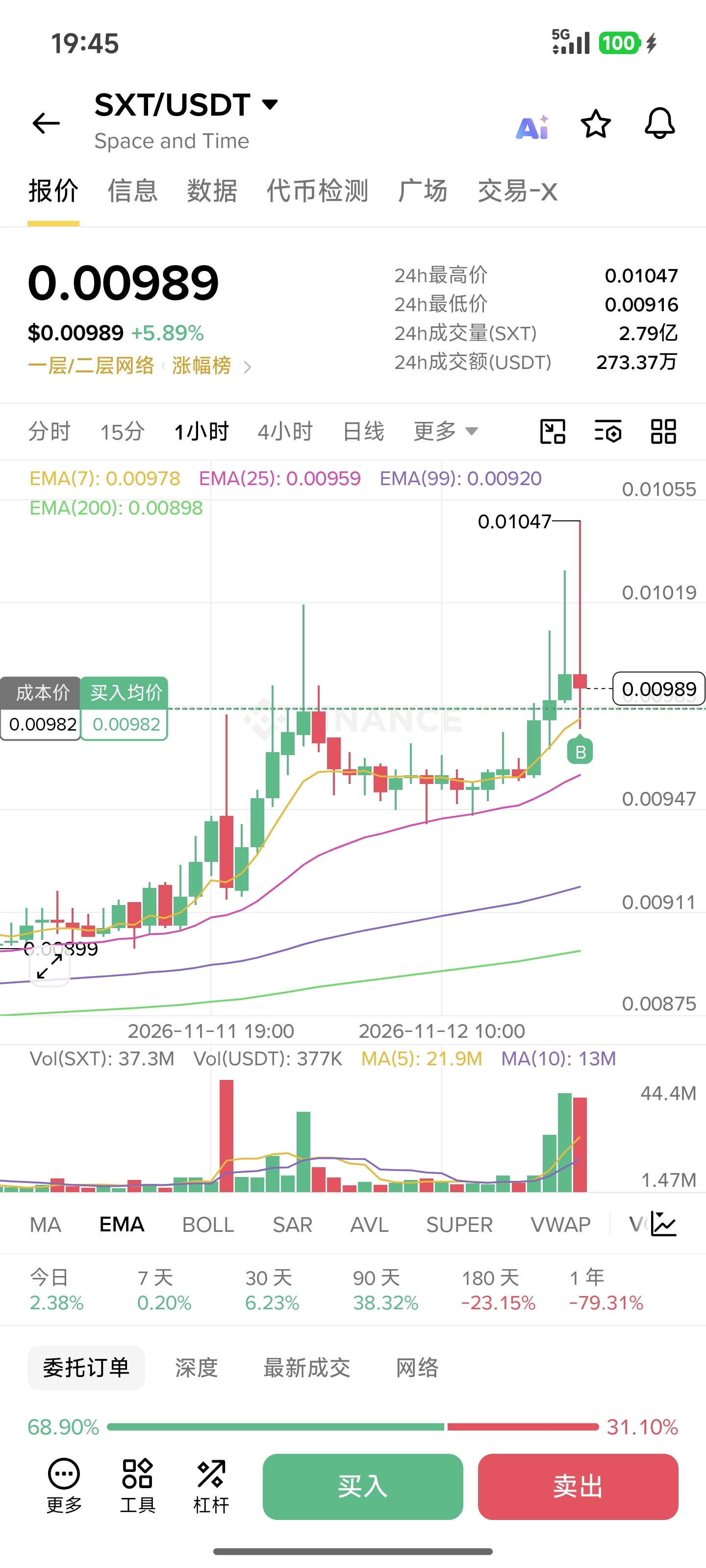

After learning more about $SXT recently, I’ve become increasingly convinced that it is at the forefront of solving the blockchain data trust problem.
Smart contracts are inherently “short-sighted”: they can only see simple state within their own chain. Whenever they need historical transactions, cross-chain data, or information from the real world, they have to rely on centralized oracles—and the trust problem follows. Space and Time’s self-developed Proof of SQL (a zero-knowledge coprocessor) lets developers use standard SQL to query vast amounts of indexed on-chain data and off-chain data sources. The query results come with cryptographic proofs that can be verified on-chain in seconds, ensuring the computation has not been tampered with.
This directly enables three key areas:
1. DeFi: Protocols can reliably query full historical TVL, liquidity depth, and user behavior to design dynamic risk controls, complex derivatives, and yield strategies, instead of being limited to real-time prices.
Tokenization: Underlying data for RWAs (such as real estate, government bonds, and commodity reserves) can be verified and brought on-chain, so auditors and investors don’t have to trust a single issuer.
2. AI: On-chain AI agents or enterprise AI workflows can use proven data inputs to make decisions. The latest Enterprise version even lets companies generate proofs in their local environments, allowing AI systems and auditors to verify results without accessing the original private data.
3. Early investment from Microsoft M12, combined with SXT Chain’s decentralized validator network, is turning “verifiable data” from a concept into infrastructure.
#SXT $SXT @SpaceandTime