



A bad review in The New York Times hurts the sales of a famous author. For a lesser-known author, it can help.
A 2010 study in Marketing Science by Jonah Berger, Alan Sorensen and Scott Rasmussen looked at more than 200 books reviewed by the paper. Sales rose 45% for less prominent authors who got a New York Times review, even when the review was poor.
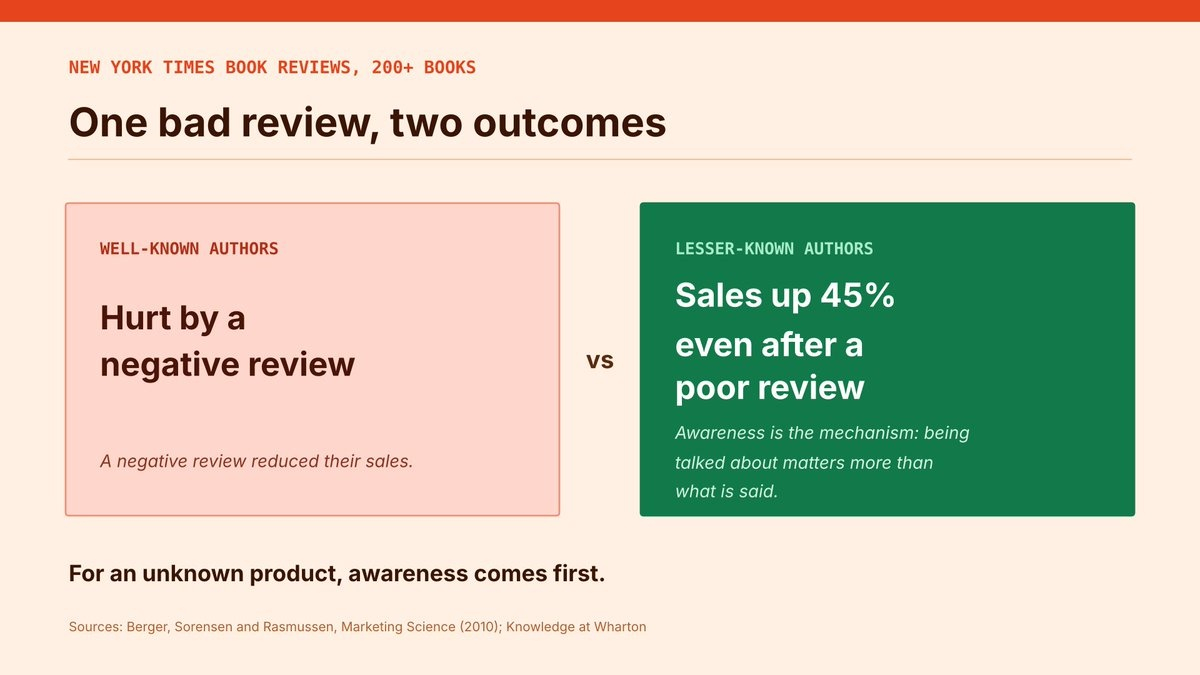
The authors say awareness is the mechanism. For a product nobody knows, being talked about at all matters more than what is said.
Herbert Simon described the scarcity behind it in 1971. “A wealth of information creates a poverty of attention.”
Familiarity Does Half the Work
Psychologist Robert Zajonc found in 1968 that repeated exposure to something is enough to make people rate it more positively. He called exposure a “sufficient condition for the enhancement of his attitude toward it.”
People start with a lean toward what they have already seen. A name nobody recognises has no such head start.
Scandals Don’t Last
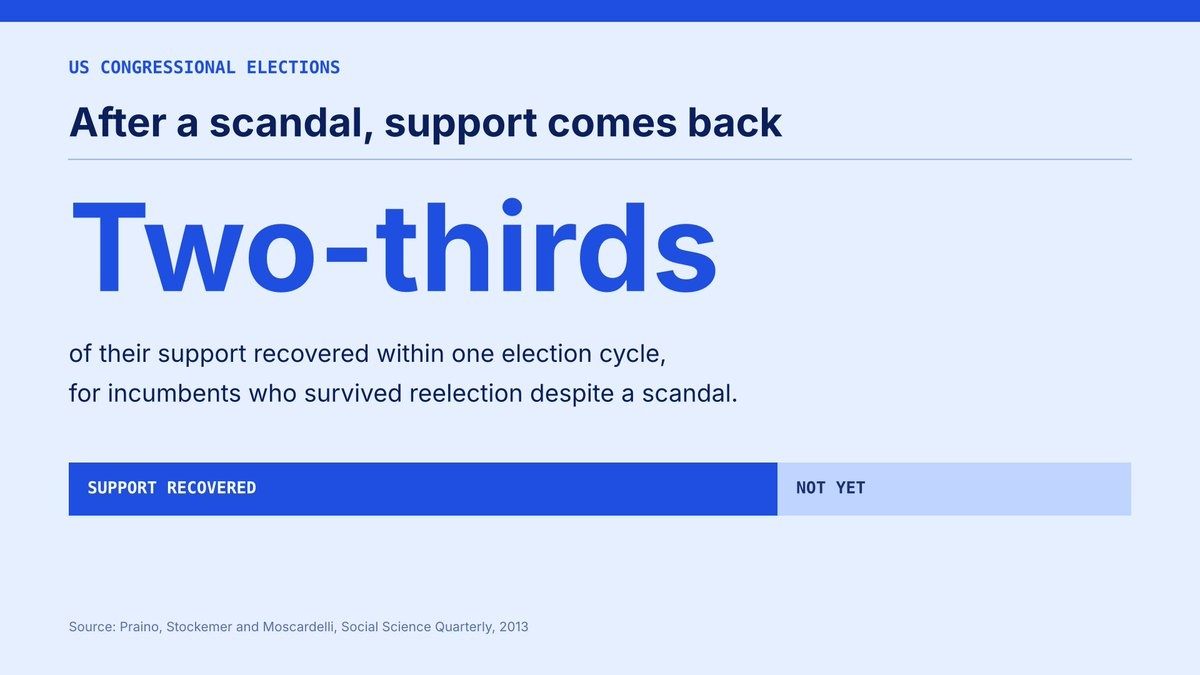
Politics gives the clearest case. A 2013 study in Social Science Quarterly by Rodrigo Praino, Daniel Stockemer and Vincent Moscardelli looked at scandals in US congressional elections. Incumbents who survived reelection despite a scandal could expect to recover two-thirds of their support within one election cycle.
Oleg Bevz puts the logic in one line. He is sure it is better to be known for the wrong thing than to be unknown, because “attention is capital. It’s hard to earn it.” Switching attention from negative to positive is “way easier than building it from scratch.”
In his words, politicians in a reputation crisis usually spend only six months rebuilding it fully, because the brain can completely forget what it thought about a person six months earlier.
People Hold One Idea
Psychologists Susan Fiske and Shelley Taylor named the reason in 1984, the cognitive miser. People are limited in their capacity to process information, so they take shortcuts whenever they can.
Marketing writers Al Ries and Jack Trout reached the same place from the other side in their 1981 book Positioning. “A brand is something made in the mind.” Their advice was to find one distinct niche and build from there.
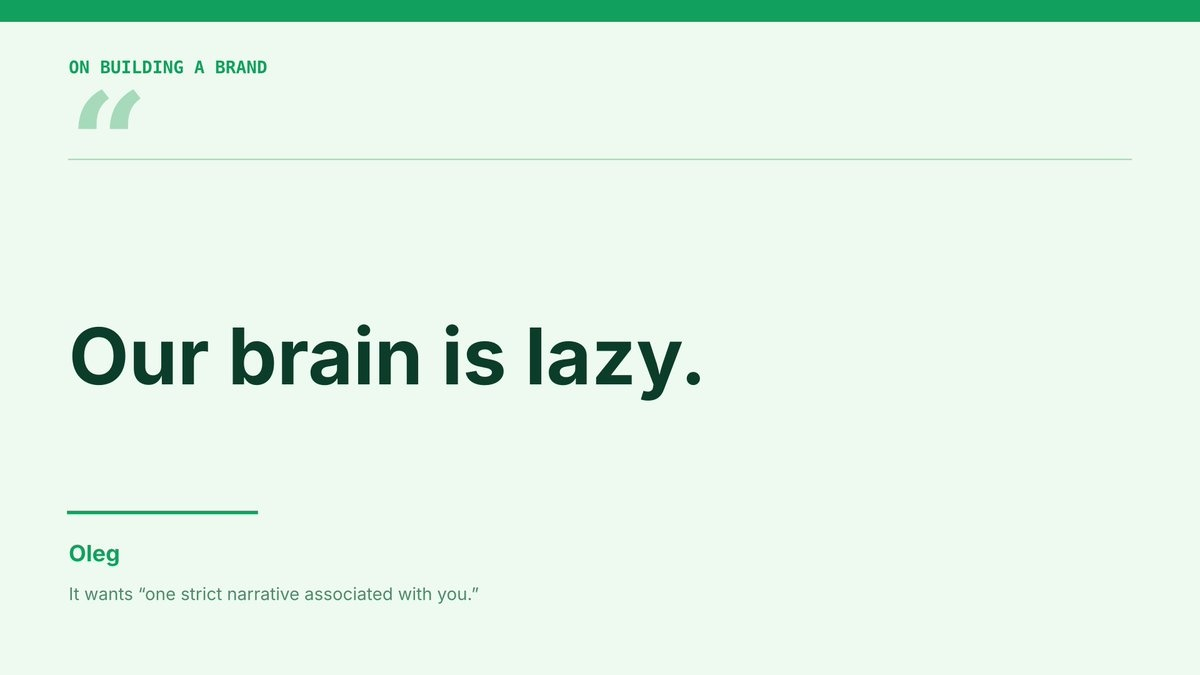
Oleg’s rule for brands follows from this. Be consistent in every channel. “Our brain is lazy,” he says, and it wants “one strict narrative associated with you.” The mass audience links a creator to one idea and one format. Fans deep in the content can see the other angles, but showing many of them to everyone else is “a very expensive and dangerous tactic.”
Final Thoughts
Awareness lifted sales for unknown authors even after a bad review, and a damaged political reputation recovered two-thirds of its support within a cycle. Both depend on people knowing who you are first.
A bad moment can be repaired, because people already hold a name and a story to work with. An unknown name has neither.