Avalanche($AVAX
)has been getting a lot of attention lately. With low fees, a growing number of real-world applications, and backing from major players like Mastercard and Sumitomo Mitsui Banking Corporation, it has caught the eye of many developers. VanEck’s AVAX ETF was also approved early this year, opening the door to institutional investment. Many people are wondering whether AVAX can surge to $50.
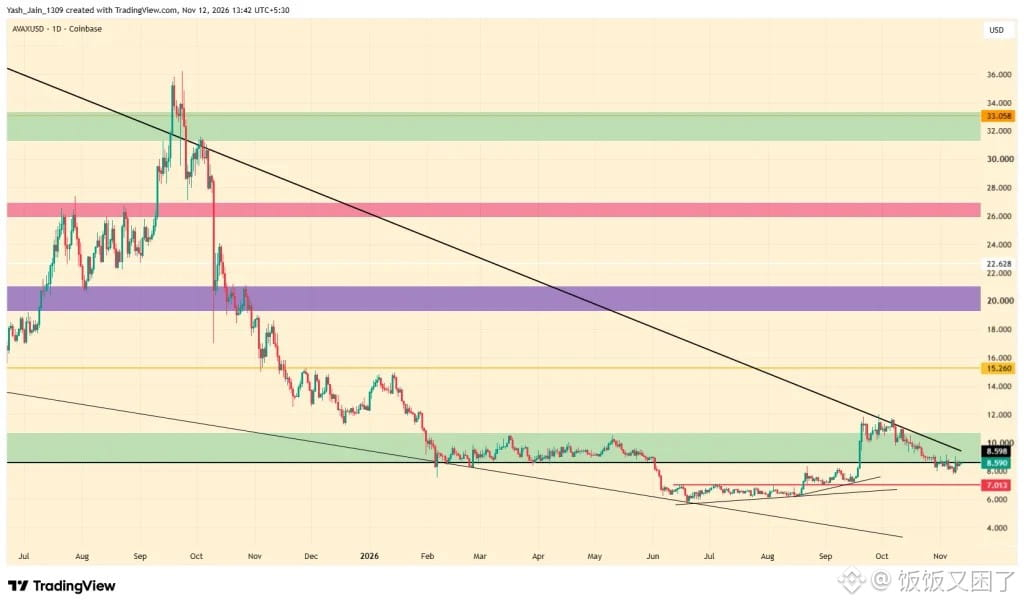
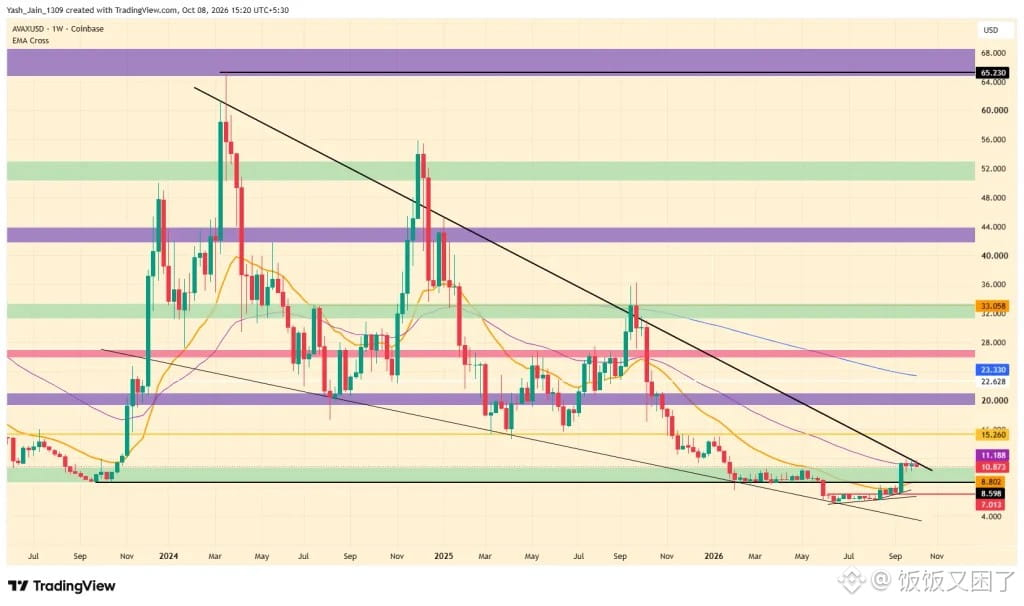
Looking back at this year’s market performance, AVAX spent much of the first half stuck between $8.6 and $10.5, while the market remained indecisive. In June, the price broke down, falling to $5.85. Although it formed a falling wedge—a pattern that could theoretically signal a reversal—it lacked enough buying pressure to drive a recovery. After a series of fluctuations, it briefly touched the multi-year resistance level of $11.65, then fell back to $8.59 by the end of October. If demand picks up in November and the price holds above $12, AVAX could have a chance to advance toward $15 and $20. If it fails to hold, it will retest support at $7; a break below that could even send it down to $4.
There are plenty of bright spots in the ecosystem: AAVE V4 has launched, several major asset managers have made substantial staked investments totaling #AVAX , and a number of tokenized RWA products have gone live. News of institutional partnerships keeps coming. The problem is that on-chain data looks bleak: active addresses and TPS continue to decline, and real user activity has dropped noticeably. With high-profile partnerships on one hand and weakening organic network activity on the other, it will be difficult for AVAX to break out of its multi-year downtrend. Whether it can emerge from the bear market will depend on whether buying pressure can keep up.#黄仁勋再被曝与下属婚外情,或遭董事会罢免