Taxation of offshore trust income takes effect, bringing in 1.6 trillion yuan, with inheritance and gift taxes to follow.
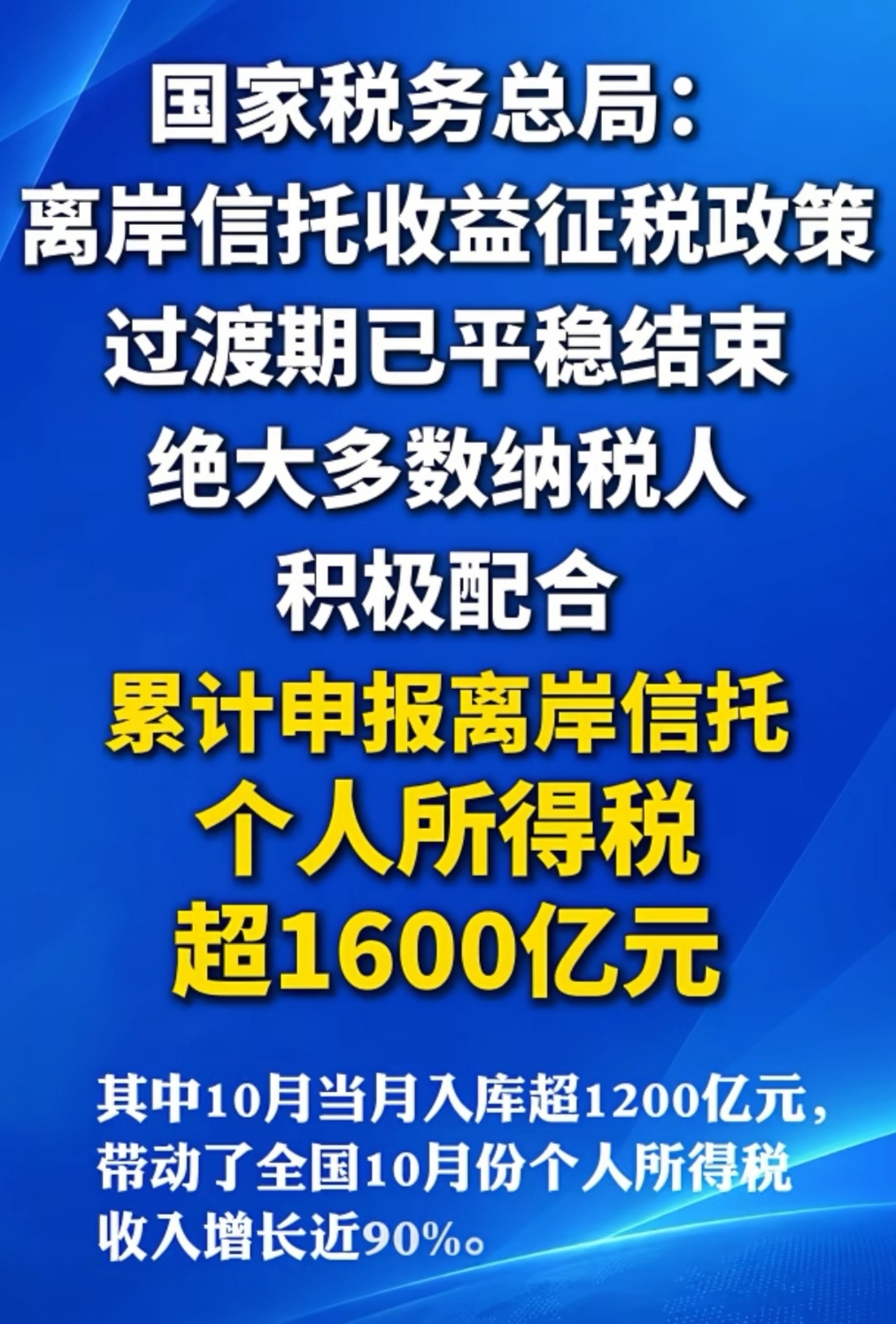
According to a notice issued by the State Taxation Administration on November 11, 2026, the 90-day transition period for taxing offshore trust income has officially ended. Individual income tax declarations totaled more than 160 billion yuan, with over 120 billion yuan collected in October alone, directly driving a nearly 90% increase in national individual income tax revenue that month.
A look back at the policy’s origins: On July 24, 2026, the Ministry of Finance and the State Taxation Administration jointly issued Announcement No. 21 of 2026, clarifying that resident individuals must pay individual income tax at a rate of 20% on income from offshore trusts, and establishing a 90-day transition period (through October 22). Those who voluntarily filed during the transition period were exempt from late-payment surcharges.
After the transition period ended, oversight tightened across the board. Tax authorities will urge taxpayers who failed to file or filed inaccurate returns to pay the tax owed, plus late-payment surcharges (at a rate of 0.05% per day). In serious cases, they will launch investigations and publicly name and shame offenders. Intermediaries that assist with tax evasion will also be investigated and penalized.
Meanwhile, Guo Shuqing publicly recommended that legislation on inheritance and gift taxes be initiated as soon as possible.
Considering the current pace of policy developments and statements from senior officials, the introduction of an inheritance tax is no longer a distant prospect—it is all but certain to happen within the next three to five years.
Months ago, Xianzhi Finance made a clear prediction: In China today, where land-based fiscal revenue is no longer sustainable, fiscal and tax expansion is both the prevailing trend and inevitable.
即刻加入先知财经资讯群,领取财富密码!
According to a notice issued by the State Taxation Administration on November 11, 2026, the 90-day transition period for taxing offshore trust income has officially ended. Individual income tax declarations totaled more than 160 billion yuan, with over 120 billion yuan collected in October alone, directly driving a nearly 90% increase in national individual income tax revenue that month.
A look back at the policy’s origins: On July 24, 2026, the Ministry of Finance and the State Taxation Administration jointly issued Announcement No. 21 of 2026, clarifying that resident individuals must pay individual income tax at a rate of 20% on income from offshore trusts, and establishing a 90-day transition period (through October 22). Those who voluntarily filed during the transition period were exempt from late-payment surcharges.
After the transition period ended, oversight tightened across the board. Tax authorities will urge taxpayers who failed to file or filed inaccurate returns to pay the tax owed, plus late-payment surcharges (at a rate of 0.05% per day). In serious cases, they will launch investigations and publicly name and shame offenders. Intermediaries that assist with tax evasion will also be investigated and penalized.
Meanwhile, Guo Shuqing publicly recommended that legislation on inheritance and gift taxes be initiated as soon as possible.
Considering the current pace of policy developments and statements from senior officials, the introduction of an inheritance tax is no longer a distant prospect—it is all but certain to happen within the next three to five years.
Months ago, Xianzhi Finance made a clear prediction: In China today, where land-based fiscal revenue is no longer sustainable, fiscal and tax expansion is both the prevailing trend and inevitable.
即刻加入先知财经资讯群,领取财富密码!