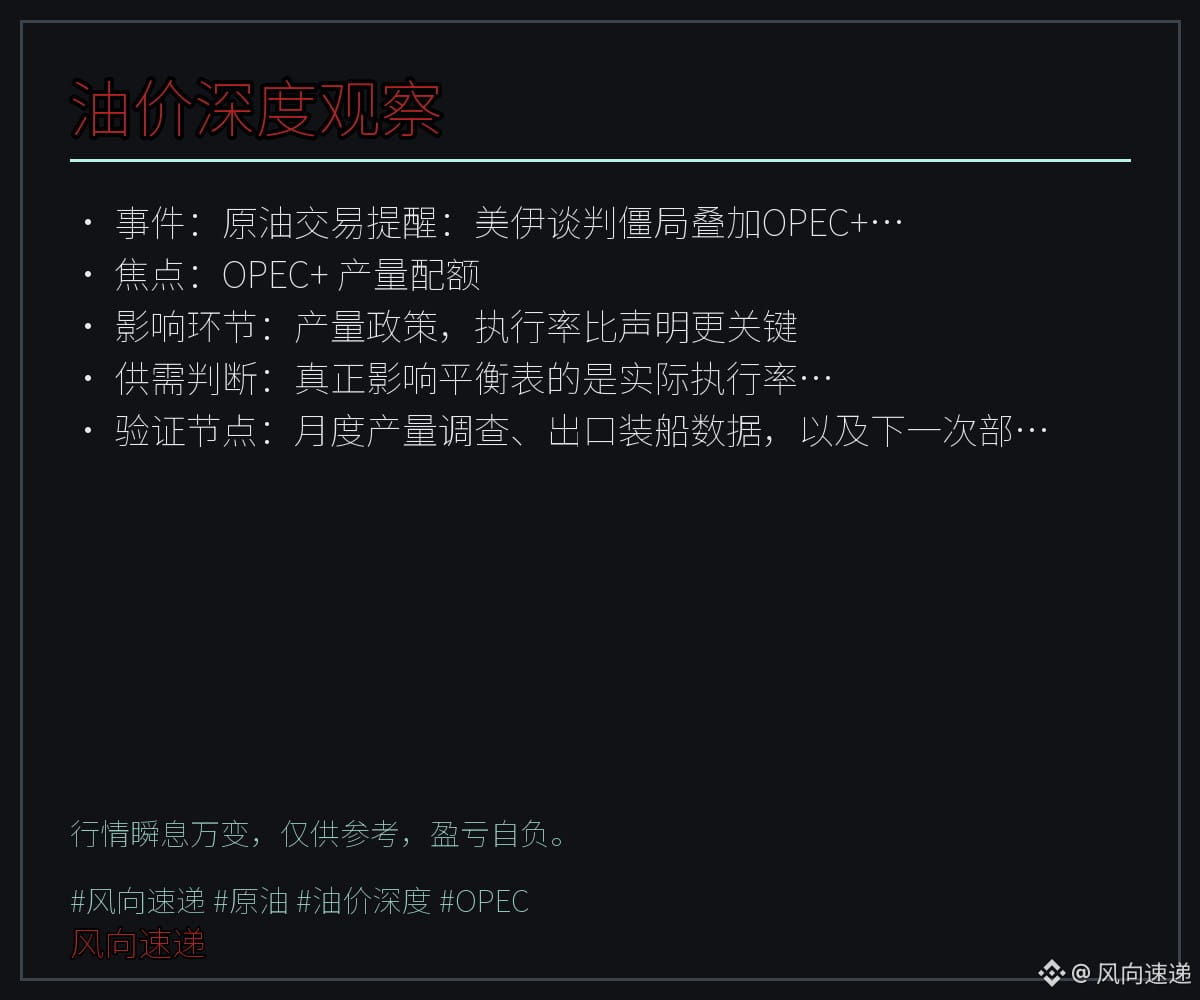
In-Depth Oil Price Watch
【Key Events】
Crude Oil Trading Alert: U.S.-Iran talks deadlocked as OPEC+ boosts production; WTI crude falls for five straight sessions—beware a downside breakout. Futures Market News (2 hours ago)
【Who Is Influencing Oil Prices】
OPEC+ has signaled that it may increase supply. The focus is on OPEC+ production quotas. OPEC+ accounts for roughly 40% of global output, and its quotas determine the medium-term supply curve. Spare capacity is the main buffer for smoothing sudden shortfalls.
【Transmission Channels】
Production cuts—or extending voluntary cuts—directly reduce exportable volumes, while increased production weighs on near-month premiums by lowering expectations for future supply.
Policy signals can also change trade flows. Price differentials for deliveries into Asia and Europe tend to move first, with the effects feeding through to benchmark oil prices afterward.
【Supply, Demand, and Pricing】
What really affects the balance sheet is the actual compliance rate; overproduction by member countries can significantly undermine the effect of production-cut announcements.
WTI is currently trading around $85.60, down 1.10% over 24 hours. This can serve as a starting point for observation; subsequent moves should be assessed alongside the confirmation points below. Expectations ahead of a meeting are often partly priced in already, and the market reaction afterward depends on the gap between the decision and expectations.
【What to Watch Next】
Watch monthly production surveys, export shipment data, and the timing and messaging of the next ministerial meeting.
【What Would Invalidate This Thesis】
If demand weakens at the same time, the price support from production cuts will be offset by declining demand.
Markets can change in an instant. For reference only; trade at your own risk.
#风向速递 #原油 #油价深度 #OPEC