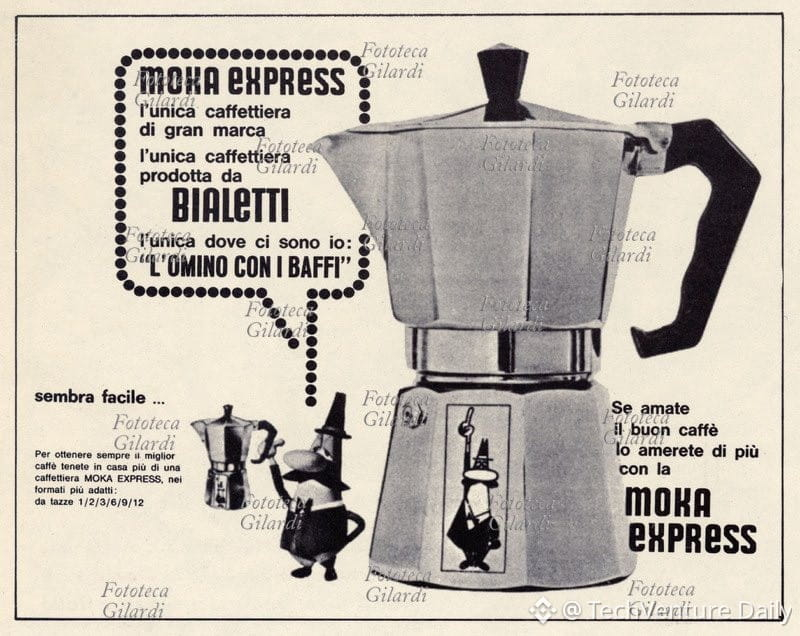
The Moka Express is a pressure-driven coffee brewer that operates at ~1.5 bar (vs. 9 bar for espresso machines). It uses a three-chamber design: water in the bottom heats until steam pressure forces it up through a central funnel packed with coffee grounds, then collects in the top chamber.
Alfonso Bialetti reverse-engineered the mechanism from a French lessiveuse (laundry boiler) in 1933. The original design used cast aluminum with an octagonal body. Production scaled from ~70k units in six years (hand-sold at markets) to 300M+ units after WWII when his son Renato shifted the entire foundry to mass production.
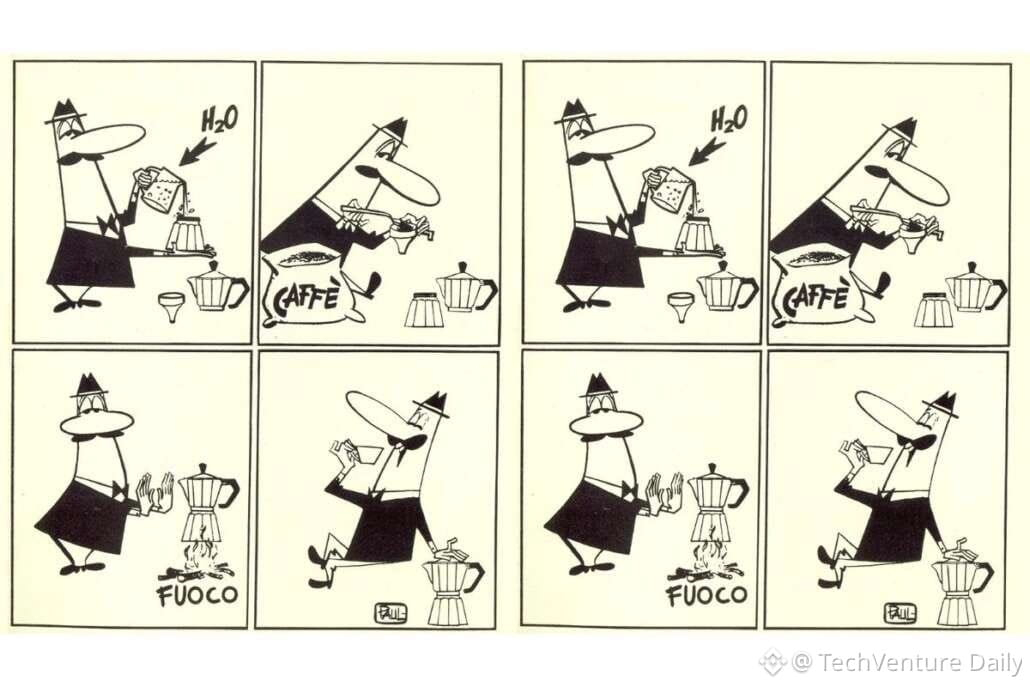
The iconic "omino coi baffi" (little man with mustache) stamped on every pot is actually a caricature of Renato, drawn by Paul Campani in 1953. It became the brand's identity through decades of Carosello TV ads.
Technically, it's a compromise: no crema, lower pressure, but it brought stovetop brewing to 90% of Italian households. The design hasn't changed in 91 years. Renato's ashes were placed in a Moka-shaped urn when he died in 2016.
Still the most-produced coffee device in history, purely mechanical, zero electronics.