U.S. stocks keep us on the edge of our seats: one moment there’s good news, and the next they’re plunging in an instant 😂
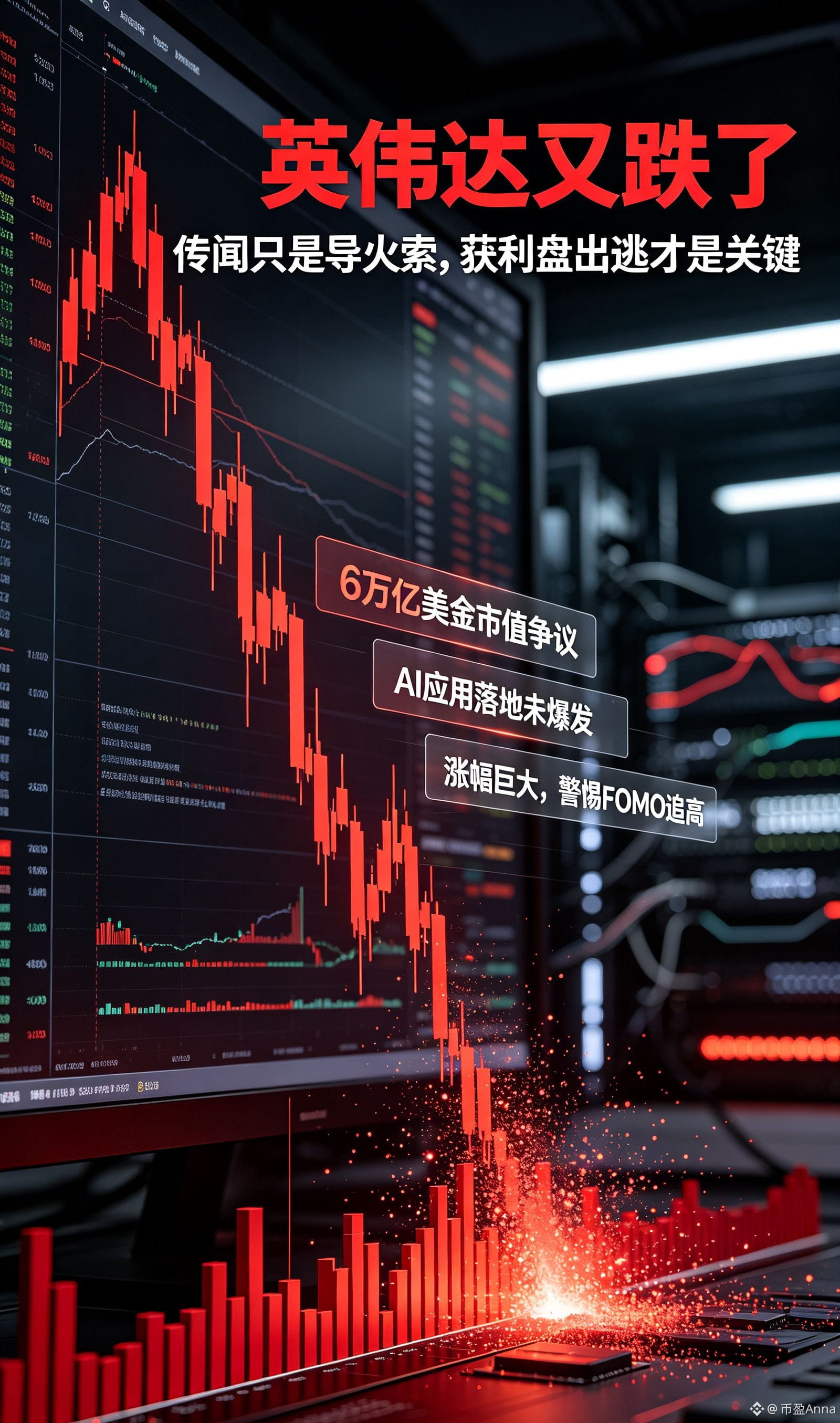
Nvidia’s latest drop had little to do with the news about Huang being ousted—that was just an excuse. The stock had climbed too much, leaving tons of investors sitting on profits. The big players used the news to dump their shares and cash out. AI hasn’t truly transformed our lives on a large scale yet, but valuations have already been pushed sky-high. Risk comes from prices rising, so don’t FOMO in at the top and end up holding the bag. #英伟达 Nvidia’s board has decided to remove Huang, and Nvidia has started falling again. Let’s be honest: Huang isn’t all-powerful. It’s obvious the big players are using the bad news to drive the price down. The fundamental reason is that Nvidia has multiplied in value many times over the past few years.
Its gains have far outstripped those of Bitcoin. The stock is packed with investors sitting on profits, and the big players can dump their shares and cash out at any time. That’s why we say risk comes from prices rising: whatever the asset, the faster it rises and the more it multiplies in value, the more cautious you should be. Don’t FOMO in at the top and become someone else’s exit liquidity.
Remember a while back, when Nvidia’s market cap was nearing $6 trillion? Plenty of folks were still saying it was cheap and predicting it would hit $10 trillion. I just want to ask: do you have any sense of how much money that is? $6 trillion is enough to rival an entire country—and a developed one at that.
What has it actually produced? Have tools like Claude, Codex, and GPT completely changed our everyday lives? Have they transformed the way humanity lives, the way search engines, e-commerce, ride-hailing, and social media did with the mobile internet? No, right? Even now, AI applications haven’t taken off, so a $6 trillion market cap for an infrastructure company seems a little overvalued, doesn’t it?
An elephant has walked into the room, but everyone is pretending not to see it. That’s where things stand right now.