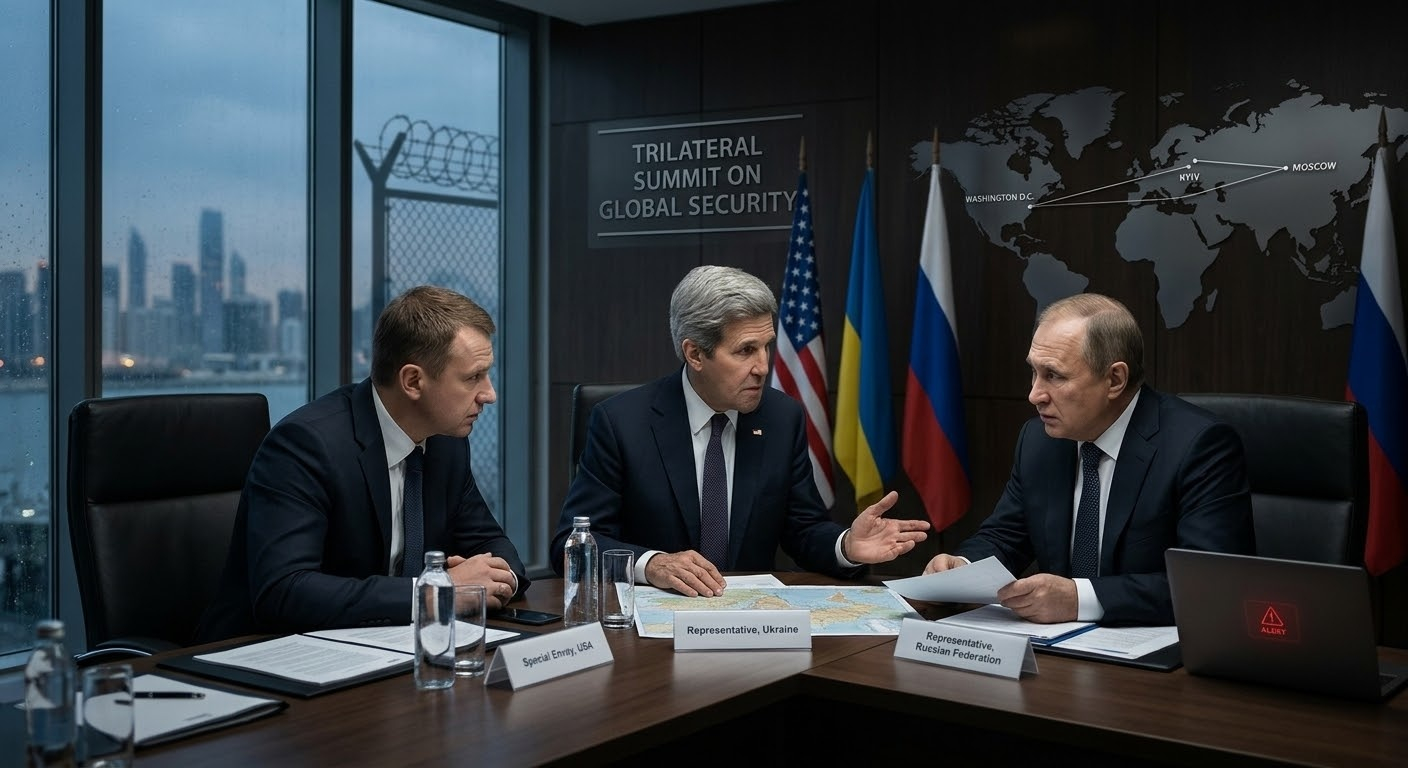

The international stage is at its most tense and politically consequential point in months. Representatives from Moscow, Kyiv, and the United States have met again for direct trilateral negotiations—with key rounds in Abu Dhabi—after nine months of complete deadlock.
What has set off alarm bells in international foreign ministries and dominated global headlines is the European Union’s total exclusion from these talks. The Kremlin is demanding that any hypothetical resolution to the conflict be directly linked to a profound review of Europe’s entire security architecture and the strategic withdrawal of NATO troops.
📊 The key points of this diplomatic earthquake:
Bilateral negotiations bearing Washington’s stamp: The U.S. administration is seeking to steer the situation following the impact of recent election events and the open fronts in the Middle East, opting for a closed-door format that sidelines Brussels’ diplomatic influence.
Military tensions persist: While diplomats sit down to negotiate, pressure on the ground continues with attacks on critical infrastructure and accusations over energy corridors and control of the Baltic Sea.
Collateral impact on markets: Uncertainty over the outcome of these summits keeps global commodity, energy, and risk-asset markets on edge, as they react immediately to any sign of escalation or de-escalation in Eastern Europe.
💡 In a world where geopolitics determines the flow of capital and economic stability, staying informed is no longer an option—it’s a competitive advantage.
👇 Do you think this new trilateral format will manage to force a lasting peace, or will leaving Europe out only deepen the rift in the West? Share your analysis in the comments!
#Geopolitics ics #GlobalNuclearDeterrenceAndInternationalDefenceStr ews #WorldPoliticsAndSecurity ics #UkraineRussia #Diplomatic acy #MacroEconomy