The market faces a negative catalyst tonight, so this is worth keeping an eye on.
Strategy (MicroStrategy) MSCI index removal (the biggest recent negative catalyst)
New MSCI rule: If a company derives most of its value from holding crypto assets and its core business accounts for a very small share, it will be deemed not to be a conventional operating company and removed from the index pool.
Impact: Passive ETFs tracking MSCI global indexes will be forced to sell MSTR. The market estimates this could create selling pressure worth billions of dollars. The deeper impact: In the past, it could raise funds at low cost by issuing new shares to buy BTC, with index funds absorbing a large share of those offerings. After removal, there will be fewer institutional buyers, making future share offerings more difficult and raising financing costs.
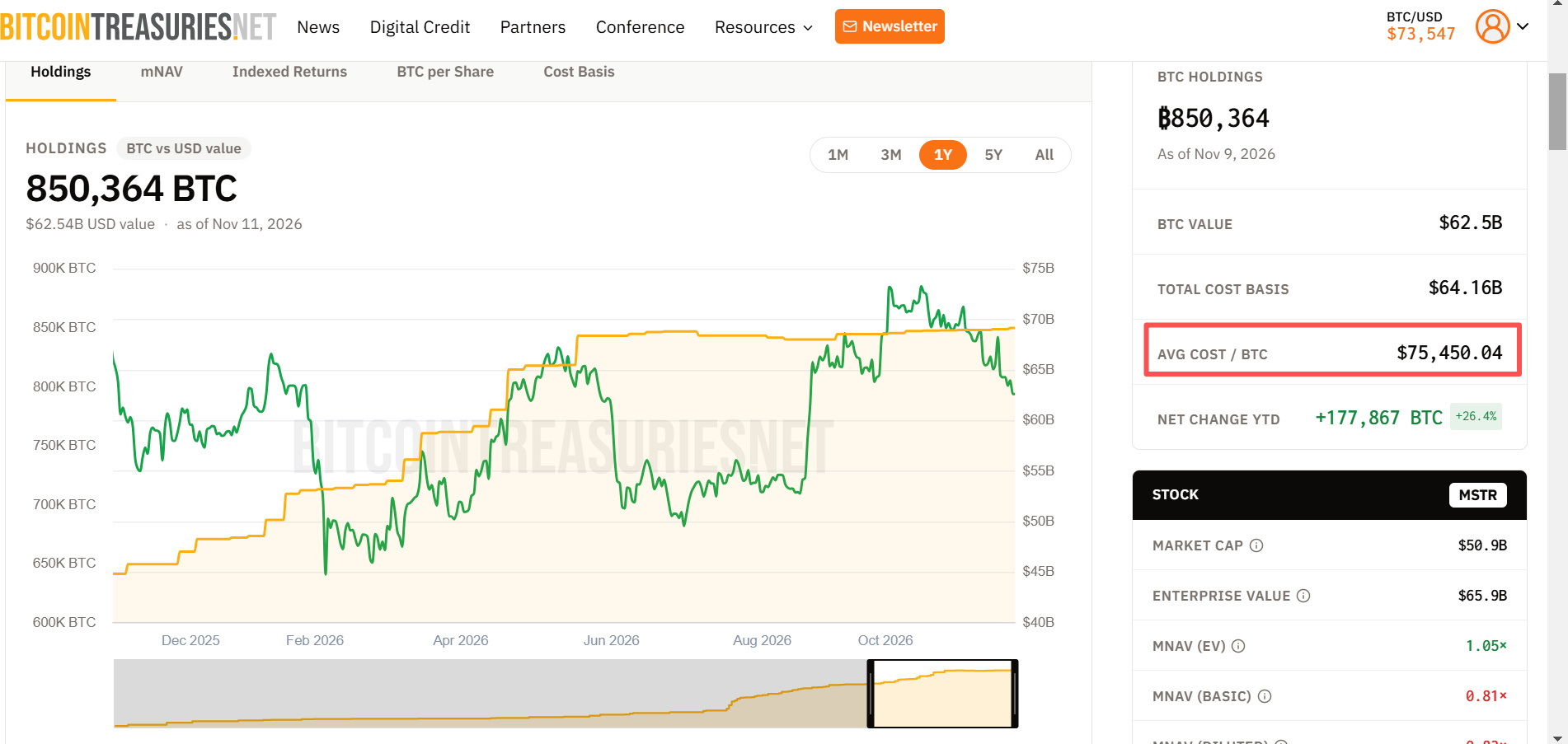
Strategy holds approximately 850,000 BTC, with an average cost of about $75,450. With crypto prices having fallen recently, its holdings are now at an overall unrealized loss.
MSTR (Strategy) MSCI removal timeline
Rule approval date: October 15, 2026, Eastern Time. MSCI officially implements the new screening rule for “non-operating companies,” launching this review cycle.
Window for announcing the final list: November 11 (Eastern Time). The results of the November semiannual review will be released in the early hours of November 12, Beijing Time, confirming whether MSTR will officially be added to the removal list.
Effective date and passive fund rebalancing day (the most critical selling-pressure point): Takes effect after the U.S. market closes on November 30, 2026. In other words, when the U.S. market closes on November 30, passive ETFs tracking MSCI will sell and rebalance their holdings. MSTR will no longer be included in the index at the market open on December 1, with concentrated selling pressure expected in the final minutes of trading on November 30.
$BTC