
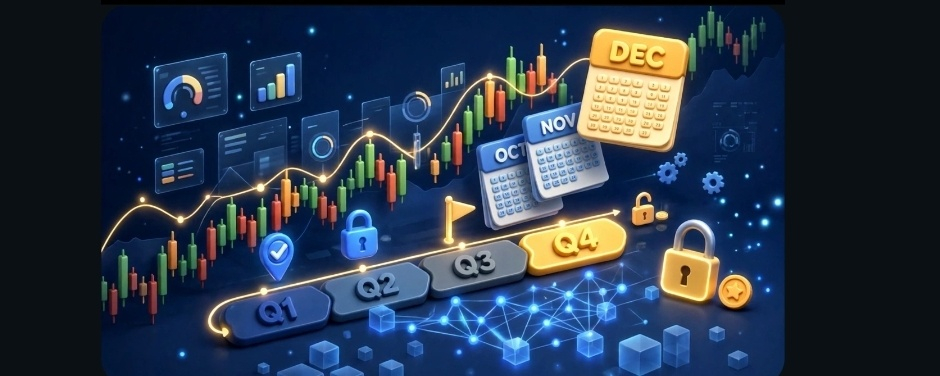

In crypto, Q4 means the fourth quarter of the year: October 1 through December 31. It is simply a calendar and reporting period, alongside Q1 (January–March), Q2 (April–June), and Q3 (July–September).
When traders, investors, projects, or analysts say “Q4,” they may be referring to several things:
Market performance: How Bitcoin, altcoins, or the broader crypto market performed during the final three months of the year.
Project roadmaps: A blockchain project may state that a mainnet launch, token unlock, upgrade, partnership, or product release is planned for Q4.
Financial reporting: Public companies, crypto-related businesses, and some protocols discuss quarterly revenue, user growth, expenses, or operational updates.
Year-end positioning: Market participants may adjust portfolios before the year closes, sometimes influenced by tax considerations, liquidity conditions, or expectations for the next year.
Why Q4 Gets So Much Attention
Q4 is often associated with heightened discussion because it closes the calendar year. Investors review performance, companies publish or prepare year-end updates, and projects try to meet roadmap milestones before December 31.
In crypto, people also sometimes talk about a “Q4 rally” or “year-end rally.” This describes a market narrative, not a rule. Historical performance has varied widely: some fourth quarters have been strong, while others have been volatile or weak. Price movements can depend on broader liquidity, regulation, macroeconomic conditions, adoption trends, leverage, and market sentiment.
A Simple Example
Hypothetical example: A blockchain project announces that its protocol upgrade is expected in Q4. That means the team expects the upgrade to happen sometime between October and December.
For an investor, the relevant questions are not only whether the upgrade is scheduled, but also:
What problem does it solve?
Is the timeline realistic?
Does it improve user experience, security, scalability, or token utility?
Are there token unlocks or other supply changes expected during the same period?
Has the project delivered similar milestones successfully before?
In short, Q4 is a time period—not a price signal or an investment conclusion. It can be useful for tracking roadmaps, earnings, token events, and market context, but it should be considered alongside the project’s fundamentals and the wider market environment.
The above is market analysis and does not constitute investment advice.