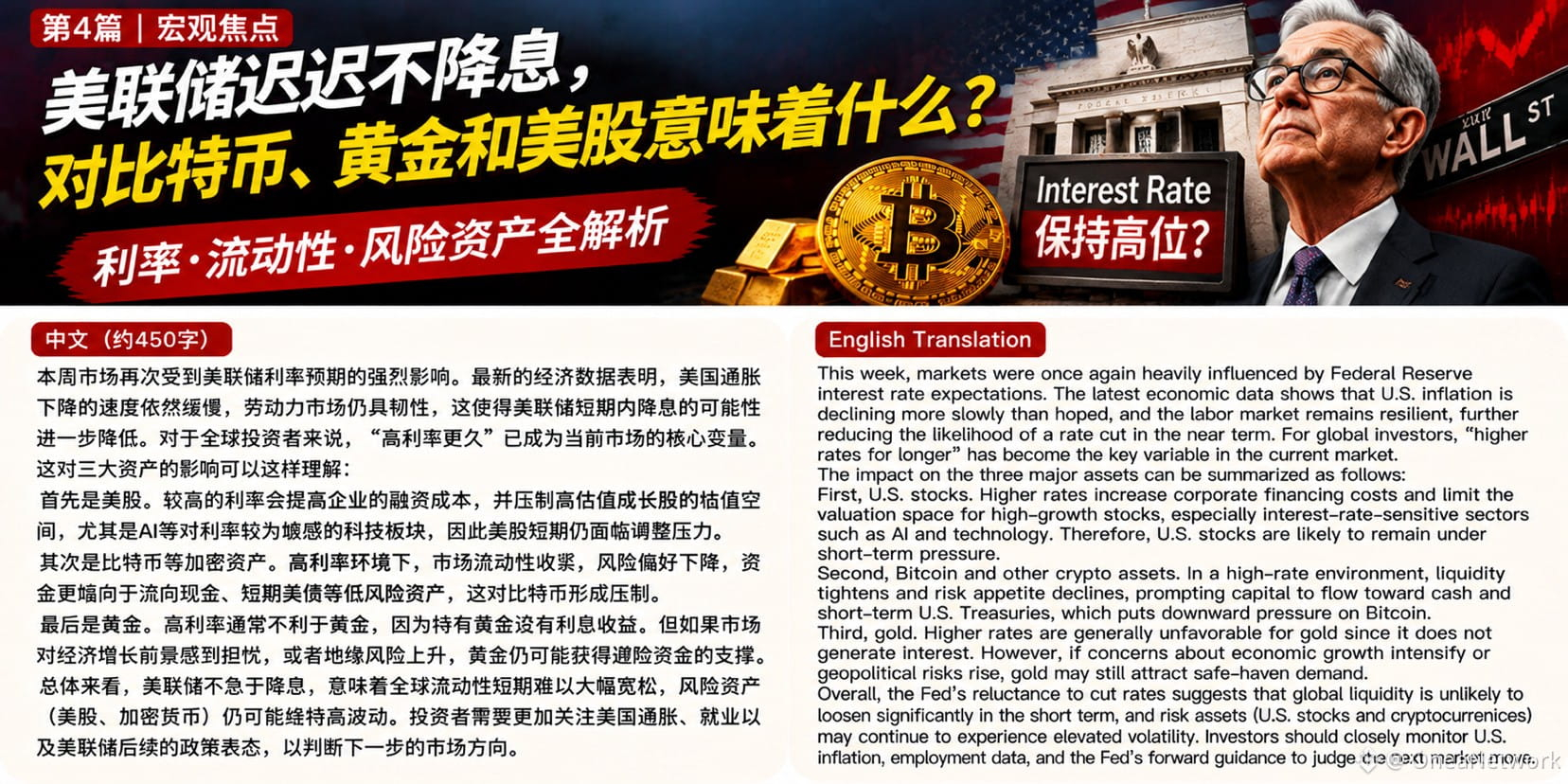
What Does the Fed’s Delay in Cutting Rates Mean for Bitcoin, Gold, and U.S. Stocks?
Recently, expectations about the Fed’s monetary policy have once again become an important factor influencing global asset prices. Many investors are waiting for rate cuts, but what really matters isn’t when the Fed will cut rates—it’s why it has been taking so long.
If U.S. inflation remains above target or the labor market stays strong, the Fed may choose to keep interest rates elevated. High interest rates affect different assets through borrowing costs, liquidity, and investor risk appetite.
First, U.S. stocks. Persistently high rates mean higher financing costs for companies and a lower present value for future profits. High-valuation growth stocks, especially in the tech sector, are more vulnerable to these effects.
Next, Bitcoin. Although Bitcoin has a unique supply mechanism, it is also affected by global liquidity as institutional investment continues to grow. When borrowing costs rise and risk appetite declines, Bitcoin typically faces greater selling pressure.
Finally, gold. Gold does not generate interest, so high real interest rates usually increase the opportunity cost of holding it. However, if markets begin to worry about an economic downturn, financial risks, or geopolitical conflicts, gold may find support from safe-haven demand.
This means these three assets will not necessarily move in the same direction. Inflation, real interest rates, the U.S. dollar, and global capital flows are what will truly determine their future performance.
Investors shouldn’t bet solely on a single rate cut. Instead, they should build an asset allocation strategy that can withstand different macroeconomic conditions.
What do you think: In the next phase, will expectations of Fed rate cuts catalyze a market rebound, or does the market still need to go through a longer period of adjustment?