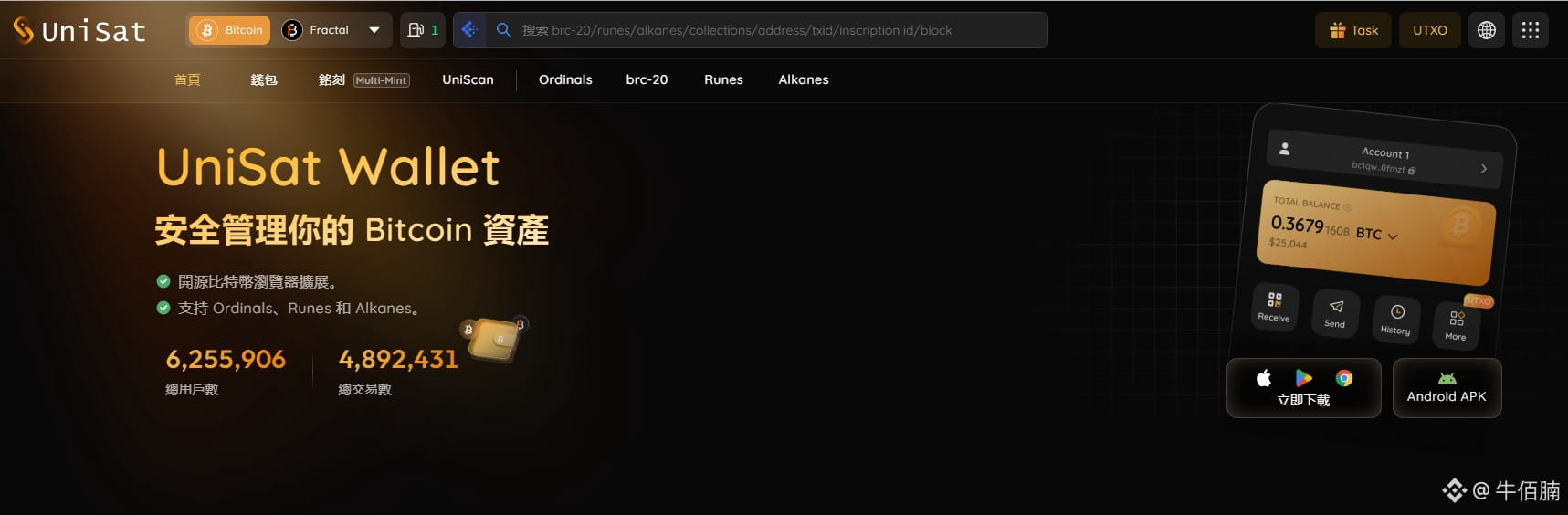
Why does the Bitcoin ecosystem need USDT? UniSat has been building infrastructure for Bitcoin-native assets since 2023. It has introduced many innovations, but one thing has been missing: a stablecoin that everyone recognizes and can use directly within the ecosystem. No matter how many native assets there are, connecting them to the real economy often still requires cross-chain transfers. USDT can serve as a unit of account and bring in liquidity, supporting use cases such as payments, trading, DeFi, and gaming. This is especially useful for AI agents: they can use BTC as a store of value and pay for services within the ecosystem in USDT, without having to move assets back and forth across chains. Bitcoin doesn’t need to become another Ethereum; it needs a more vibrant, complete ecosystem—and stablecoins are the missing piece.
UniSat’s three-phase roadmap:
1. Wallet and browser support (current focus): UniSat Wallet and UniScan will support RGB-based USDT, with features for sending, receiving, and managing assets; state management; backup and recovery; data security; and user experience. Asset authenticity will be verified through the Utexo API.
2. Trading support (UniHexa): Enable trading between Bitcoin-native assets and USDT, giving users dollar-denominated balances, a more consistent unit of account, and better liquidity.
3. Broader applications: Explore use cases such as payments, financial services, gaming, and AI agents with developers.
Next steps: Utexo will roll out in phases, starting with institutional liquidity and exchanges, then expanding to everyday users. UniSat will prioritize completing the wallet and UniScan integrations, then move on to UniHexa trading features. It is also willing to share its experience with other wallets and projects. The goal is simple: make Bitcoin and ecosystem assets easier to use and build with, extending beyond “digital gold” into a wider range of real-world economic activities. $BTC $USDT