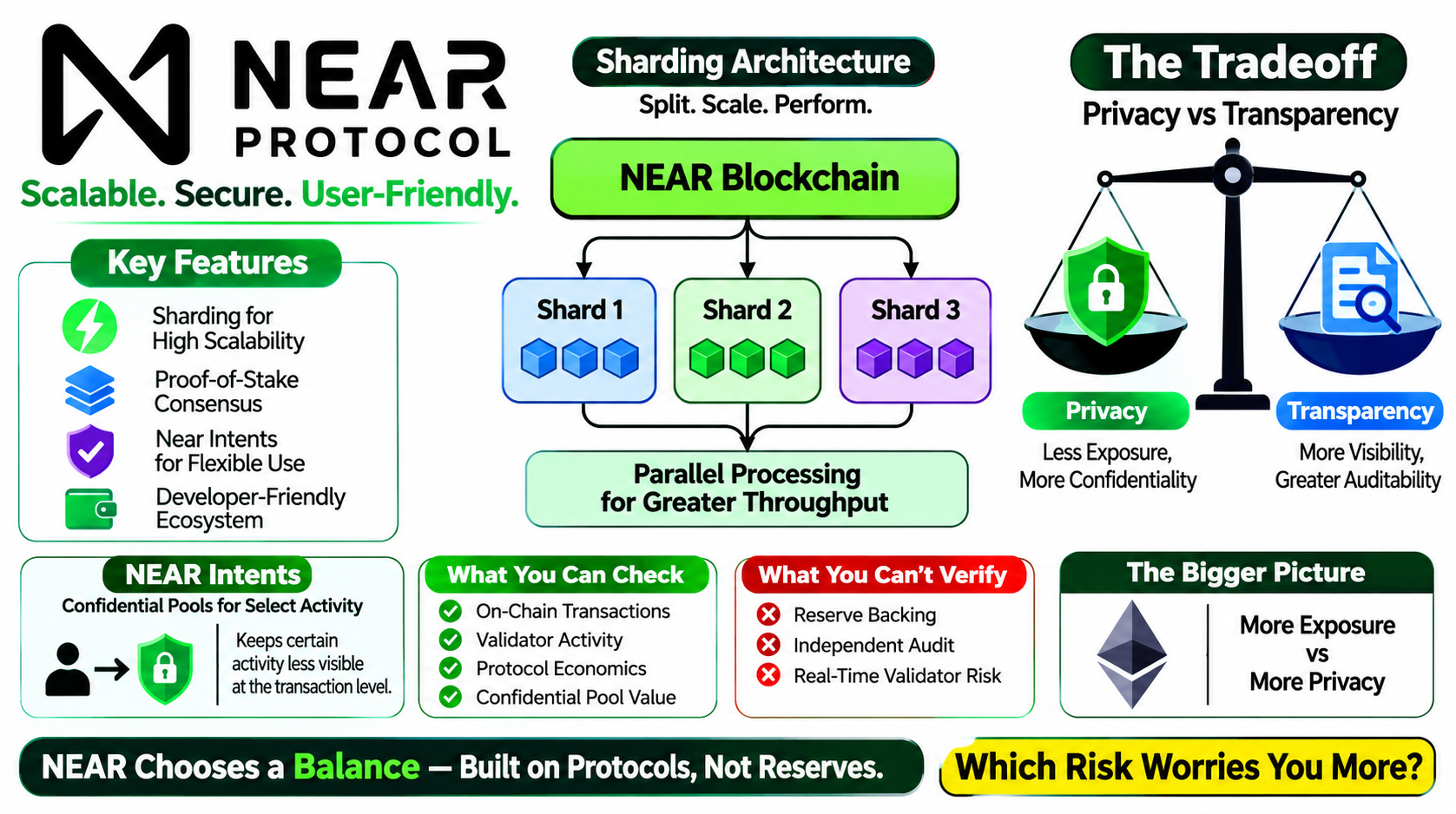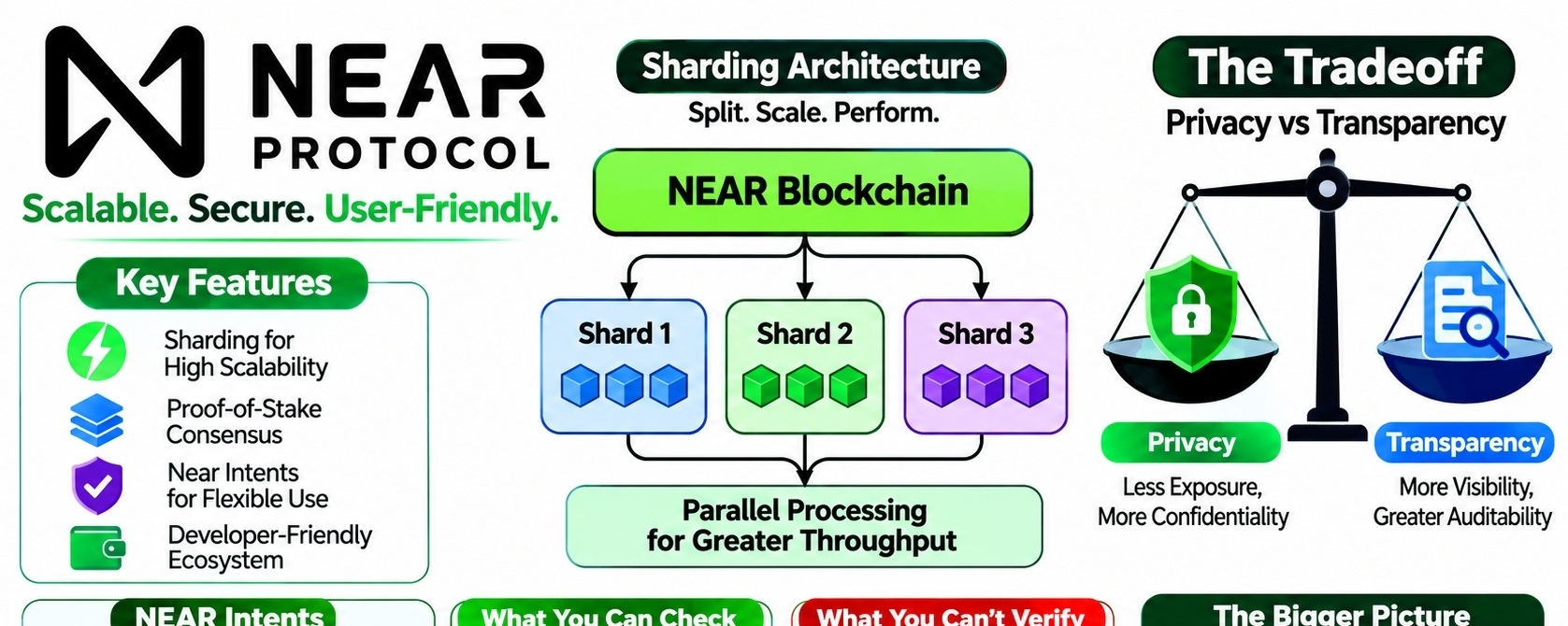

NEAR is a proof-of-stake blockchain built around sharding, allowing the network to process transactions across multiple shards rather than relying on a single execution layer. But its transparency model has a different tradeoff: public blockchain activity does not automatically reveal every operational or validator-level risk.
NEAR Intents introduces another layer: confidential pools allow certain activity to remain less visible at the transaction level. That's not an oversight. It's a stated choice. Privacy can reduce exposure of trading activity, but it also limits what outsiders can independently inspect.
Holders can check public NEAR transactions, validator activity and protocol economics. NEAR's revenue dashboard also publishes on-chain metrics, including confidential pool value. However, NEAR is not a reserve-backed coin, so traditional reserve attestations do not apply. There is no named reserve auditor or periodic reserve-attestation schedule to verify. Aggregated metrics are not the same as continuous independent auditing.
Compare Ethereum: its public blockchain exposes transaction, staking and validator data through block explorers. More exposure, in exchange for greater transaction-level scrutiny. But public visibility cannot eliminate smart-contract, validator or infrastructure risks.
Neither approach removes counterparty risk. Confidential systems rely more heavily on the integrity of their privacy mechanisms and operators. Public systems rely more heavily on visible execution and independently inspectable network activity.
NEAR is pursuing a balance between public settlement infrastructure and selective confidentiality. Its trust model leans on protocol verification while accepting limits on visibility in confidential applications.
Which risk worries you more — hidden activity with greater privacy, or public activity with great