BTC ETFs See Continued Large Outflows—Are Institutions Starting to Pull Back?
Fund flows for U.S. spot $BTC ETFs have been less than encouraging lately.
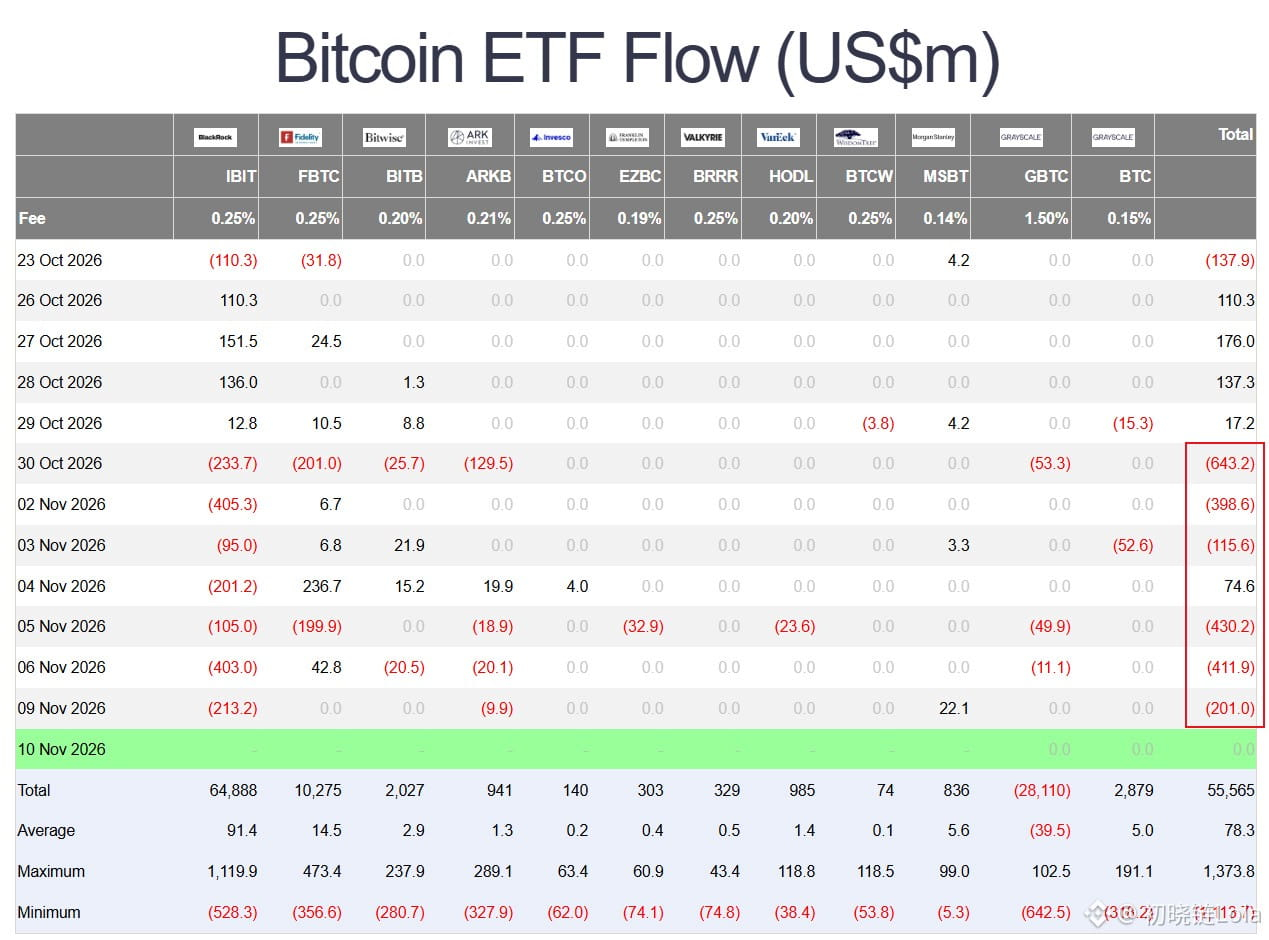
Since November, cumulative net outflows have reached about $1.5 billion.
From November 2 to 6, net outflows totaled about $1.282 billion for the week;
On November 5, daily net outflows reached $430 million, the largest single-day outflow in recent weeks.
This is no longer just a matter of fund flows fluctuating for a day or two.
Additionally, has also become a major source of outflows this time around.
On November 6, IBIT saw about $403 million in outflows for the day, accounting for nearly all of that day's net outflows from BTC ETFs.
On November 9, IBIT saw another $213 million in outflows.
IBIT was once an important channel for traditional financial investors to enter the BTC market.
Now that it, too, is seeing sustained outflows, it suggests that some investors are reducing their short-term exposure to BTC risk.
Looking at cumulative historical figures:
BlackRock's IBIT has seen cumulative net inflows of about $64.89 billion;
Fidelity's FBTC has seen cumulative net inflows of about $10.28 billion;
Grayscale's GBTC has seen cumulative net outflows of about $28.11 billion.
Although funds have pulled back in the short term, cumulative net inflows across the entire market have still exceeded $55.6 billion since spot ETFs launched in 2024.
Traditional financial markets' demand for BTC allocation has not disappeared entirely because of short-term outflows.
Will #etf outflows continue to grow?
Can BlackRock's IBIT return to net inflows?
Will more institutional capital exit as the BTC price falls?
When market sentiment recovers, can ETF flows turn positive again?
ETFs are an important window into how traditional investors feel, but they are not the only indicator for judging whether BTC will rise or fall.
Outflows are a signal worth watching, but they don't mean BTC will necessarily continue to decline.
#定投BTC Continue to monitor fund flows, market sentiment, and BTC's actual price performance.
The market won't stop falling just because we're bullish on BTC, nor will it lose its long-term value just because institutions are pulling out in the short term.
Staying patient and managing position sizes are more important than rushing to call the bottom.
#比特币现货ETF连续三日净流出2.01亿美元