

Munger: In 1972, he changed Buffett with a box of candy
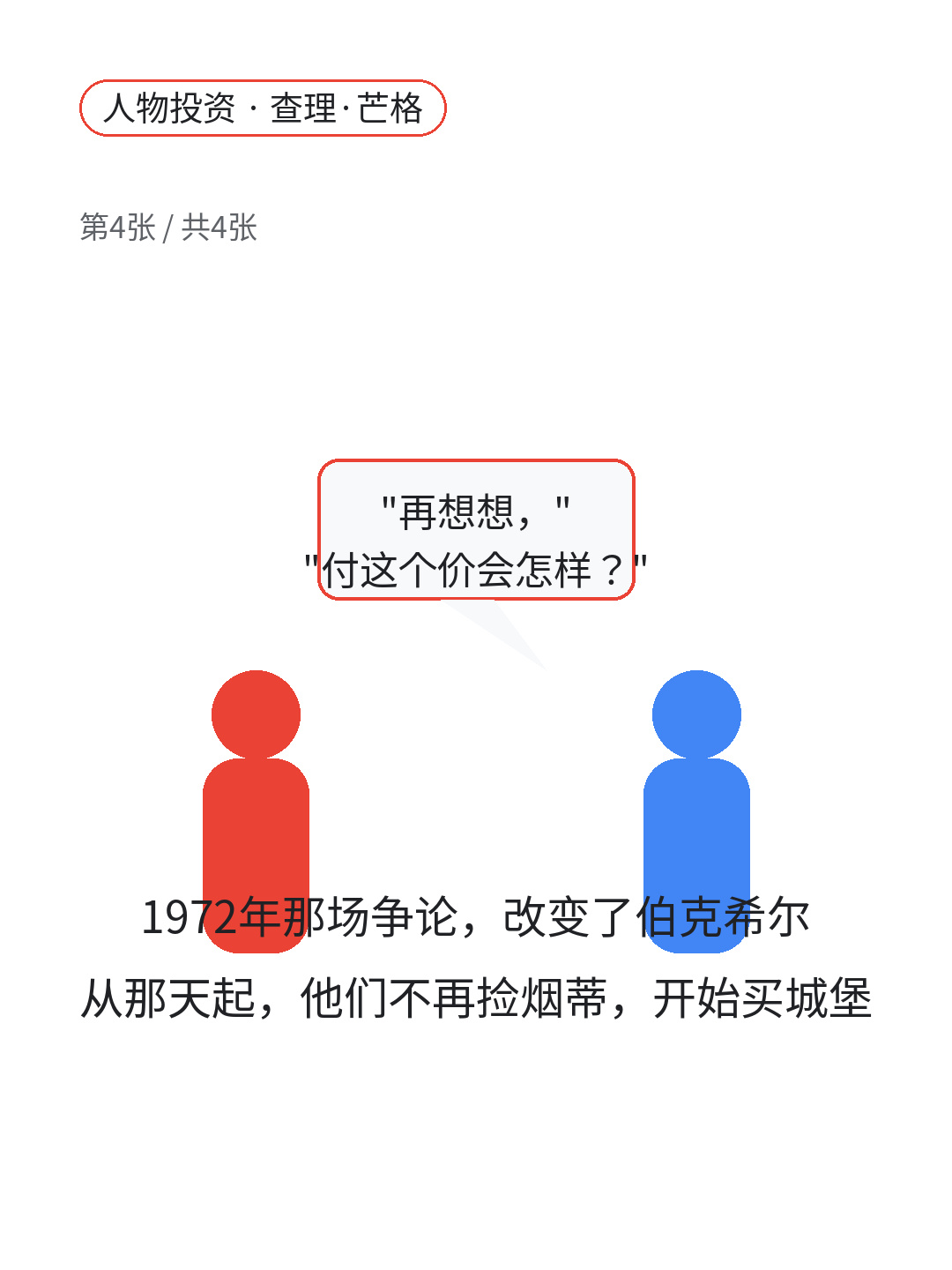
In 1972, Munger had an argument with Buffett.
They were arguing about a candy company: See’s Candies. A California institution with an excellent reputation, its stores had long lines every year before Christmas.
The problem was the price. The seller was asking $25 million. But See’s had only $8 or $9 million in net assets on its books.
Paying three times book value for a candy company? By Buffett’s standards at the time, that was crazy.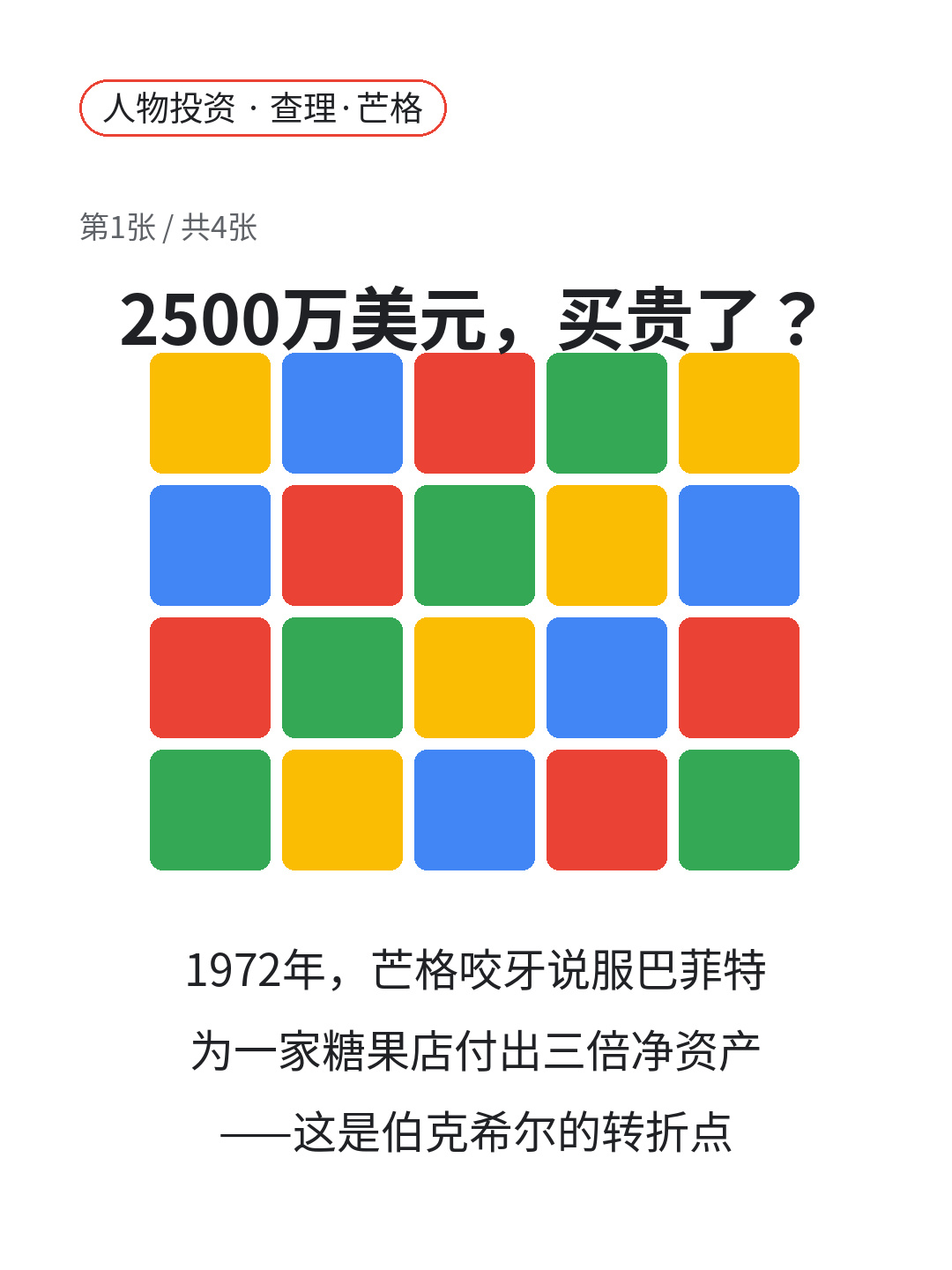
He was Graham’s protégé, after all. His mentor’s doctrine boiled down to one word: cheap. Buy cigar butts, pick up bargains, and only invest when the stock price is below liquidation value. A “premium” business like See’s wasn’t even worth considering.
Munger didn’t see it that way. He kept coming back to the same point: Look at its profits, its brand, its repeat customers. This business doesn’t need further investment; it naturally generates profits year after year. The premium buys you the right to raise prices for the next thirty years.
Buffett was persuaded.
Later, it became clear that this deal changed the course of Berkshire’s history.
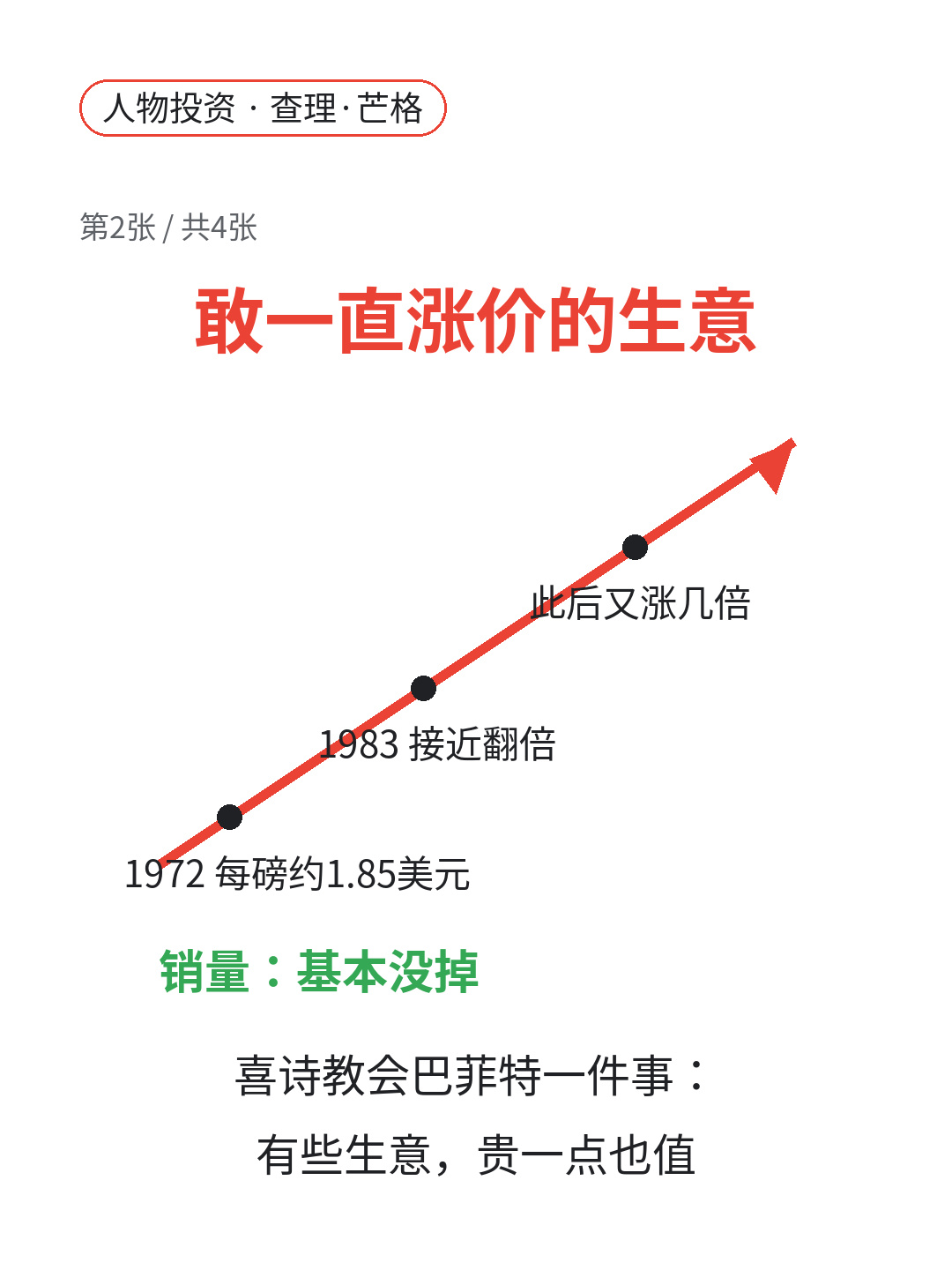
Once See’s was in their hands, it immediately showed what a “great business” looked like. When sugar prices rose, See’s raised its prices too; even in a bad economy, people still lined up. From 1972 to today, See’s has earned Berkshire dozens of times its original $25 million investment. And sustaining the business has required almost no new investment.
Munger later summed it up: See’s opened our eyes.
What did he mean?
Before that, Buffett had been scouring the world for cigarette butts. What was the problem with them? They were cheap, but they burned your fingers. You could buy them cheaply, but to make money you had to sell them—and there had to be one last puff left in the butt. It was a lot of work for limited returns, and sometimes you really did end up with ashes in your hand.
See’s was something else: a great business at a fair price. Once you bought it, it could grow on its own. While you slept, it made money; while you vacationed, it raised prices.
From 1972 on, Buffett’s mantra changed from “cheap” to “great business.” Coca-Cola and Apple followed the same playbook. Without See’s, there would have been no Berkshire as we know it today.
Munger’s role in this debate is worth reflecting on.
He wasn’t the kind of person who came up with lots of ideas; he was the kind who drove a point home. “It’s better to pay a little more for a good product than to buy junk just because it’s cheap.” Today, that sounds like common sense. In 1972, it was heresy.
There was nothing wrong with Graham’s cigarette-butt approach; it just had a ceiling. As the pool of capital grew, there weren’t enough cigarette butts to go around. Munger pushed Buffett over that hurdle.
What can ordinary people learn from this?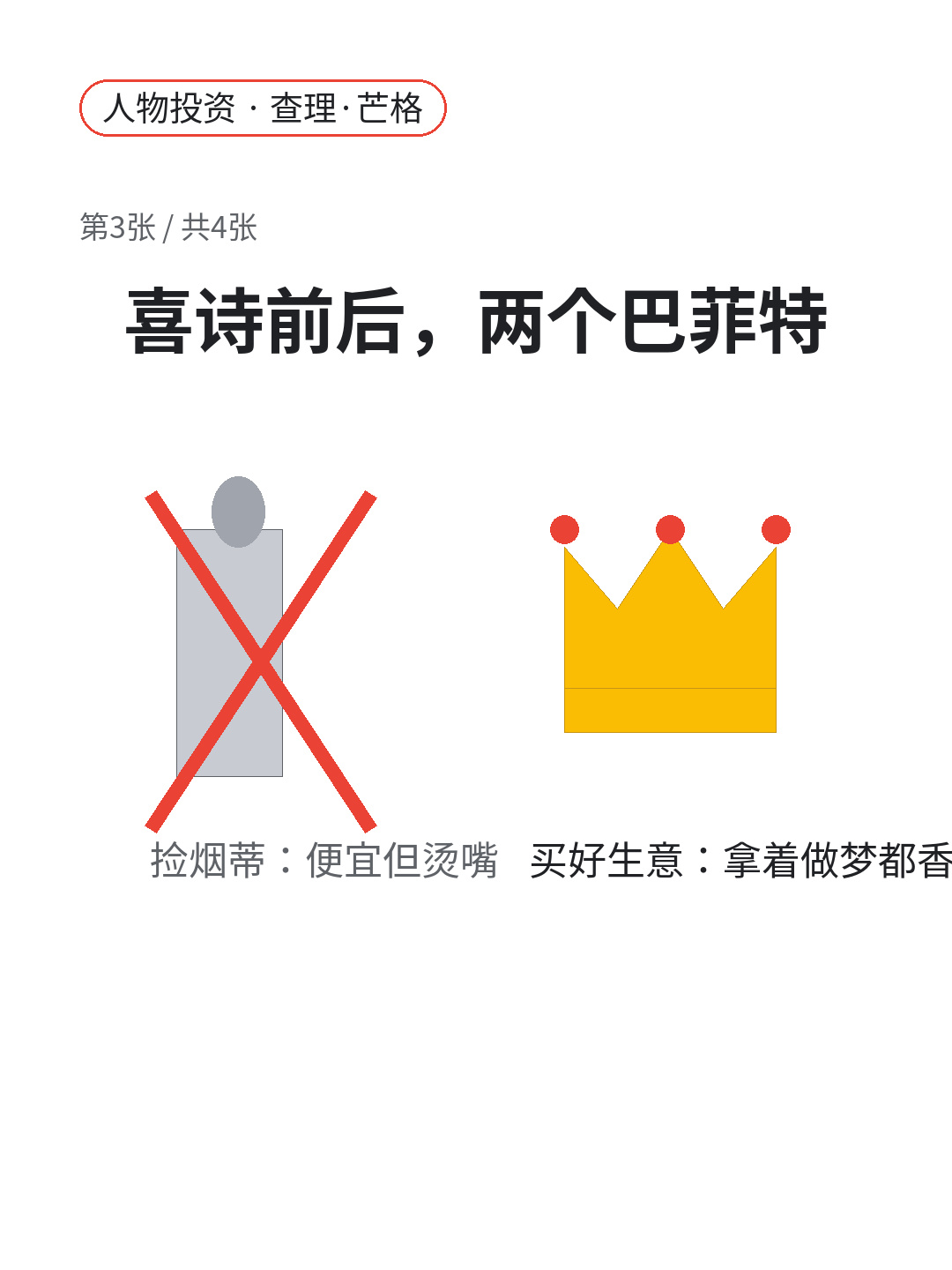
When buying something, look at its quality first, then its price. A stock is a share of a business. If the business is lousy, even a cheap-looking chart is a trap. If the business is good, time can make up for paying a little extra.
Conversely, the most dangerous words are “because it’s cheap.” Cheapness isn’t a reason; it’s an outcome—a good company occasionally beaten down unfairly by the market, that’s what cheap means. When a bad company falls further, it’s just getting “even worse.”
That box of chocolates from 1972 is still paying off today.