
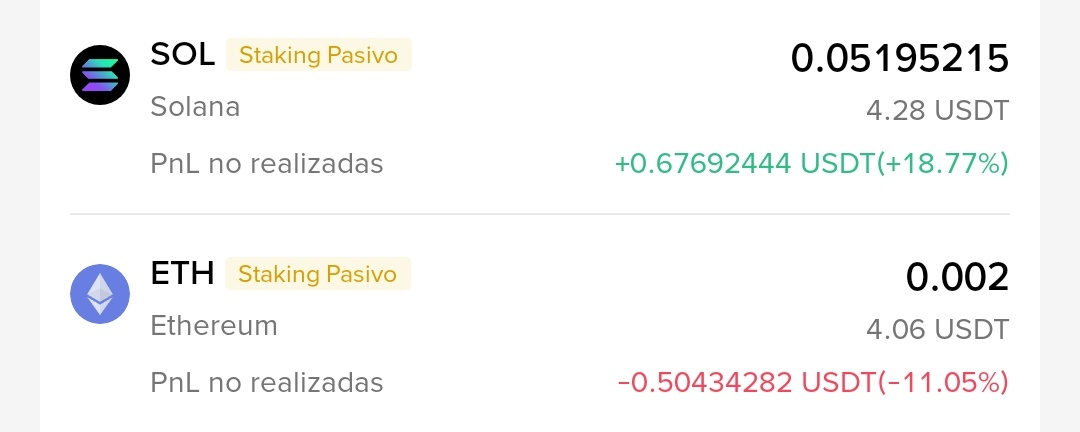


There’s something about the Binance ecosystem that I find particularly interesting and worth sharing.
Many people buy cryptocurrencies, hold them in Spot, and hope they’ll increase in value over time. This strategy is known as holding: acquiring an asset and keeping it while its project develops and its price evolves.
But there’s another possibility that some users may not know about yet: certain assets you hold in Binance Spot can also earn rewards through Passive Staking.
In other words, in addition to being exposed to the possibility that the asset will increase in value, you can receive rewards in that same cryptocurrency if you meet the product requirements.
It’s about more than just buying and holding
Imagine someone buys SOL, BNB, or ETH because they find these projects interesting for their technology, ecosystem, development, and presence in the market.
They decide to keep those assets in their Spot account for a while.
Normally, their results will depend on how cryptocurrency prices move: if prices rise, the value of their investment may increase; if prices fall, it may decrease.
But Binance offers an additional option for certain assets: Passive Staking.
Once the feature is activated and the relevant requirements are met, this product lets you earn staking rewards on selected tokens held in a Spot account.
What is Binance Passive Staking?
Passive Staking lets you receive rewards generated through blockchain participation mechanisms known as Proof of Stake.
One interesting feature is that it doesn’t work like a traditional staking product where assets are locked for a fixed period.
Binance explains that eligible assets can still be used for trading or withdrawn, although they remain subject to the product’s terms and risks.
Rewards are calculated based on the eligible average daily balance and are usually credited in the corresponding cryptocurrency.
Assets listed in Binance’s Passive Staking documentation include:
BNB.
SOL.
ETH.
ADA.
SUI.
TON.
NEAR.
POL.
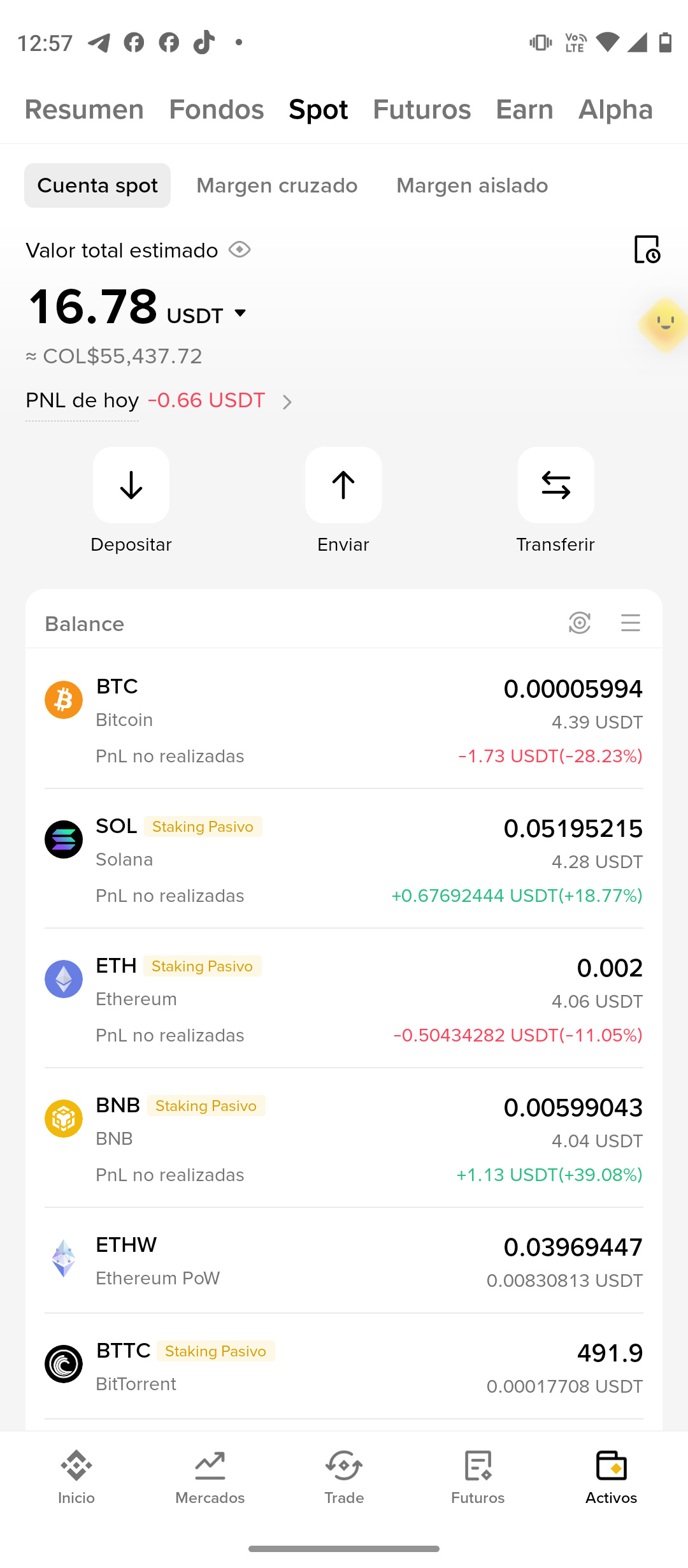
The list may change, and not all assets are necessarily available to all users or in all regions.
Two possible sources of returns
Here’s what I find most interesting about this option.
When someone holds an eligible asset in Spot and participates in Passive Staking, they may have two distinct sources of returns:
1. Price movements: if the asset increases in value, the value of the holdings in a reference currency may also increase. But if the price falls, the loss may exceed the value of the rewards received.
2. Staking rewards: depending on the terms, eligible balance, and current rate, they may receive additional units of the asset for participating in the staking mechanism.
For example, someone holding SOL could receive rewards denominated in SOL. If SOL subsequently increases in price, those additional units could also increase in value.
But it’s important to understand one thing: receiving more units of a cryptocurrency doesn’t necessarily mean making money in dollar terms. Price movements remain decisive.
What should you check before activating it?
It’s not enough to buy just any cryptocurrency and leave it untouched.
Passive Staking has specific conditions:
Only certain assets are eligible.
Each asset may have a minimum balance requirement.
There is a maximum balance limit for earning rewards.
The APR may change and is not guaranteed.
Assets subject to pending Spot orders or that are frozen do not earn rewards.
Availability depends on the product terms and your region.
You should also read about the risks: although you can use your assets flexibly, Binance warns that certain events, such as a large-scale withdrawal of funds or on-chain liquidity constraints, could cause delays.
So before participating, it’s a good idea to review the specific information for each asset and understand how the product works.
Where can you find it on Binance?
You can check this feature in the app:
Open Binance.
Go to Assets.
Open your Spot account.
Check whether any of your eligible assets show the Passive Staking option.
You can also go to Earn and look for Passive Staking.
If you decide to activate it, read the terms and risk warnings first.
Not all users will necessarily have the same options or requirements.
My thoughts as NómadaCripto
I think it’s interesting to discover that the Binance ecosystem offers alternatives that go beyond buying and selling cryptocurrencies.
Many people focus on watching the price of their assets, hoping they’ll increase in value in the future. But it’s also worth learning about the tools available to make use of certain features of the cryptocurrencies we hold.
This isn’t about buying a coin just because it offers rewards, or thinking that staking eliminates the risk of an investment.
It’s about researching projects, understanding their fundamentals, assessing their risks, and learning about the tools available.
Because holding cryptocurrencies and hoping they increase in value is one thing; understanding the additional possibilities some of those assets may offer while we hold them is another.
And that’s exactly one of the things I want to keep sharing through NómadaCripto: discovering, researching, and sharing what’s happening within the Binance ecosystem that many users may be overlooking.
A question for the community:
Did you already know about Binance Passive Staking? Do you hold cryptocurrencies in Spot just waiting for them to increase in value, or do you also use tools that can generate additional rewards?
#staking #stakinpasivo #spot #holding #Nomadacripto


