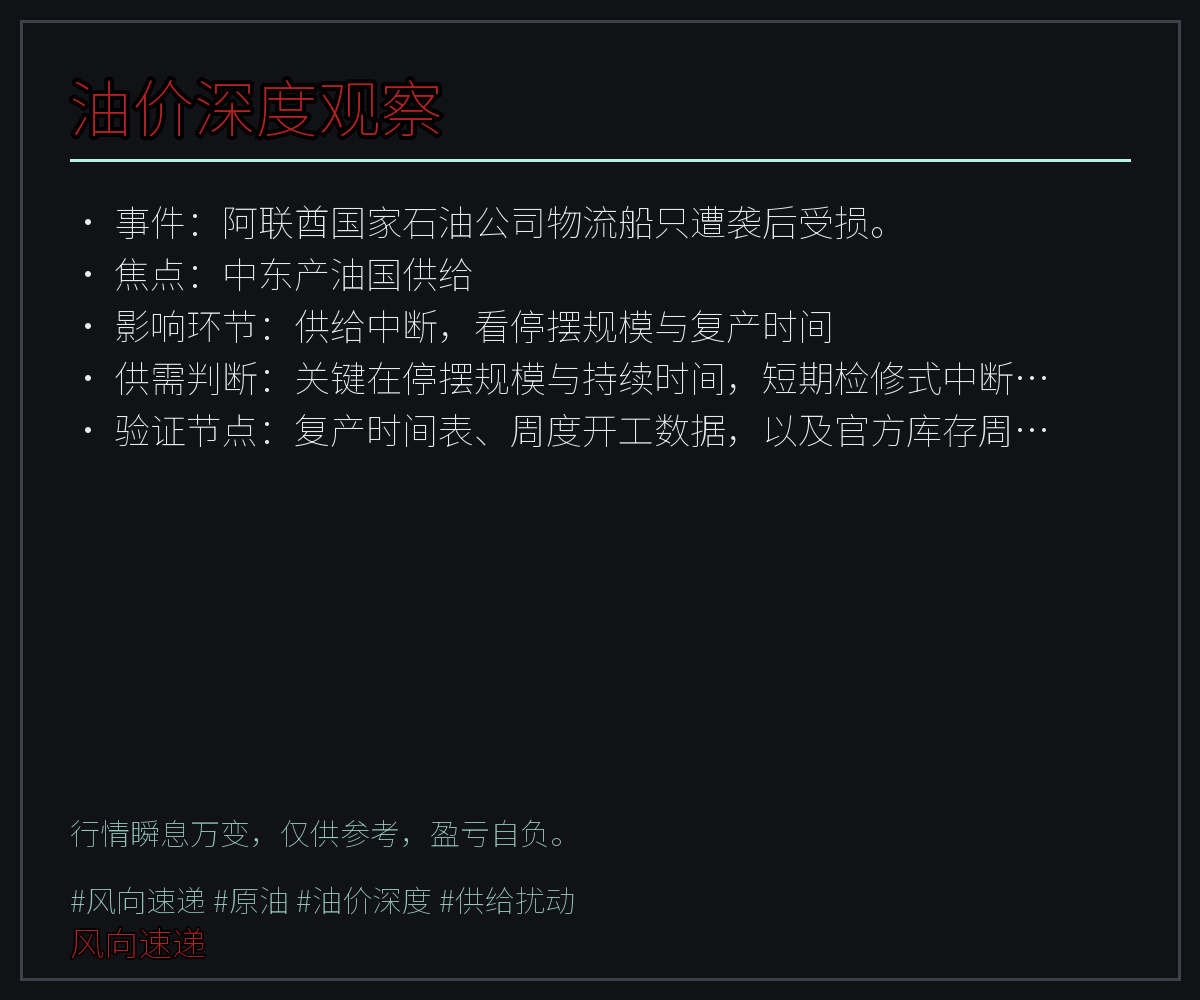
Oil Market Deep Dive
【Key Event】
A logistics vessel belonging to the Abu Dhabi National Oil Company was damaged in an attack. (2 hours ago)
【Who Is Affecting Oil Prices】
The UAE has disrupted supply operations. The focus is on supply from Middle Eastern oil-producing countries. Upstream oil fields, refineries, and export terminals are the three most vulnerable links in the supply chain. A shutdown at any one of them will first affect the pace of loading.
【How the Impact Is Transmitted】
A disruption to supply from Middle Eastern oil-producing countries first affects current production and export volumes loaded onto ships, then shows up in spot premiums and discounts through the rate at which inventories are drawn down.
Lower refinery throughput also reduces refined-product output. Changes in crack spreads often signal a shift earlier than the absolute price of crude oil.
【Supply, Demand, and Pricing】
The key factors are the scale and duration of the disruption. Short-term, maintenance-like interruptions can usually be offset by spare capacity in other producing regions.
WTI is currently trading around $85.69, down 2.93% over 24 hours. Volatility has increased, suggesting this kind of risk is being priced in quickly. Next, it will be important to see whether actual supply and demand data bear this out. Markets often price one-off disruptions as short-lived; persistence is what determines whether the price benchmark shifts higher.
【What to Watch Next】
Watch the restart timeline, weekly operating data, and the size of inventory draws in official weekly inventory reports.
【What Would Invalidate This Thesis】
If production resumes faster than expected, or oil-producing countries release spare capacity to compensate, expectations of a supply shortfall will quickly narrow.
Markets can change in an instant. For reference only; you are responsible for your own gains and losses.
#风向速递 #原油 #油价深度 #SupplyDisruption