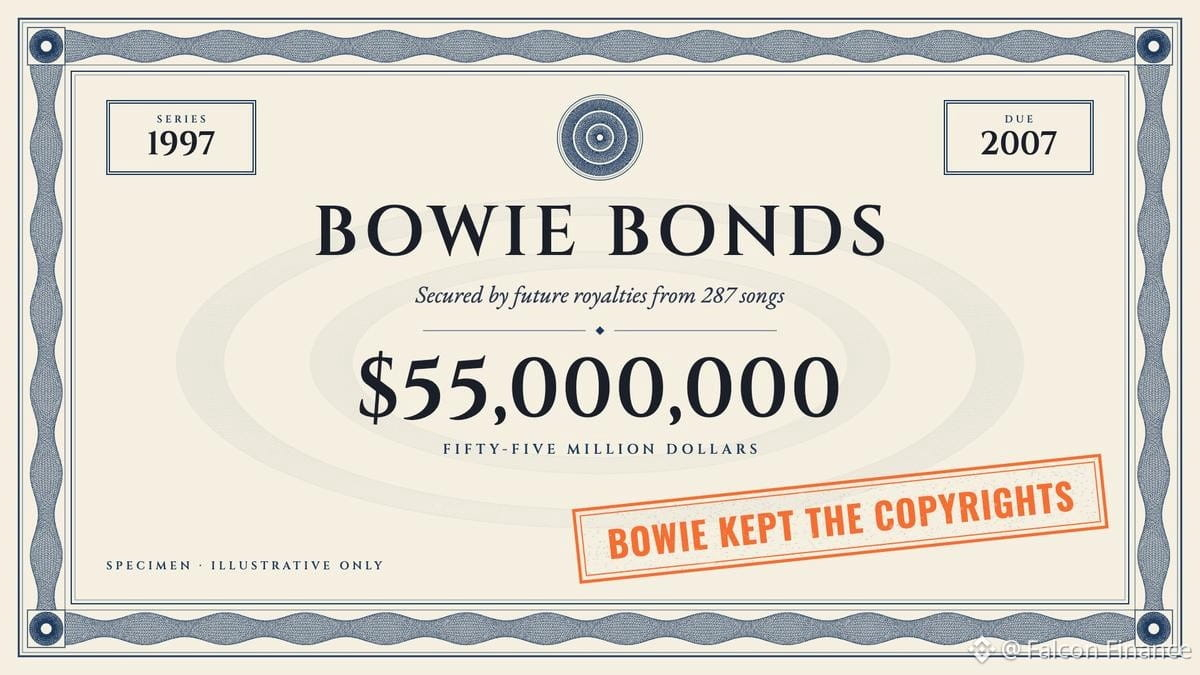

In 1997, David Bowie used his music to buy back more of his music.
He raised $55 million by issuing bonds backed by future royalties from 287 songs, then used part of the money to buy back rights held by his former manager.
Instead of selling his copyrights, Bowie committed 10 years of royalty income to help repay investors.
He had found a way to raise money from assets he already owned, without selling them outright.
Back then, pulling off a deal like that required a custom financial structure, Wall Street bankers, and a major institutional investor.
Today, the same principle is relevant to tokenized assets.
Assets like stocks and Treasuries are being brought onchain. But tokenization is only part of the story. When these assets can also be used as collateral, their owners have another way to access liquidity without selling them.
That's the idea behind Falcon Finance's USDf, which can be minted using eligible assets as collateral.
Different assets, different financial structures, but the same principle: what you own can do more than sit in your portfolio.