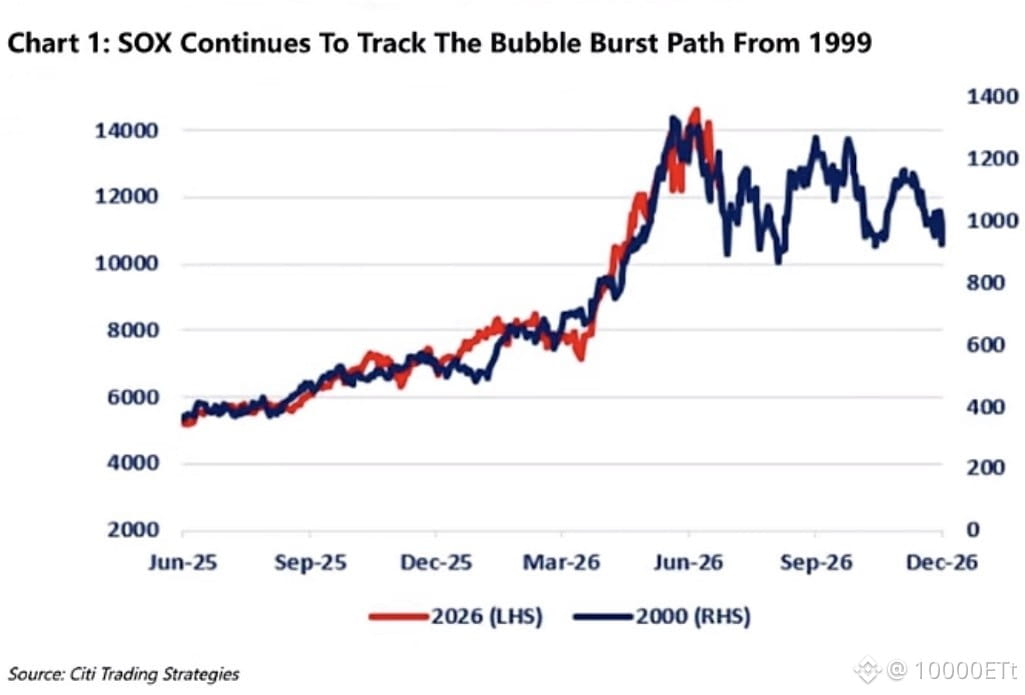
The 97.5% correlation is the most glaring thing—Citi says it almost perfectly matches the period before the 2000 Nasdaq crash!
Even Bridgewater is calling it an AI bubble!! The math checks out 👇👇
The five biggest cloud companies will spend $805 billion on AI in 2026, while application revenue is only tens of billions—a gap of an order of magnitude. That’s a bubble.
But the 2000 crash had an aftermath: the Nasdaq fell 78%, wiping out $5 trillion, and companies collapsed left and right. But telecom companies had raised $1.6 trillion and laid more than 80 million miles of fiber. After the crash, bandwidth prices plunged by over 90%, leaving behind a whole network of cheap infrastructure.
This time, the scale is even bigger! #CPI前瞻,12月利率走向迎关键考验
By 2030, AI infrastructure investment will reach $5.3 trillion, with three-quarters going into physical infrastructure—much like laying fiber back then. The difference is that inference costs are falling faster. DeepSeek charges just $0.87 per million tokens.
There are just three opportunities for ordinary people like us! #黄仁勋因婚外情致歉,英伟达启动独立调查
The application layer, where products can genuinely take on tasks like customer service, reporting, and moderation; the startup window, when cheaper computing means two or three people can do the work of a whole team; and great companies that get unfairly sold off when the bubble deflates and investors care only about profits. Don’t get the order backwards: first wait for the bubble to burst, then wait for valuations to recover, and only then is it time to buy.
The AI bubble will burst, but the industry will remain. The worst that can happen to the giants is a sharp drop in their share prices (like Nvidia’s) and a business restructuring. What should you do when the AI bubble arrives and you have no direction? Come to Mr. Yu’s chatroom 👉 get the entry points 点击获得底部
跟随鱼总聊天室准备上车抄底美股
继续做空AI泡沫!做空让我暴富!
19 hr(s) left