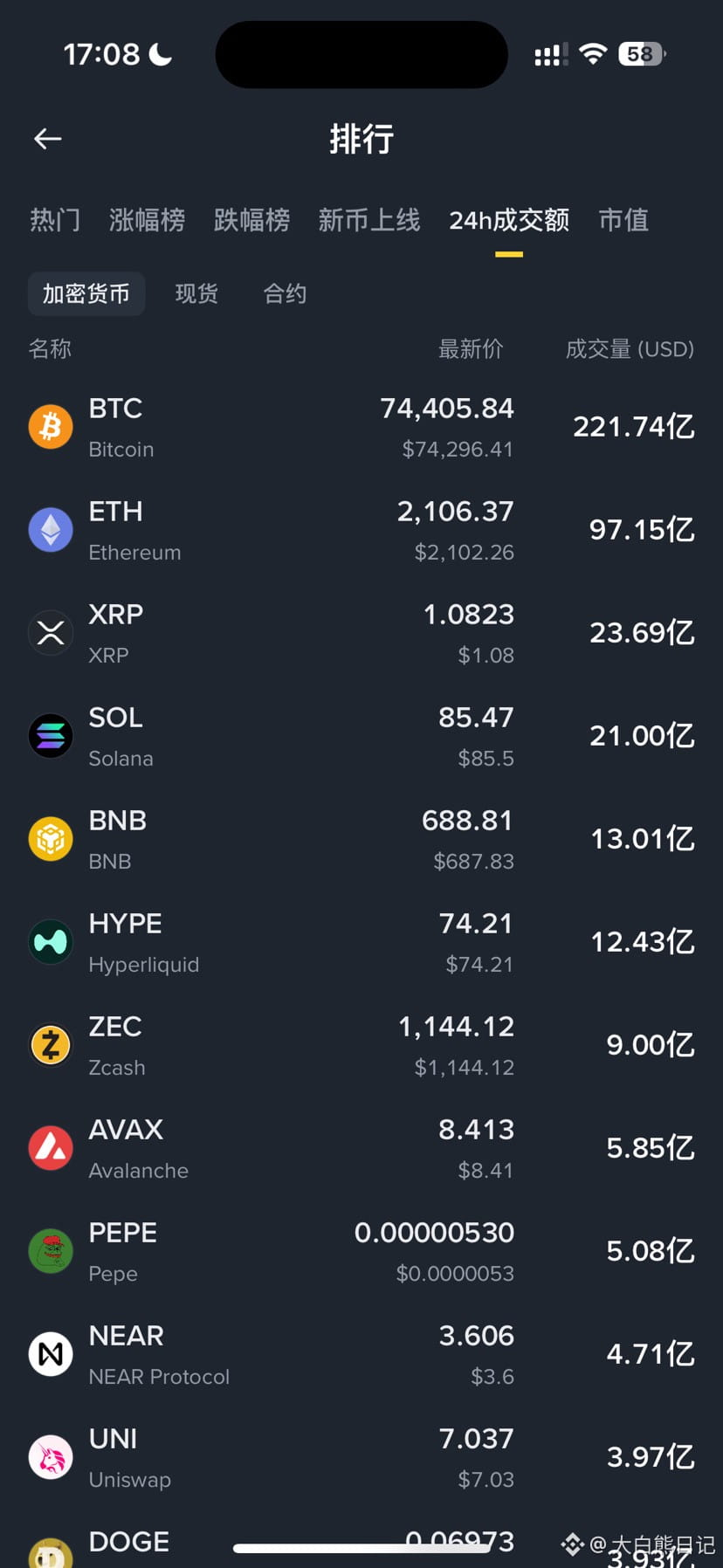
The crypto market is weeding out a batch of projects with no value!
The recent crypto market has certainly left many people disappointed.
BTC and ETH remain under pressure, altcoins are generally weak, and many once-popular projects that the market enthusiastically embraced have started to suffer steep pullbacks. But this may not be a bad thing.
Every bear market is, in effect, a major screening of business models. In the last bull market, the market speculated on far too many things.
Many projects were highly valued during the bull market. But when the tide went out, we discovered that some had no real users, no recurring revenue, and not even a basic business model.
I think the next bull market will be driven by several areas.
First, DeFi projects that can genuinely make money.
DEXs, lending platforms, aggregators, and perpetual futures platforms—all can sustainably generate fee revenue as long as there is genuine demand for trading.
Second, AI computing power and decentralized cloud computing.
AI development requires vast amounts of computing power. Infrastructure projects that can attract customers and generate real revenue are worth watching over the long term.
Third, RWAs and stablecoins.
Bringing traditional financial assets on-chain, along with stablecoin payments and settlement, could become important growth areas for the crypto industry in its next phase.
Fourth, tokens backed by real revenue and buyback-and-burn mechanisms.
This is something I particularly care about. A project making money is one thing; whether its token can capture value from the project's growth is another.
Some projects generate substantial fee revenue every day but have no effective mechanism for capturing value for their tokens.
Others are willing to use protocol revenue to continuously buy back and burn tokens on the market.
In the long run, these two models deserve to be treated differently.
I’m now more inclined to study real revenue, P/S valuations, token unlocks, buybacks and burns, and a project's future growth potential.
Revenue doesn’t guarantee a price increase; buybacks don’t mean the price can’t fall; and a low valuation certainly doesn’t mean it can’t get even cheaper.
At least these metrics can help us determine whether a project has genuine business value.
I’ve always believed that the greatest opportunity in a bear market isn’t finding the token that has fallen the most, but finding high-quality projects whose business models still work yet are being mispriced by market sentiment.
Stay clear-headed when others are euphoric, and look for opportunities when others are fearful.
In the next bull market, I hope to hold not just stories, but businesses that can genuinely make money.