🚨 DUCK, MONKEY, AND ELON MUSK MEMECOINS: THE NEW DISGUISE FOR LAUNDERING BILLIONS STOLEN FROM BINANCE! 🦆🐒💣
Have you ever wondered why thousands of memecoins with visual jokes appear and disappear every day? It’s not always community hype. Often, it’s a luxury disguise for laundering dirty money!
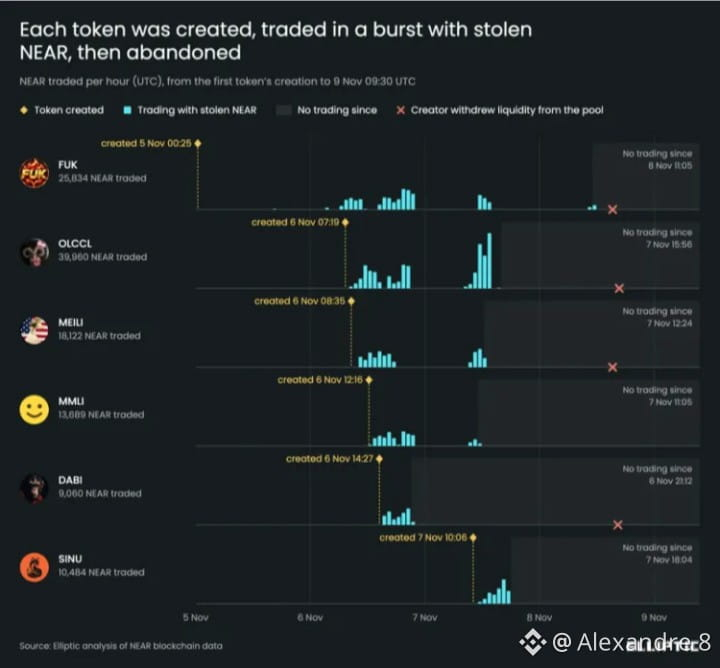
A recent analysis by security firm Elliptic revealed the heavy-duty tactic used by hackers linked to North Korea to try to launder part of a billion-dollar heist worth US$ 6,3 billion:
1️⃣ The Bait’s Outfit (The Memes): The intruders created at least 6 disposable memecoins on the NEAR network, spending only around US$ 90 on each one. To look like amateur speculators, they used illustrations of a duck in front of the US flag, a monkey with a pink bow tie, satires of “Elon 2028 for president,” and pun-based names like FUK and SINU. 🎭💸 2️⃣ The DEX Scheme: They set up liquidity pools on decentralized exchanges, mixing these fake front tokens with real cryptocurrencies. 💧🔄 3️⃣ The Quick Swap: Wallets holding stolen funds bought the memecoin; minutes later, other wallets sold everything back into the pool and cashed out in stablecoins (US$ 430 thousand laundered in this move alone).
🛡️ Why does this matter to you, trader?
Many people think the trail disappears on the blockchain, but the truth is that everything is public and traceable. This memecoin “disguise” serves only to create extra layers and delay investigators before the funds are frozen.
For retail traders, there are two golden lessons:
Beware of newly launched tokens: That chart suddenly climbing for some funny, unknown coin may be nothing more than artificial laundering volume or a rug-pull liquidity trap. Compliance is serious business: Major exchanges monitor these addresses in real time. If you interact with suspicious wallets or accept cheap crypto from third parties outside the platforms, you run a real risk of having your funds frozen.
In the crypto market, anyone who doesn’t understand the behind-the-scenes mechanics becomes liquidity or a statistic.