$ZIL: When a Rally Feels Like Dry Leaves, Look for the Hidden Logs
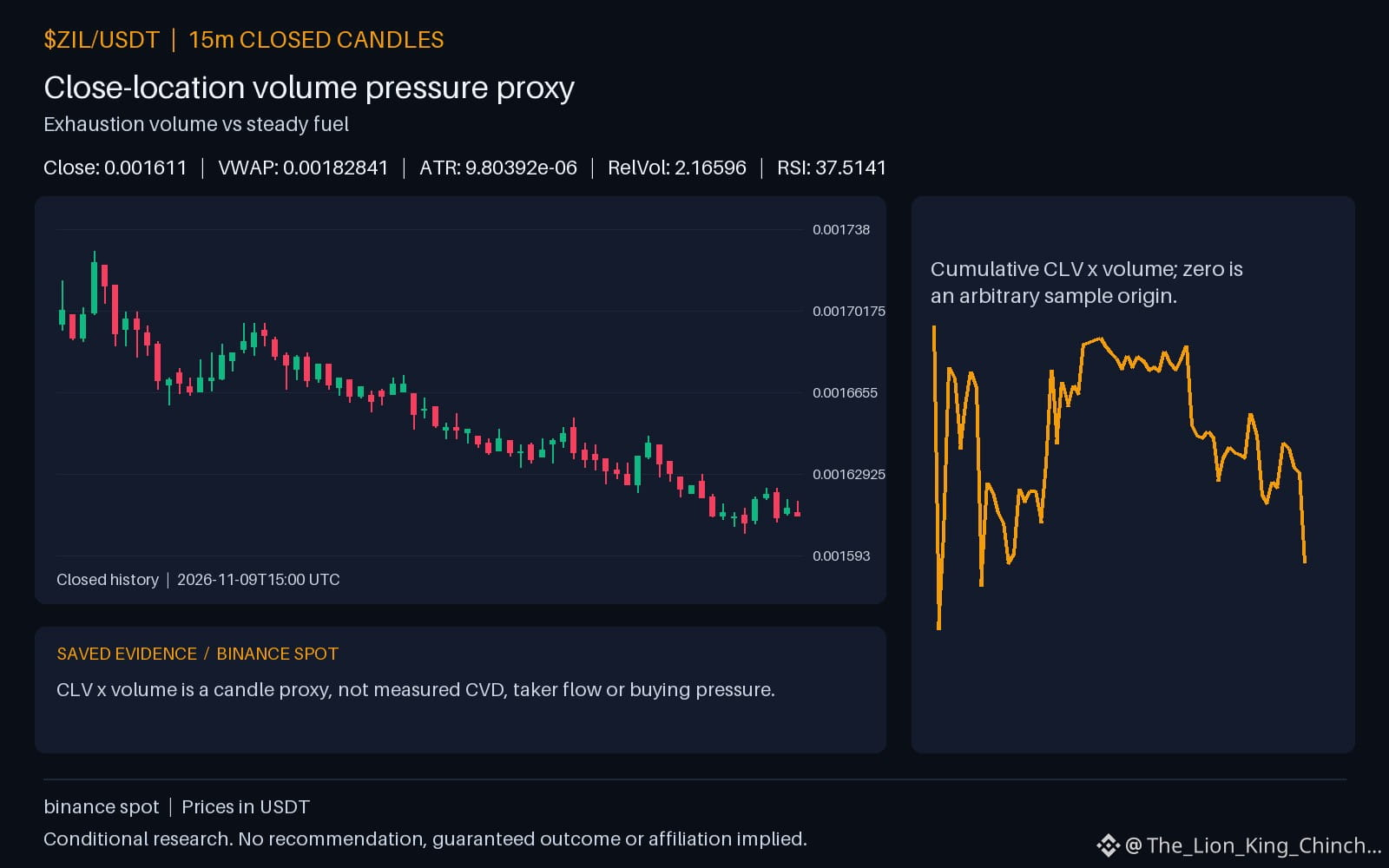
The question explores whether a price surge powered by a sudden spike in volume is merely a puff of dry leaves or a fire fed by solid logs. The observation shows $ZIL trading hourly direction down while volume sits above baseline, which can feel like a clear signal.
Imagine a campfire where gusts of wind toss light leaves upward; the flames dance brightly but the heat remains low. In a crypto market, a burst of 2.16596 may act like those leaves. visible, noisy, and short‑lived. By contrast, a steady flow of trades, reflected in a consistent 5.67743e+06 and a modest 0.00182841 that tracks the price, resembles logs that keep the fire warm over time.
A practical self‑check asks: does the price move ahead of the average price (VWAP) or lag behind it? If the price consistently stays above VWAP while volume remains elevated, the logs may be present, suggesting genuine buying pressure. If the price spikes above VWAP only briefly and then retreats, the movement likely stems from a temporary burst of speculative buying.
A counterexample would be a token that repeatedly jumps above VWAP on low volume, only to fall back when the wind dies. The mechanism does not prove intent; it simply highlights the difference between fleeting spikes and sustained turnover.
Readers should monitor the relationship between price, VWAP, and volume over several hours to reassess whether the rally is fueled by steady fuel or just dry leaves.
Probabilistic market research, not a recommendation or guaranteed return.
When a rally looks like dry leaves thrown on a campfire, what clue tells you whether real logs are underneath it?
#ZIL