

Over the past week, the digital asset industry faced one of its most complex security incidents to date.
Although the attack, which caused approximately US$6.3 billion in losses, was unprecedented in scale, the response to the incident also demonstrated the progress, resilience, and coordination of the industry’s defense systems.
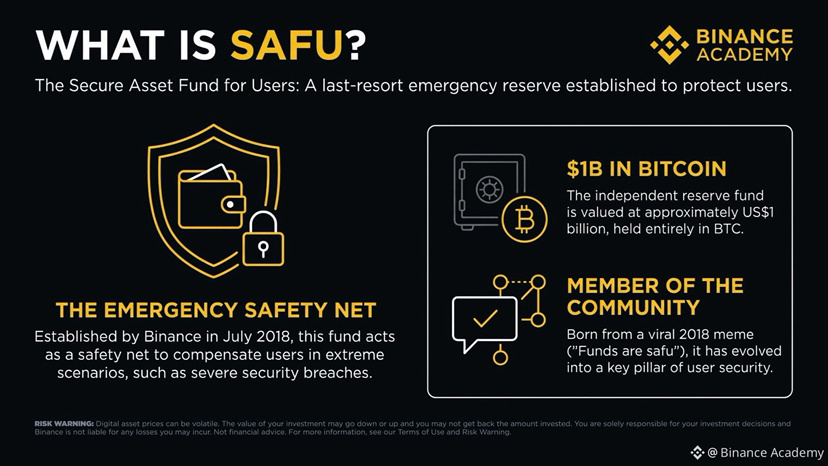
🛡️ 1. User Protection
Binance used its Corporate Treasury and the SAFU (Secure Asset Fund for Users) to cover the financial losses.
After using SAFU’s emergency reserves, Binance committed additional corporate funds to cover the remaining losses, amounting to several billion dollars. Binance stated that retail users would not bear these losses.
🛡️ 2. Industry Coordination
The emergency response highlighted the importance of collaboration among organizations.
Through rapid coordination with stablecoin issuers and relevant blockchain stakeholders, more than $2.8 billion in affected assets was frozen and recovered, helping mitigate the impact of the incident.
🛡️ 3. The Evolution of Security
This incident highlighted new attack methods, such as:
🔸 Advanced social engineering, or deception to gain access to systems
🔸 Misuse of Ethereum’s EIP-7702 authorization mechanism
To address these threats, the industry is accelerating the development of:
✅ AI to detect unusual behavior
✅ Stronger device controls
✅ Safer permission-revocation processes using Multi-Party Computation (MPC) technology
💛 Security improves when everyone learns from incidents together.
As malicious actors develop increasingly sophisticated attack methods, the infrastructure protecting digital assets must continue to evolve as well.
⚠️ Note: This information is for educational purposes only. No system can guarantee 100% security. Users should protect their accounts and always verify information through official channels.
#Binance #Web3Security #SAFU🙏 #BlockchainSecurity