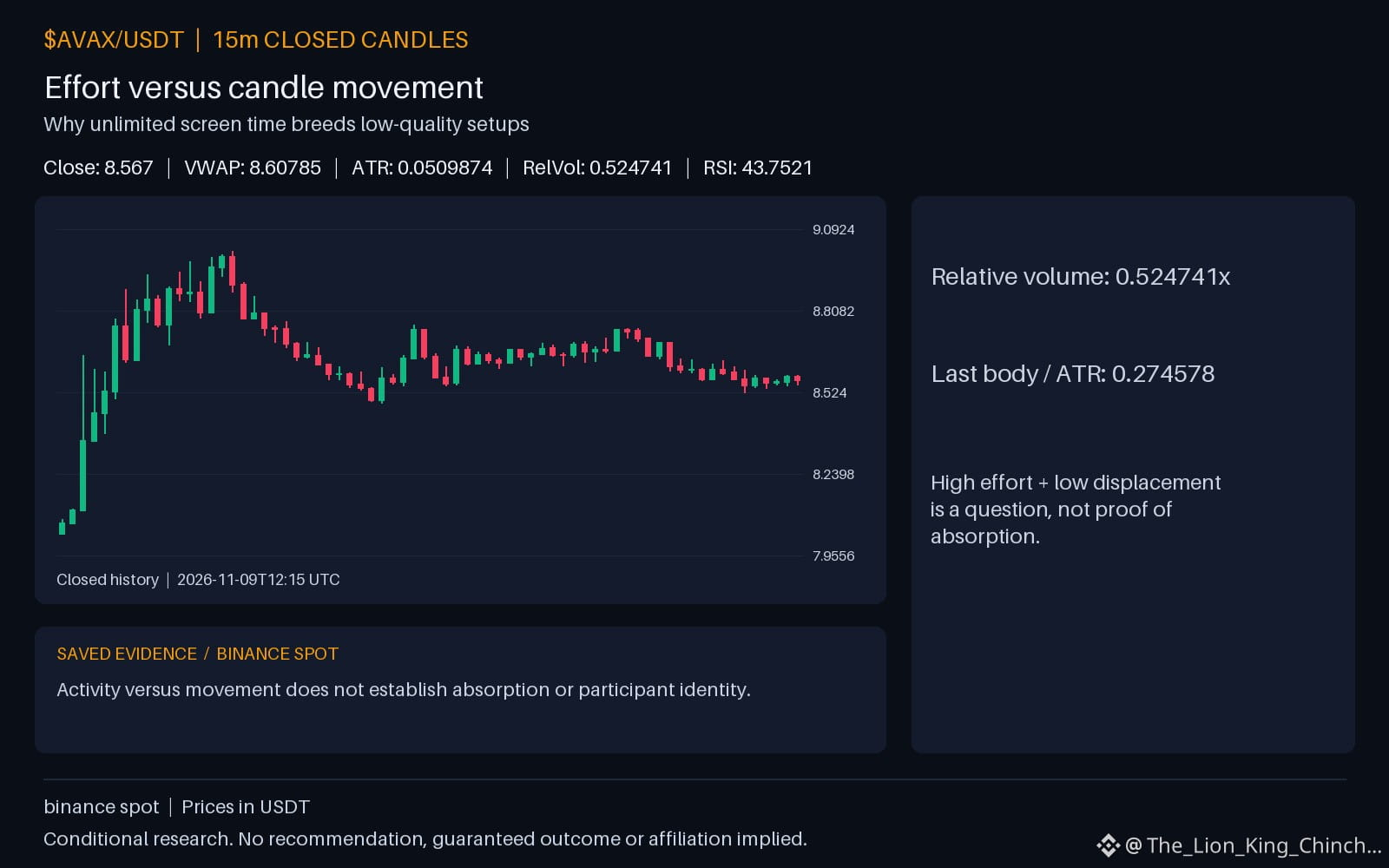
$AVAX: Screen Time and Setup Quality
The question asks whether longer screen exposure improves trading results or simply creates more low‑quality setups. The observation for $AVAX shows an hourly direction down while volume does not sit above baseline. This pattern can trigger the attention bias: the more screens we watch, the more likely we notice every small move and feel compelled to act, even when the signal is weak.
One possible reaction is to enter a trade based on the down direction because the chart is constantly in view, anchoring the trader to the most recent price action. Another trader might step back, recognize the lack of volume confirmation, and wait for a clearer signal. Both behaviours illustrate how unlimited screen time can inflate perceived opportunities.
A practical self‑check: before opening a position, ask yourself if you would still consider the trade after stepping away for a short break. If the answer changes, the setup may have been driven by attention overload rather than solid analysis.
A counterexample helps clarify the idea. Imagine a market where a trader limits screen time to a few focused windows per day. That trader may miss some moves but often avoids chasing marginal setups, preserving capital for higher‑probability entries.
In summary, unlimited screen time can lower setup quality by feeding attention bias. Use the break‑test self‑check to reassess each potential trade and guard against impulsive entries.
Probabilistic market research, not a recommendation or guaranteed return.
Does spending more hours staring at the screen improve your results, or does it just lead to taking lower-quality setups?
#AVAX #TradingPsychology #CryptoLearning