Yesterday at noon, I asked whether $6.3 billion had been recovered or whether the money was just being washed cleaner and cleaner. Elliptic’s report on Monday gave the answer: the methods are getting more and more creative. North Korean hackers are now laundering money with their own meme coins.
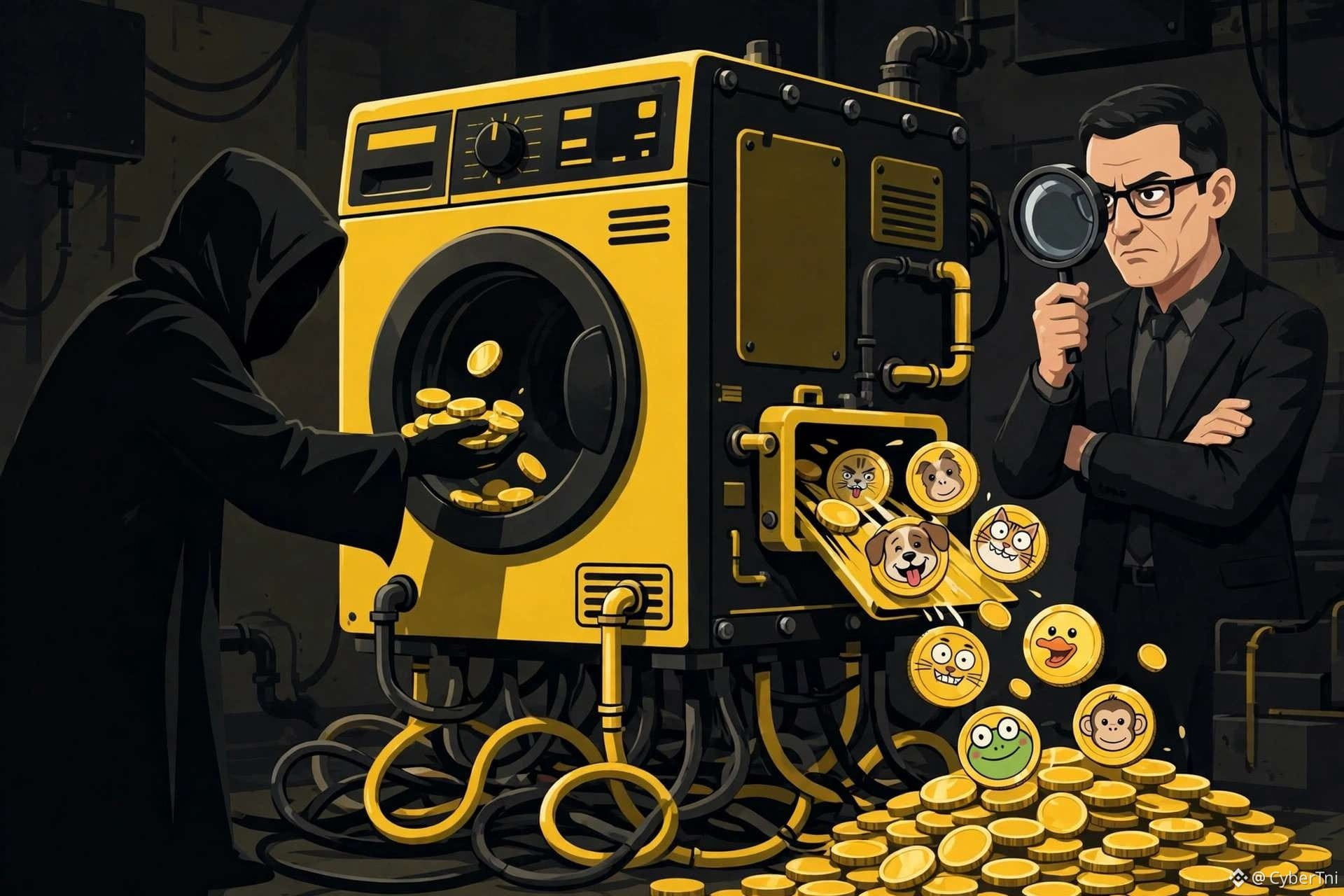
Here’s how it works, in four simple steps: create a meme coin nobody wants, pair it with $NEAR in a liquidity pool, use one set of wallets to buy the coin with stolen NEAR, then use another set of wallets to sell it back for NEAR. Just like that, stolen funds become trading profits. Over three days, from November 5 to 7, they launched six of these disposable tokens on the NEAR blockchain. Each cost only about $90 to create. They moved 117,000 NEAR—around $430,000—through the scheme, while purchases by outsiders accounted for less than 1% of the trading volume of even one of the coins. After November 8, all six coins went dormant.
First, three numbers to keep in mind: $430,000 is just a drop in the bucket; most of the stolen funds haven’t been touched. 11.8 million stolen NEAR, worth around $43.7 million, are still sitting untouched. Next, Elliptic estimates that around 3,000 $BTC , worth roughly $225 million, have already been converted from stolen funds. And this isn’t a new trick: when $1.4 billion was stolen from Bybit last February, the same group laundered $24 million using junk tokens on Tron.
$NEAR is currently around $3.63, down about 32% over the past 30 days. For holders, the real risk isn’t the $430,000—it’s when those 11.8 million tokens will move, and where they’ll go. $BTC is still hovering around $75,000 ahead of tonight’s 21:30 CPI release. The Fear & Greed Index is at 28, and no one in the market dares to make the first move.
Just my personal opinion, not financial advice.
#CPITestsDecemberRateOutlook #BTC #CryptoNews
Those 11.8 million NEAR that haven’t moved—do you think they’ll be frozen first, or dumped on the market first? Pick a side in the comments.