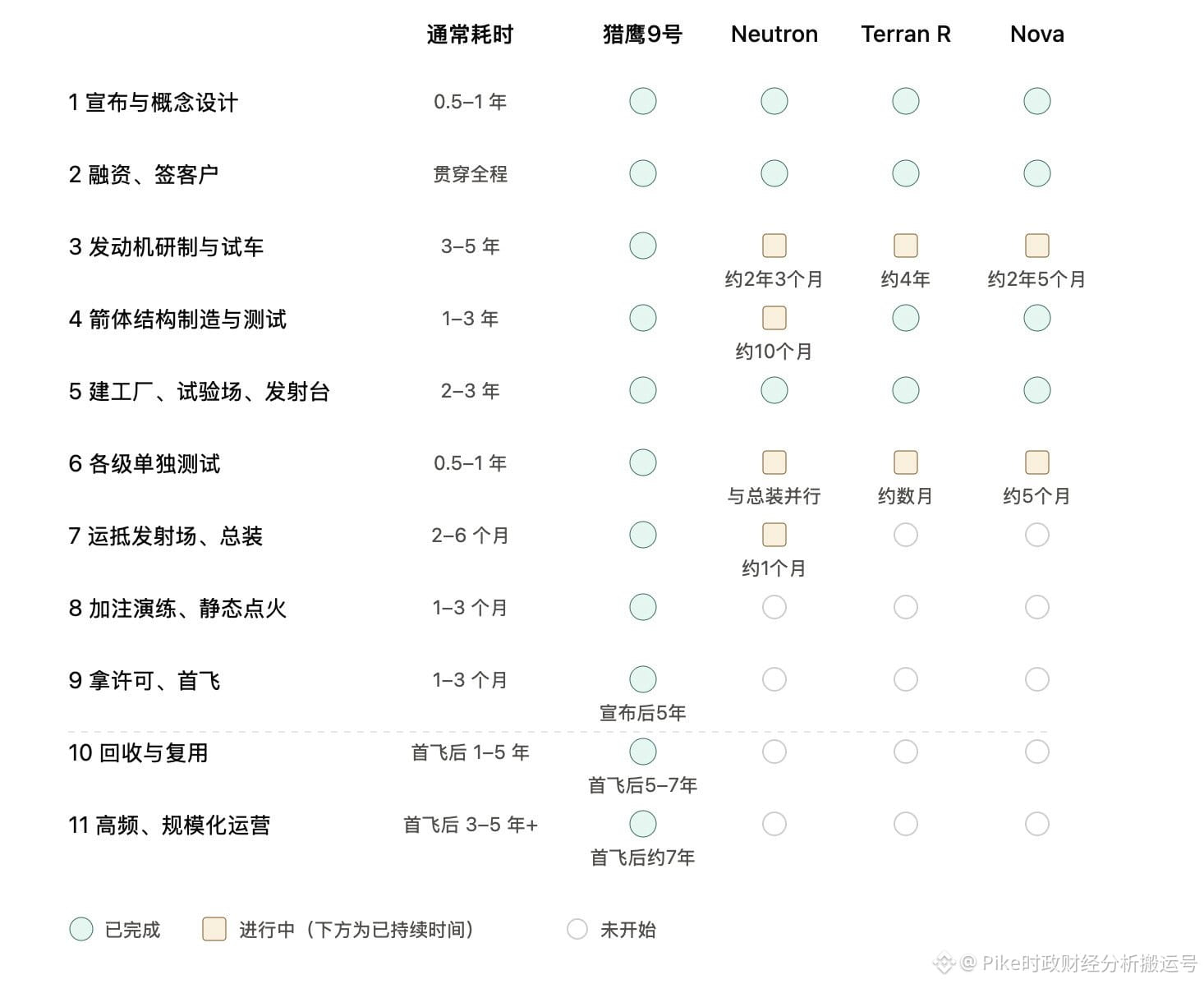
We can take a multidimensional look at the launch and development progress of RKLB’s Neutron rocket.
In terms of competition with comparable products, Neutron has both strengths and weaknesses. Compared with Terran R and Nova, Neutron is the only one of the three competing models to have entered the final assembly and testing phase at the launch site. Its second stage and thrust module have both been delivered to the site, putting it ahead in overall progress. However, development of its rocket structure is still relatively behind. Looking at SpaceX’s development path, it took Falcon 9 five years from its formal announcement to its first test flight, while Neutron is expected to take about 6.5 years—a development timeline in the middle of the industry range. However, once Neutron completes its maiden flight, it is expected to move toward achieving booster recovery faster than Falcon did at the time.
The most critical bottleneck in the current development process remains the first-stage carbon-fiber tank. Looking back at developments so far this year, the company reported a tank rupture in January, then detected a void in the dome in October, pushing the maiden flight back to 2027. To assess when Neutron might actually take to the skies, the tank test results in the first quarter will be a decisive indicator. My current estimate is that its maiden flight will likely take place around the fourth quarter.
In terms of the secondary market and valuation, the stock had previously pulled back below the $50 mark, making it particularly attractive from an investment perspective. Looking back at my own investing, I had already added to my RKLB position in several purchases in the $45–$47 price range.