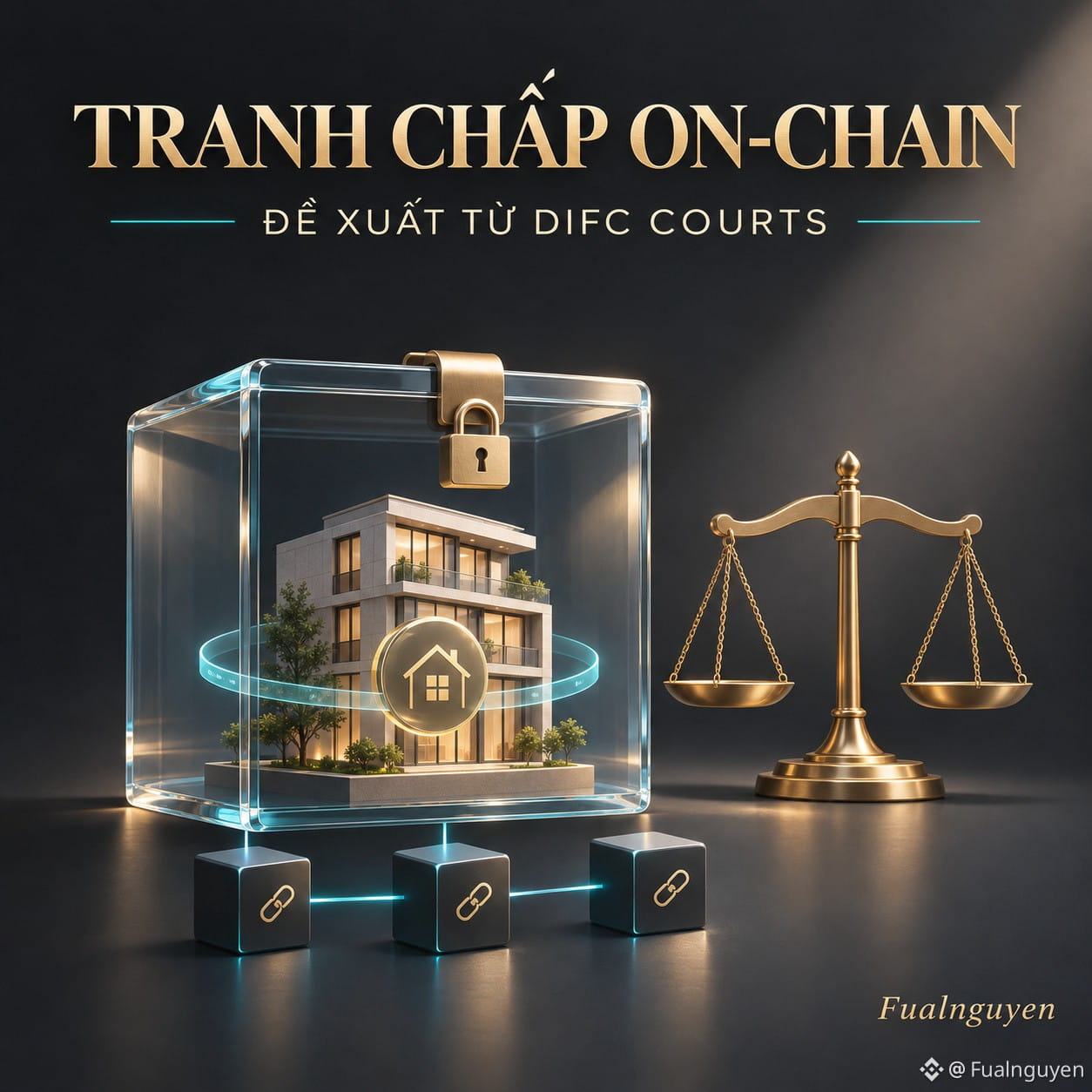
Tokenized assets: if there’s a dispute, who has the authority to freeze them?
On November 9, 2026, the DIFC Courts in Dubai published a white paper proposing a mechanism called a Dispute Resolution Oracle (DRO). The idea is for parties to voluntarily choose in advance a court or competent authority to resolve disputes, then design an application that can enforce its decisions on the blockchain.
For example, two parties buy and sell a tokenized asset and hold the funds in an escrow contract integrated with a DRO. If a dispute arises, the mechanism can temporarily freeze the relevant portion of the assets under predetermined conditions. The selected authority reviews off-chain evidence. The DRO then converts the verified decision into an instruction for the contract to execute. DIFC’s reference model requires multiple court officers to approve the instruction using their individual signing keys.
What I’d be watching is who has the authority to freeze assets, how long they can be frozen, and how affected parties can request a review. For tokenized real estate, I’d also want to see how the rights attached to the token are recorded in off-chain legal records.
This is a proposal. DIFC’s roadmap begins with dialogue and controlled trials before any real assets are handled.
If you were using a tokenized asset platform, which terms would you want to review before transferring funds into escrow?
Source — DIFC Courts white paper and press release dated November 9, 2026.
$BTC $ETH $BNB