


On Sunday evening, November 8, Bitcoin plunged from $75,690 to $73,477 in 15 minutes, hitting its lowest level since August, before rebounding to the $74,500–$75,000 range. Ethereum fell below $2,100. Two headlines triggered the sell-off: Jensen Huang admitted to an extramarital affair with a former executive at Singapore data center company Megaspeed, which U.S. intelligence agencies suspect of helping Chinese clients obtain restricted AI chips; Nvidia’s board has launched an independent investigation. Rubio also publicly said that U.S.-Iran nuclear talks had “effectively broken down.”
Neither headline alone would have been enough to cause such a severe reaction; the timing was what made the difference. Weekend trading accounts for just 16% of Bitcoin’s weekly volume, while Ethereum’s Sunday trading volume was down 76% from Saturday. With traditional markets closed, crypto— the only risk asset trading 24/7—had to absorb the selling pressure on its own. It was much like the “weekend wick” during the Binance hack in late October: weekends are increasingly becoming the first release valve for global risk events. Nvidia shares were down 6%–7% at one point in premarket trading, wiping out about $270 billion in market value. U.S. spot Bitcoin ETFs saw net outflows of $1.28 billion last week, their biggest weekly outflow since late June.
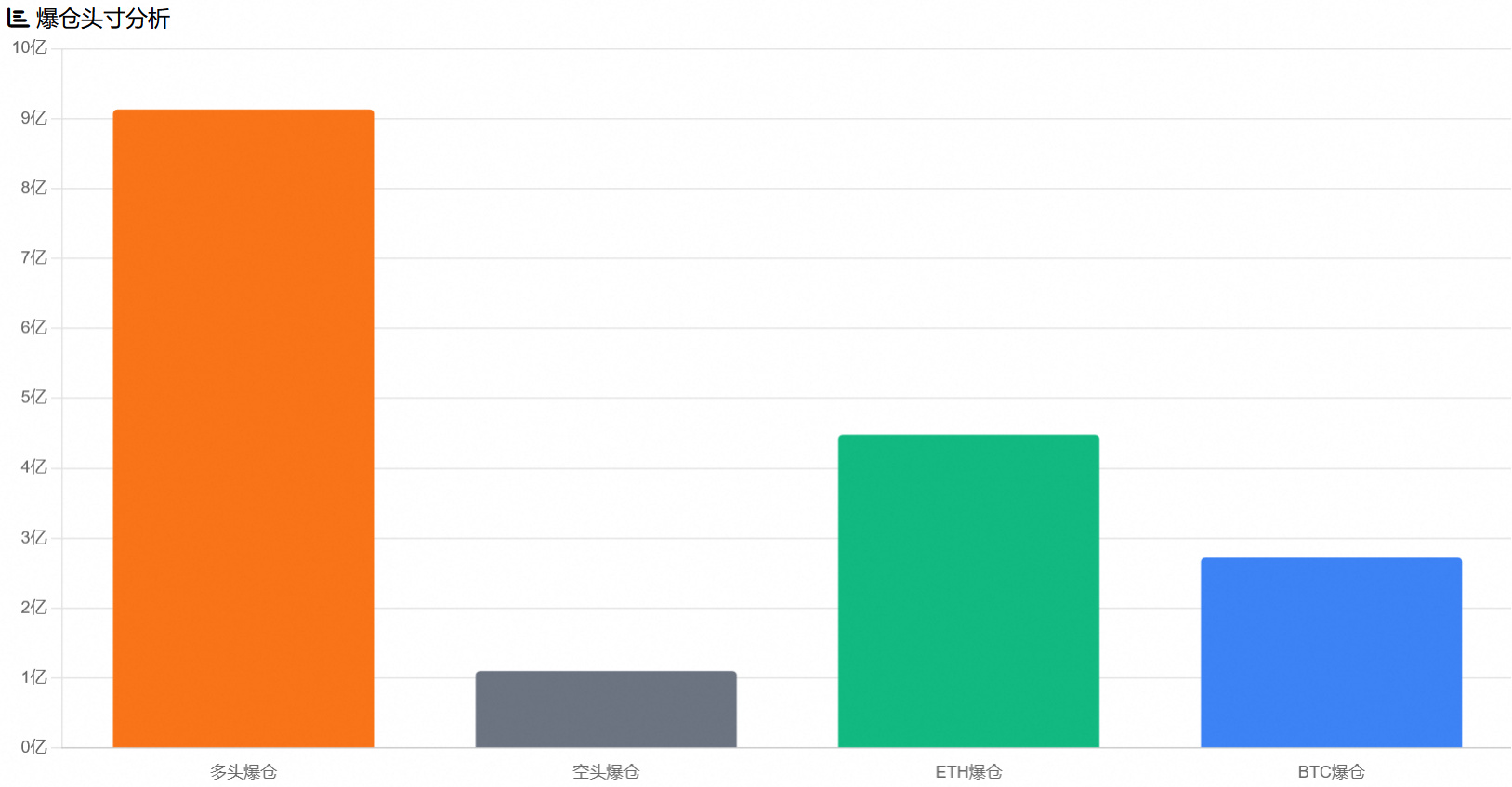
Leverage is the second driving force. Over $1 billion was liquidated within 24 hours, including $913 million in long positions, affecting 210,000 traders. ETH liquidations reached $448 million, exceeding BTC's $272 million. The largest single liquidation was a $48 million ETH position; one trader lost $44.78 million on a 56,667 ETH long position. The “buy the dip—add leverage—get liquidated” cycle is repeated with precision during every rebound: a few weeks ago, the drop from $81,000 to $75,000 had already flushed out one round of leveraged positions. After rebounding above $75,000, leverage quickly piled up again.
Sentiment remains fearful: the Fear & Greed Index is 29; Polymarket puts the probability of a drop to 72,500 this month at 67.5%, and the probability of a drop to 70,000 at 46.5%. The key is whether the 200-day moving average around 73,150 and the 50-week moving average around 75,500 hold—this will determine whether this is a short-term pullback or a trend reversal.#黄仁勋因婚外情致歉,英伟达启动独立调查 #比特币连续五周下跌 $NVDAB $BTC
