
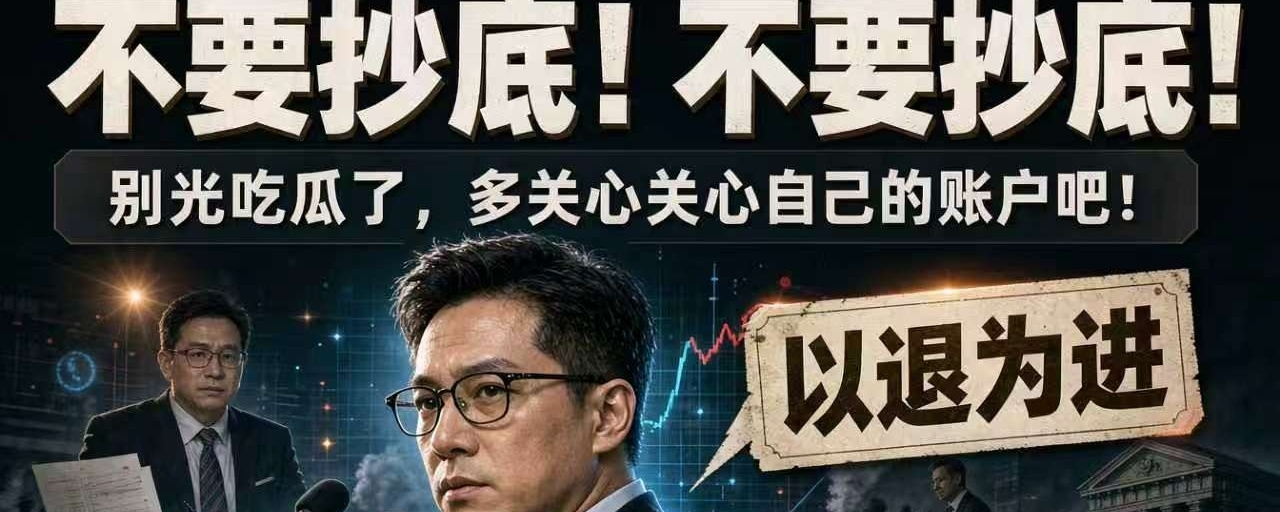


Don’t buy the dip! Don’t buy the dip! Stop just watching the drama and pay more attention to your own account!
Based on past experience, Lao Huang’s situation won’t simply be over with one apology!
This kind of political vendetta won’t end after just one round.
Instead, it will drag on for a long time, gradually rippling through the capital markets and hitting everyone holding a position.
A dirty trick from the U.S. legal system: accusing the woman of being a “foreign security spy and an unregistered foreign agent.”
These are serious federal felonies, punishable by up to life in prison. The company could also face hefty fines or even be forcibly broken up.
What about an extramarital affair? It’s just a personal moral failing—not even a criminal offense.
On one side: life imprisonment and the breakup of the company. On the other: damage to one’s reputation.
By admitting to an affair, Jensen Huang is essentially keeping the whole matter firmly within the bounds of a “private conduct issue.”
By admitting to this minor wrongdoing, he trades reputational damage for his own safety and protection from the company being politically targeted.
Retreating in order to advance.
So why is Huang the target? Three reasons!
He is the soul of Nvidia, and Nvidia holds the key to global AI computing power, with an almost absolute monopoly on market share.
Taking him down is tantamount to taking aim at the global AI industry’s pricing benchmark.
He is of Chinese descent.
Amid the current U.S.-China tech rivalry, “a Chinese-American leading a core technology company” is itself a political soft spot. It’s all too easy to whip up public opinion and bury a business issue under the banner of national security.
And compared with someone like Musk, whose private life is already too messy to touch, Jensen Huang—whose private life appears spotless—is more likely to become a media sensation.
Even good people should have a gun pointed at them.
Third: political alignment.
Jensen Huang was previously very close to the Republicans and Trump, and was a major beneficiary of the previous administration’s tech policies.
Now the Democrats are in power, and they’re going after tech giants tied to the Republicans. Musk’s private life hasn’t proved an effective target, so Huang is the perfect opening.
Of course, it’s not as if Huang is completely in the clear.
As soon as next January, he may have to appear before Congress for a hearing.
From here on, Huang will inevitably have to keep returning to Congress to face questioning, going through the process again and again.
Look up the historical data: whenever a tech giant’s CEO is summoned to a congressional hearing, the company’s stock falls an average of 4% to 8% in the week before and after the hearing.
The clearest example was in 2023: TikTok CEO Shou Zi Chew faced five hours of questioning, and that same day, China internet ETFs plunged more than 5%, putting the entire industry chain under pressure.
This back-and-forth political scrutiny will keep creating uncertainty for the stock price, and that uncertainty is highly likely to push it down.
The hearing is just the beginning. Next comes pressure to hold the CEO accountable and remove him.
Some people say Nvidia was built by Jensen Huang, and since he’s the founder, there’s no way he could be replaced.
That’s naive. In the U.S., once someone is branded a “national security risk,” nothing is impossible.
CFIUS and the Justice Department can both put direct pressure on the board to replace the management team. Being the founder won’t save you.
And from a political perspective, the demand makes perfect sense.
Keeping Huang on while he continues funding the Republicans’ 2028 election campaign—isn’t that helping the enemy?
The problem is, if Nvidia gets a new leader, the company’s entire sense of certainty will collapse.
It’s not that a different person couldn’t run the company. It’s that Nvidia would inevitably get dragged into the mire of office politics, and its valuation would certainly take a hit.
And this isn’t about the stock falling a few percentage points. It’s about the entire valuation framework being rebuilt.
The final piece is the ripple effect across the global semiconductor supply chain.
Nvidia is the undisputed leader in global AI computing power. Any move in its stock sends shockwaves through the entire U.S. semiconductor market, China’s A-share computing-power sector, and the global chip supply chain.
Previously, Nvidia’s quarterly results came in below expectations, and the stock fell more than 9% in a single day!
That’s what happened just because its results missed expectations.
What would happen if Nvidia were brought down next?
So don’t try to buy the dip!