A single permit, and $3.2 trillion evaporates overnight? Seriously?
Over in Texas, Abbott ordered a review in August of all data centers waiting to connect to the grid, then went ahead and suspended all related permits in September. At the time, everyone thought they’d get the green light once the review was over.
Then the midterms changed everything: Democrat Inohosa became governor, the lieutenant governor’s office went blue too, and Goodwin took over, with the state Senate in his hands. Both had the exact same message: no new data centers. Inohosa put it bluntly: until the state legislature gives communities protections, approvals will remain frozen.
Wells Fargo’s Revich nailed it: this suspension has shifted from “waiting on a review” to “waiting on legislation.” Reviews have deadlines; legislation doesn’t.
The numbers make it clear why the selloff hit so hard. Texas accounts for 27% of all planned data center capacity in the U.S. Wells Fargo estimates that every 10% reduction in Texas capacity would cut U.S. AI capital spending by 1.6%; if half the projects fall through, U.S. capex would drop by 8% outright.
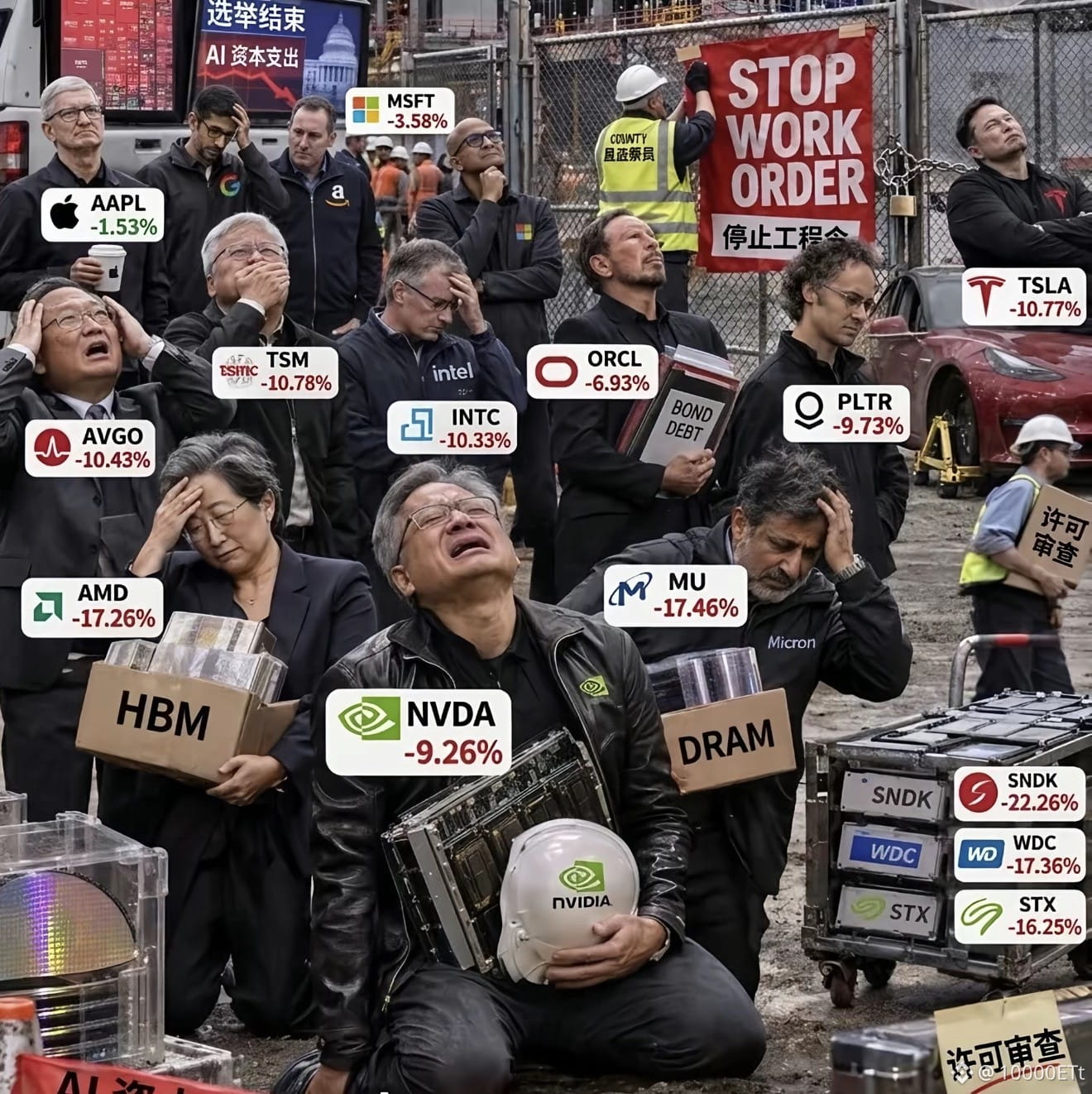
So this selloff isn’t about earnings—it’s about expectations. The Nasdaq 100 fell 6.36%, its worst day since March 2020, wiping out $3.2 trillion in market value. The Philadelphia Semiconductor Index dropped more than 10%; SanDisk fell 22%, Micron, AMD, and Western Digital dropped 17%, and Nvidia fell 9%.
It’s not hard to see why memory stocks were hit the hardest. Data centers use a lot of HBM and DRAM. Build one fewer facility, and you lose orders for tens of thousands of memory chips. Memory is a second-order derivative in this chain: it has the most upside when things rise, and the same goes in reverse. After more than a year of gains, investors had a lot of profits to lock in, so the slightest hint of trouble sent them running.
There was another headwind, too. On November 6, nonfarm payrolls came in at 165,000, versus expectations of just 65,000. Traders immediately ramped up their bets on a December rate hike. AI stocks were already expensive, and as soon as rates turned higher, valuations took the hit first.
But one thing needs to be clear: the orders haven’t been canceled—they’ve been pushed back. Demand is still there; politics has put the brakes on the timeline. This isn’t like 2000, when “the story was over.”
So keep an eye on two things next: whether the Texas legislature can come up with a legislative proposal early next year, and whether Microsoft, Amazon, and Google lower their capex guidance next quarter. If legislation starts to take shape, this selloff will have been an overreaction; if guidance really does get cut, then we’re looking at a trend.
I’ll share any updates in the chat~
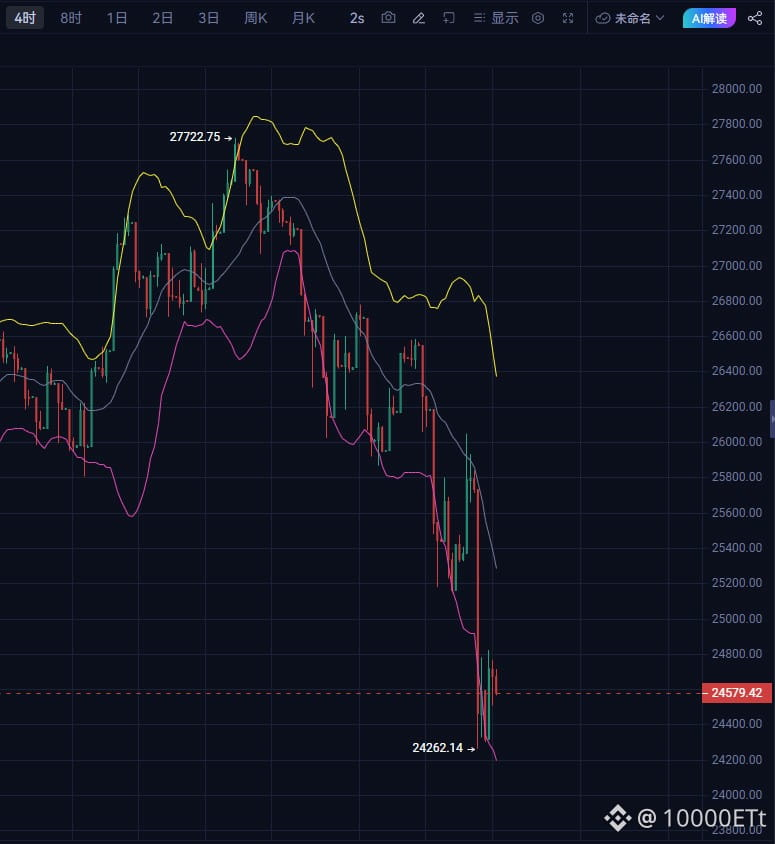
#比特币连续五周下跌 #AI芯片股重挫纳指周跌3.4%
Over in Texas, Abbott ordered a review in August of all data centers waiting to connect to the grid, then went ahead and suspended all related permits in September. At the time, everyone thought they’d get the green light once the review was over.
Then the midterms changed everything: Democrat Inohosa became governor, the lieutenant governor’s office went blue too, and Goodwin took over, with the state Senate in his hands. Both had the exact same message: no new data centers. Inohosa put it bluntly: until the state legislature gives communities protections, approvals will remain frozen.
Wells Fargo’s Revich nailed it: this suspension has shifted from “waiting on a review” to “waiting on legislation.” Reviews have deadlines; legislation doesn’t.
The numbers make it clear why the selloff hit so hard. Texas accounts for 27% of all planned data center capacity in the U.S. Wells Fargo estimates that every 10% reduction in Texas capacity would cut U.S. AI capital spending by 1.6%; if half the projects fall through, U.S. capex would drop by 8% outright.
So this selloff isn’t about earnings—it’s about expectations. The Nasdaq 100 fell 6.36%, its worst day since March 2020, wiping out $3.2 trillion in market value. The Philadelphia Semiconductor Index dropped more than 10%; SanDisk fell 22%, Micron, AMD, and Western Digital dropped 17%, and Nvidia fell 9%.
It’s not hard to see why memory stocks were hit the hardest. Data centers use a lot of HBM and DRAM. Build one fewer facility, and you lose orders for tens of thousands of memory chips. Memory is a second-order derivative in this chain: it has the most upside when things rise, and the same goes in reverse. After more than a year of gains, investors had a lot of profits to lock in, so the slightest hint of trouble sent them running.
There was another headwind, too. On November 6, nonfarm payrolls came in at 165,000, versus expectations of just 65,000. Traders immediately ramped up their bets on a December rate hike. AI stocks were already expensive, and as soon as rates turned higher, valuations took the hit first.
But one thing needs to be clear: the orders haven’t been canceled—they’ve been pushed back. Demand is still there; politics has put the brakes on the timeline. This isn’t like 2000, when “the story was over.”
So keep an eye on two things next: whether the Texas legislature can come up with a legislative proposal early next year, and whether Microsoft, Amazon, and Google lower their capex guidance next quarter. If legislation starts to take shape, this selloff will have been an overreaction; if guidance really does get cut, then we’re looking at a trend.
I’ll share any updates in the chat~
#比特币连续五周下跌 #AI芯片股重挫纳指周跌3.4%