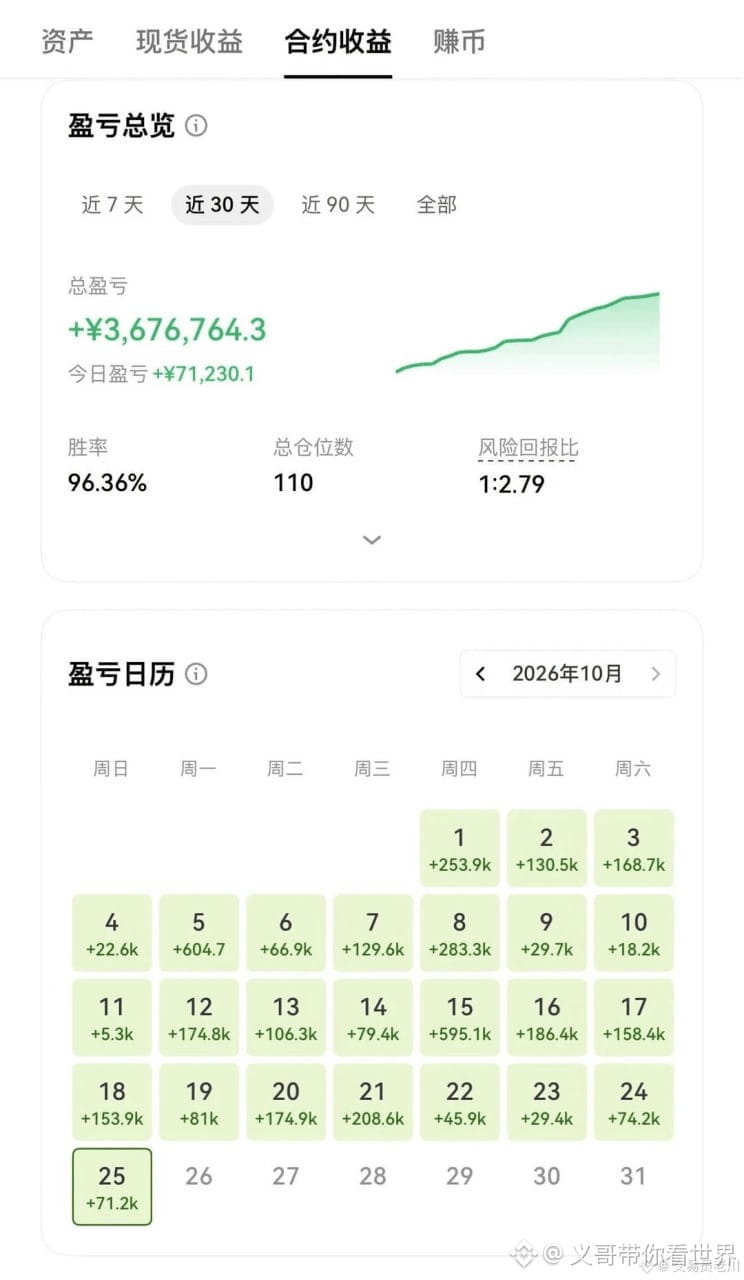
Even if you’re right eight times out of ten, your account can still lose money. The key is whether you let one losing trade spiral out of control.
1. Your win rate looks impressive, but your equity curve barely moves up. For example, say you place ten trades: eight earn you 100 each, while the other two lose you 500 each. You end up down 200. The 800 you made from eight winning trades can’t make up for the 1,000 lost on two losing trades. When reviewing your strategy, track your average profit and average loss as well as your win rate. If you only focus on how often you guess correctly, it’s easy to overlook costly mistakes.
2. You take profits too early and hold on to losses for too long. As soon as you make a little money, you rush to exit because you’re afraid of giving it back. But when a trade goes against you, you cling to the hope of breaking even. The result: you lock in profits too soon while letting losses grow. The market doesn’t care about your entry price. Set your stop-loss before entering a trade, and follow through when it’s hit. Don’t give losing trades more room to hope than you’re willing to give winning trades to run.
3. You rack up wins with small positions, then one heavily leveraged loss wipes out all your progress. Even if your judgment hasn’t changed, a sudden increase in position size on just one trade can completely reverse your overall results. Risk is based on your actual exposure. The market won’t go easy on a large loss just because you’ve had a winning streak. Record the profit or loss and planned risk for every trade, then check whether one increase in position size wiped out all your earlier gains.
4. Even if your gains and losses exactly cancel out, trading costs keep eating away at your money. Suppose eight trades each earn 100 and two each lose 400. On paper, you break even—but commissions and slippage haven’t been deducted. If you trade frequently, it’s especially important to focus on your actual returns after all costs. When reviewing your trades, don’t just show the winners. Include every trading expense to see whether your strategy can really retain profits.
5. If you focus solely on achieving an attractive win rate, it becomes difficult to cut losses decisively. Holding on to losing positions can make your win rate look good for a while, but the risk remains in your account. When reviewing your trades, take unrealized losses into account too. A loss doesn’t stop being a loss just because you haven’t closed the position. First set a limit on how much you can lose on any single trade, then work toward a higher win rate. That way, your account will be better prepared to withstand your next bad call.
#比特币连续五周下跌 $BTC