

By the Blockchain & Fintech Editorial Team
Originally published for Binance Square and decentralized technology portals.
---
For years, cryptocurrencies and decentralized finance (DeFi) have promised to free users from the iron grip of traditional intermediaries. Yet the vast majority of everyday users have found themselves caught between a rock and a hard place: either they used ultra-complex apps exposed to volatility, or they relied on traditional neobanks (such as Revolut or Chime) that, despite their modern interfaces, still operate under the same opaque, slow, centralized rules as legacy banking.
The natural evolution of this industry has given rise to a new paradigm: Deobanks (Decentralized On-Chain Banks). At the forefront of this movement is WeFi, an ecosystem that combines cutting-edge infrastructure, stablecoins, and real financial sovereignty.
---
---
What Is a Deobank, and Why Is WeFi a Pioneer?
Unlike neobanks, which simply add a polished software layer on top of last century’s banking rails, a Deobank moves all financial logic directly onto the blockchain.
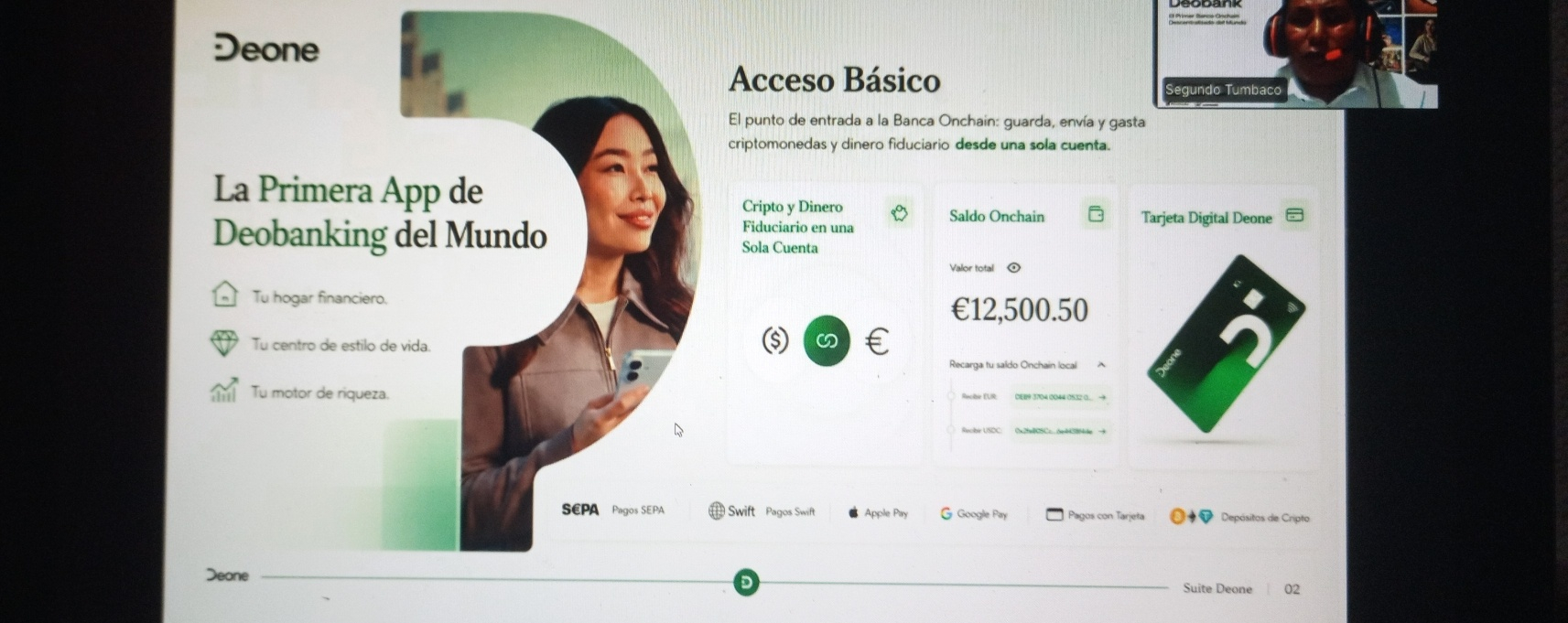
WeFi positions itself as the world’s first comprehensive on-chain decentralized banking platform. Its architecture is designed to offer:
* On-Chain Accounts and Settlements: No bureaucratic intermediaries or 3-to-5-business-day wait times. Transactions are executed in real time through smart contracts.
* Integrated Self-Custody: Users retain absolute control over their funds, eliminating the counterparty risk characteristic of centralized institutions.
* Intelligent Hybrid Infrastructure: Combines global payment rails, collateral-backed crypto cards, and stablecoin gateways tailored to both retail and institutional users.
Behind this development is a team of fintech and crypto industry heavyweights, with veterans from giants such as Tether (including its founder Reeve Collins as Chairman), Wise, Binance, Bybit, and Visa. This combination of institutional experience and Web3 agility gives the project unusual technical strength in today’s ecosystem.
---
WFI: The Economic Core of the Ecosystem
No decentralized ecosystem is complete without an asset that powers its internal economy. This is where WFI comes in (the protocol’s native token, operating prominently on high-speed networks such as BNB Smart Chain).
Far from being just a “meme governance token,” WFI serves essential roles within WeFi’s architecture:
1. Utility and Protocol Fees: It is the fuel used to process transactions, pay optimized network fees, and manage global payments or remittances.
2. Incentives and Rewards: Users and liquidity providers who actively participate in the Deobank’s lending, savings, and staking functions receive incentives denominated in WFI.
3. Demand Linked to Real-World Usage: The token’s long-term value is closely tied to platform adoption; as more people use WeFi’s crypto debit cards, on-chain accounts, and credit services, the token’s circulation and utility grow organically.
---
---
## What Do Industry Experts Say?
The emergence of Deobanks and WeFi’s value proposition have sparked intense debate and analysis on technology forums and in media specializing in cryptocurrency:
* Efficiency and Financial Inclusion: Emerging markets analysts point out that platforms like WeFi open a direct gateway for the more than 1,400 million unbanked adults worldwide. By relying on stablecoins and smart contracts instead of physical branches and costly local regulatory authorizations, barriers to entry are drastically reduced.
* The Developers’ Perspective: Smart contract infrastructure experts note that WeFi’s key advantage lies in its composability. By natively integrating compliance tools based on zero-knowledge proofs (ZKPs) and AI, it solves the sector’s major dilemma: how to be decentralized while remaining compatible with modern security standards.
* The Challenge of Token Adoption: On the other hand, exchange analysts and research firms (such as Cube Exchange) point out that the real test for WFI will be proving that users naturally choose to interact with the token and that it is not optional within the user experience. If the platform manages to make fees and rewards flow seamlessly through WFI, its economic thesis will be solidified over the long term.
---
## Conclusion: The Future of Banking Is No Longer Digital, It’s On-Chain
The transition from traditional neobanks to Deobanks represents the next logical step in the evolution of money. WeFi isn’t trying to build “yet another cryptocurrency app”; it is redesigning the foundations of how we interact with credit, savings, and payments on a global scale.
For blockchain technology enthusiasts and investors on Binance Square, closely following the development of institutionally backed self-custody infrastructure like WeFi—and evaluating the behavior of its WFI token—is essential to understanding where money is headed in the coming years.
---#Wefi, #WeFiCard #wefideobank #On-chain