Averaging down lowers your entry price. It doesn't lower your risk.
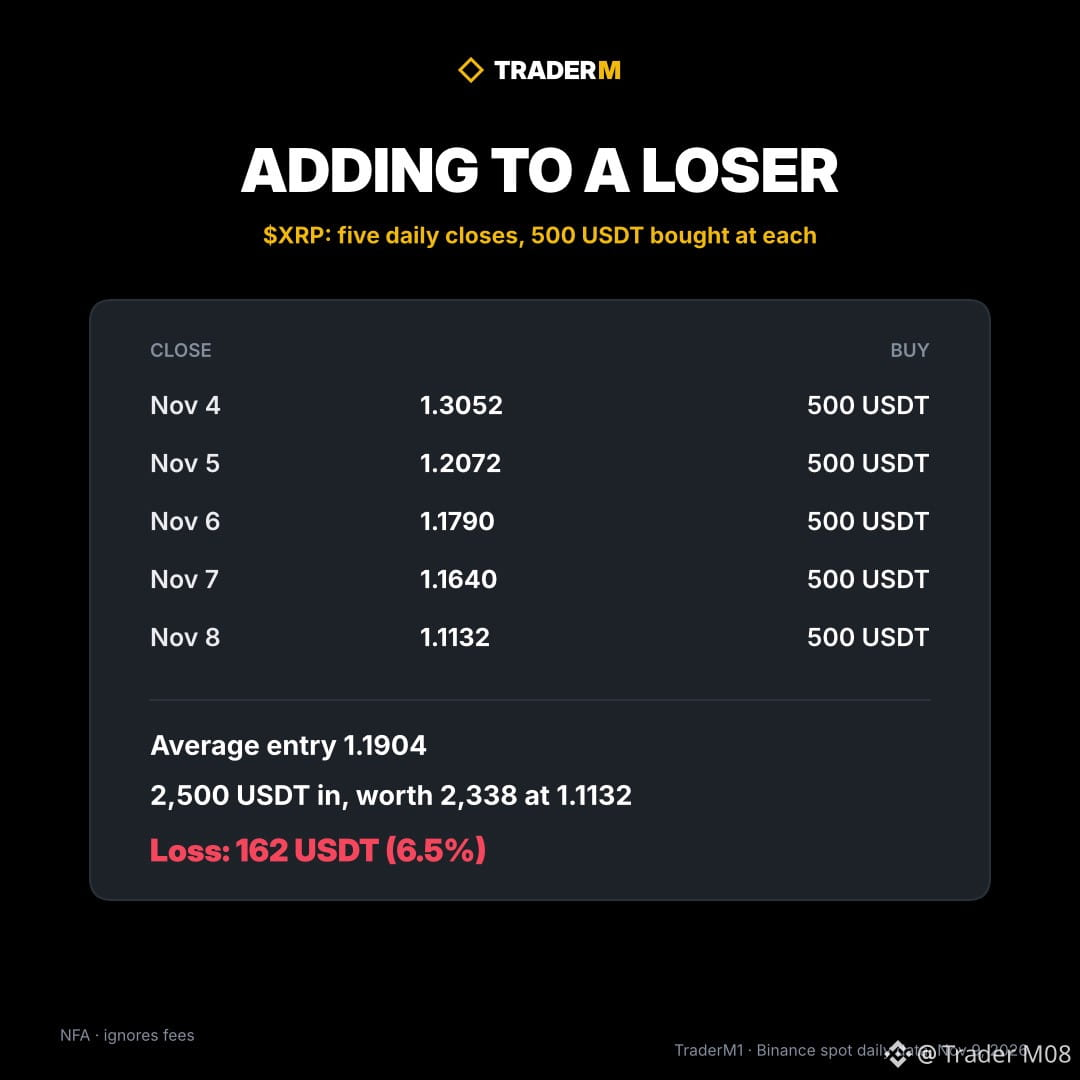
$XRP closed lower four days in a row: 1.3052 on Nov 4 to 1.1132 on Nov 8, down 14.7%.
Say you bought 500 USDT at each of those five daily closes:
- Total in: 2,500 USDT
- Average entry: 1.1904
- Value at 1.1132: about 2,338 USDT
- Loss: about 162 USDT, or 6.5%
Compare one 500 USDT buy at 1.3052 with no adds: about 74 USDT down. The adds made the average look better and the loss more than twice as big.
That's the trap. Each add feels like a discount. In money terms, you put more size into a trade that was wrong for four days straight.
My rules:
- I add only to a position that's working, never to one sitting under its stop
- If I want to buy lower, I plan the levels and the size before the first entry
- Total size across all entries stays inside the risk I set on day one
NFA. Have you ever averaged down into a trade that kept falling? Yes or no?
$XRP