Berkshire bought back $9.6 billion in Q3, more than doubling its buybacks. Cash totaled $377.4 billion, but operating earnings fell 5.8%.
What happened: In its Saturday earnings report, operating earnings came in at $12.705 billion, down 5.8% year over year. Insurance underwriting profit plunged 43%, to just $1.352 billion.
Buybacks totaled $9.6 billion, more than double the roughly $4.5 billion in Q2. Berkshire bought back another roughly $2 billion in October, while cash rose from $365.5 billion to $377.4 billion.
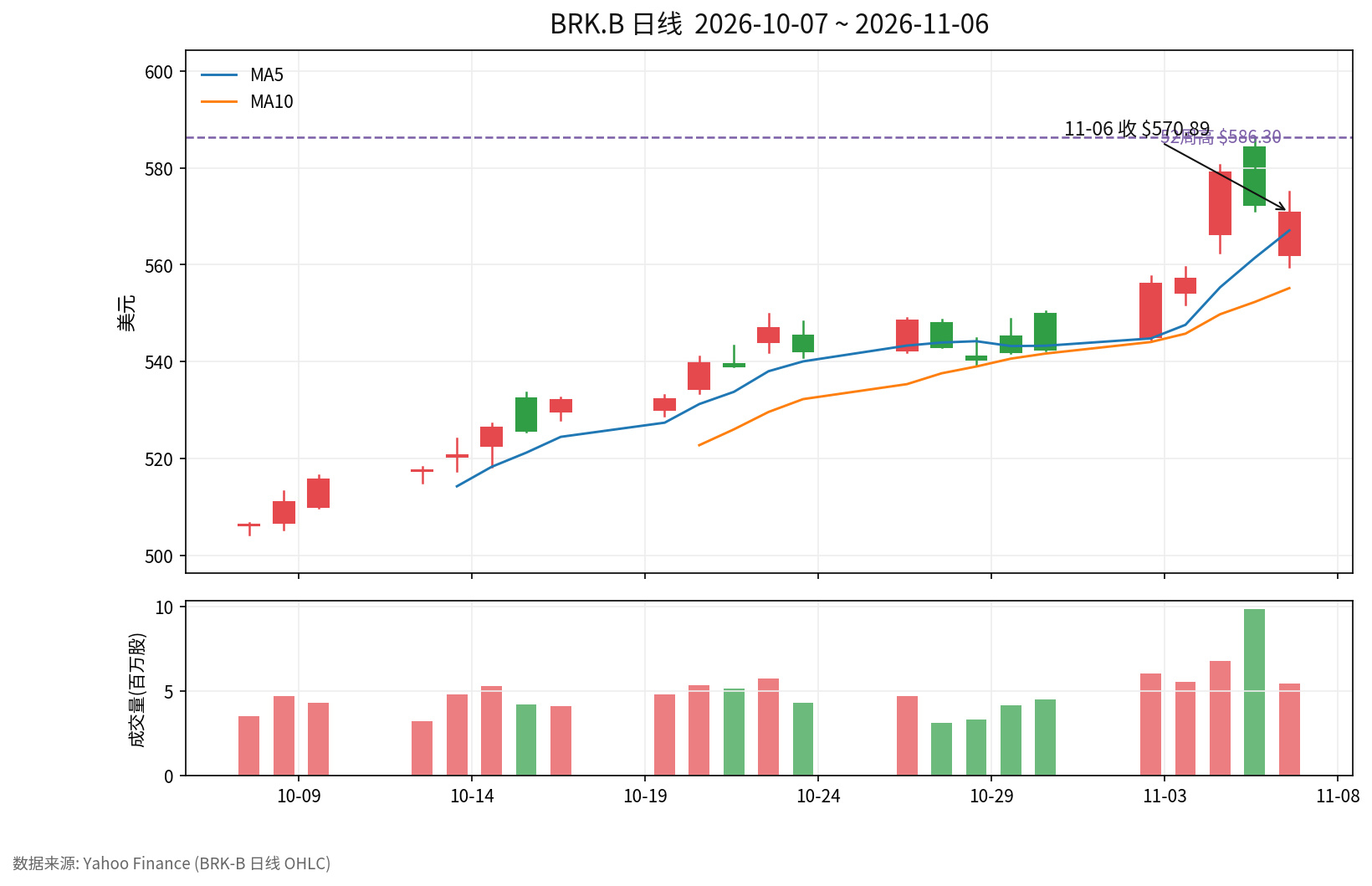
The stock hit a 52-week intraday high of $586.30 on Thursday, then closed Friday at $570.89. It still rose about 5.2% for the week, outperforming the broader market.
My take: The first fall earnings report since Abel took over sent a clear signal: when Berkshire can’t find a bargain, it buys back its own shares—and would rather hold cash than spend it carelessly. This isn’t a bet on a rising market; it’s a defensive move.
What I’m doing: Watching, not chasing. I’m not buying just because buybacks doubled. A move above the $586.30 record high would be a sign of strength; a break below Friday’s low of $559.61 would mean the weakness isn’t over.
Pick one: Is Berkshire sitting on $377.4 billion in cash to buy the dip after a big drop, or can it simply not find anything worth buying?
$BRK.B
$BRK.A
#美股 #Berkshire
What happened: In its Saturday earnings report, operating earnings came in at $12.705 billion, down 5.8% year over year. Insurance underwriting profit plunged 43%, to just $1.352 billion.
Buybacks totaled $9.6 billion, more than double the roughly $4.5 billion in Q2. Berkshire bought back another roughly $2 billion in October, while cash rose from $365.5 billion to $377.4 billion.
The stock hit a 52-week intraday high of $586.30 on Thursday, then closed Friday at $570.89. It still rose about 5.2% for the week, outperforming the broader market.
My take: The first fall earnings report since Abel took over sent a clear signal: when Berkshire can’t find a bargain, it buys back its own shares—and would rather hold cash than spend it carelessly. This isn’t a bet on a rising market; it’s a defensive move.
What I’m doing: Watching, not chasing. I’m not buying just because buybacks doubled. A move above the $586.30 record high would be a sign of strength; a break below Friday’s low of $559.61 would mean the weakness isn’t over.
Pick one: Is Berkshire sitting on $377.4 billion in cash to buy the dip after a big drop, or can it simply not find anything worth buying?
$BRK.B
$BRK.A
#美股 #Berkshire