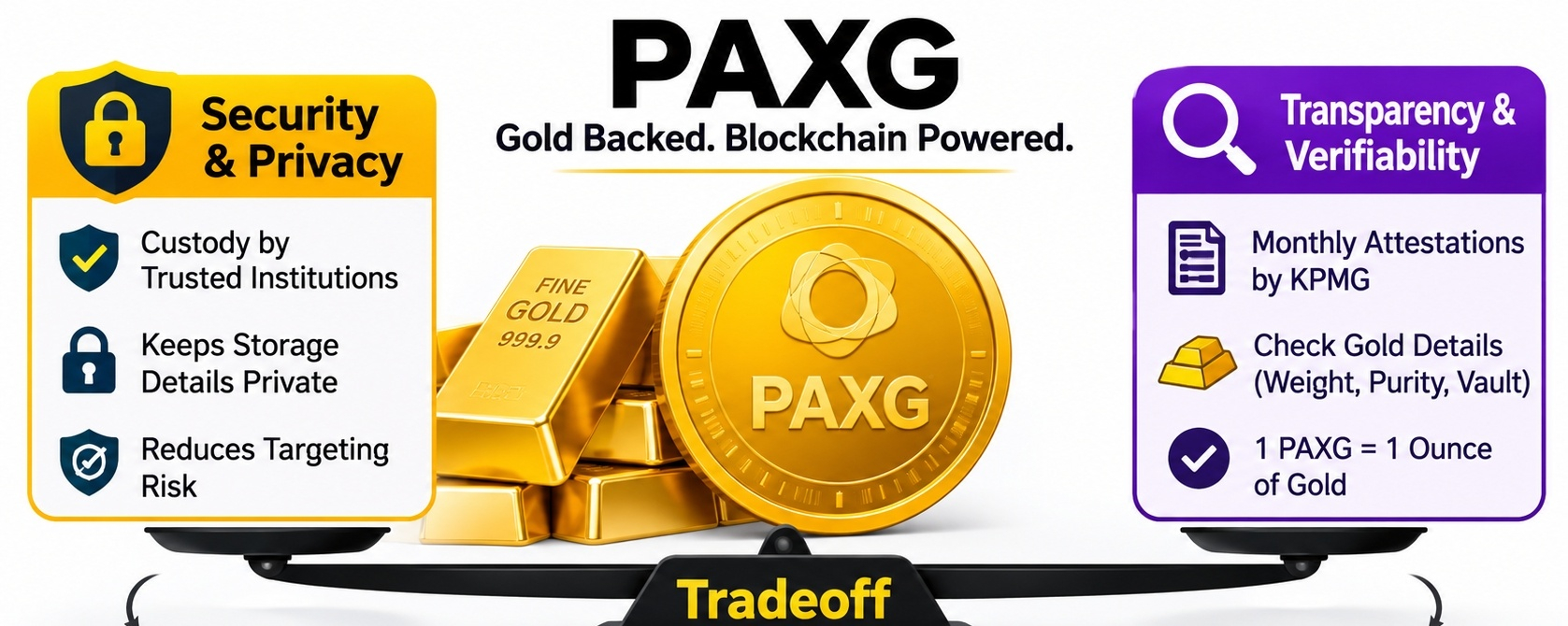

PAXG represents one fine troy ounce of London Good Delivery gold, held in allocated vaults by Paxos. But holders do not have direct physical access to the underlying gold. That's not an oversight. It's a stated choice.
Paxos keeps the physical gold under institutional custody rather than exposing the storage infrastructure publicly. This reduces unnecessary exposure of sensitive custody operations, but holders must rely on Paxos and independent verification rather than personally inspecting the reserves.
There is still meaningful transparency. Holders can check the serial number, weight, purity, and vault information associated with their PAXG through Paxos's allocation lookup tool. Each token represents one ounce of allocated gold.
Since February 2025, KPMG LLP has issued independent attestation reports under AICPA standards. Paxos publishes reports monthly, checking whether the outstanding token supply matches the gold reserves. However, this is limited assurance, not a continuous audit. Outsiders cannot independently verify every physical movement or custody condition between reporting dates. PAXG Transparency Reports +2
Now compare Tether Gold (XAU₮). Tether publishes reserve information and reported an independent attestation for Q1 2025, with gold held in Swiss vaults. Its model offers published reserve disclosures, but physical custody still depends on institutional counterparties. More exposure, in exchange for additional public scrutiny. Tether
Neither approach removes counterparty risk. PAXG relies on allocated ownership, regulated custody, and monthly independent attestations. XAU₮ relies on its own custody and reporting structure.
Which risk worries you more: trusting an institution to protect hidden physical reserves, or exposing more custody information in exchange for greater public ve