

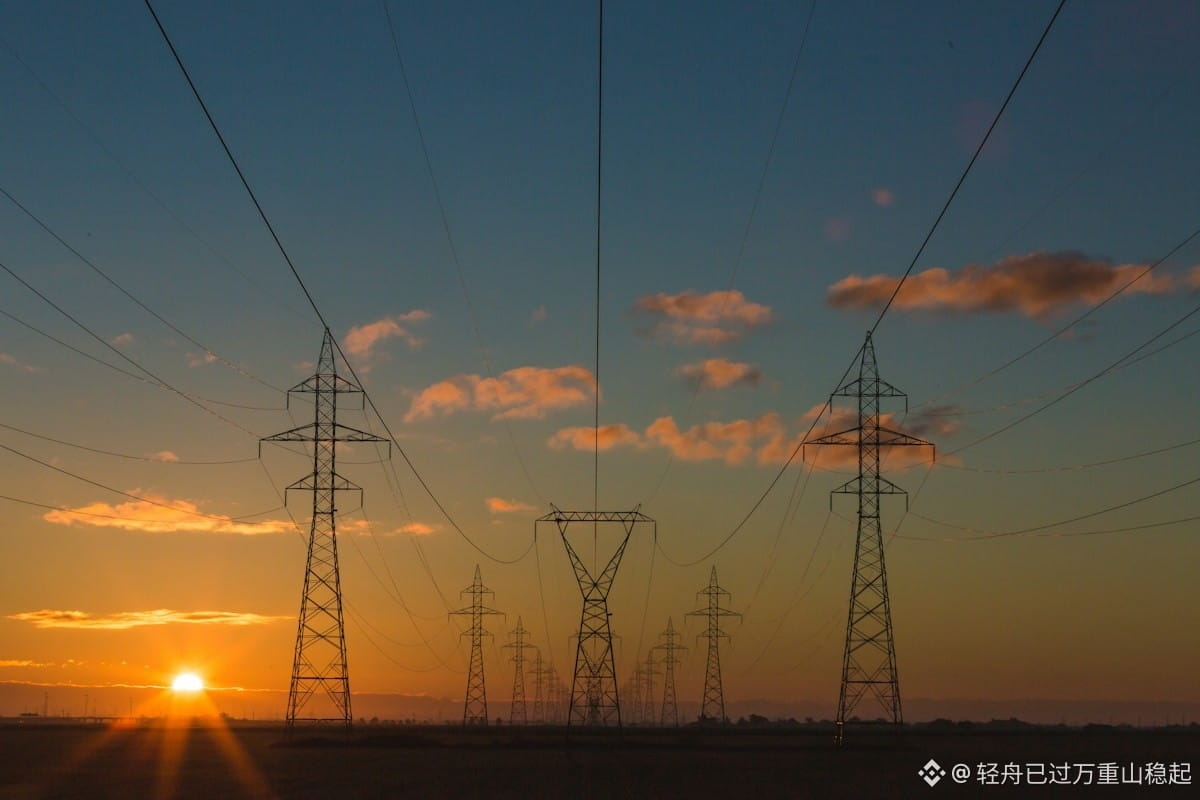
Many people are still debating whether chips are the ultimate bottleneck for AI large models and Web3 computing power. China’s power grid has built the answer right on top of a snow-covered mountain at an altitude of 3,620 meters. The world’s highest-altitude 1,000-kV ultra-high-voltage substation, in Aba, Sichuan, is entering the final push toward commissioning. At the same time, the National Energy Administration announced its sixth batch of 90 major first-of-their-kind energy equipment projects, with State Grid claiming a record 37 of them! At an altitude of 3,620 meters, air density drops by 35%. According to Paschen’s law, thinner air lengthens the mean free path of electrons, making 1-million-volt UHV lines highly susceptible to triggering Townsend electron avalanches and corona leakage. Chinese engineers have pulled off the feat by pioneering ten-split conductors and breaking a 350-ton main transformer into 14 pieces to transport it up the mountain, then reassembling it with micrometer-level precision. This lets 15 billion kWh of green electricity from wind, solar, and hydropower in western Sichuan flow directly to load centers and computing centers at lightning speed, with a latency of just 1 millisecond. While AI data centers in Europe and the United States are still waiting in line for 5 years to connect to aging power grids, the foundation that will determine pricing power for AI tokens and on-chain computing over the next decade is already here beneath our feet: a supergrid capable of transcending physical limits. What do you think is the ultimate bottleneck in the computing-power race: GPUs or power infrastructure? #BTC #Crypto #AI #Web3
Join global crypto users on Binance Square
⚡️ Get latest and useful information about crypto.
💬 Trusted by the world’s largest crypto exchange.
👍 Discover real insights from verified creators.
Email / Phone number