
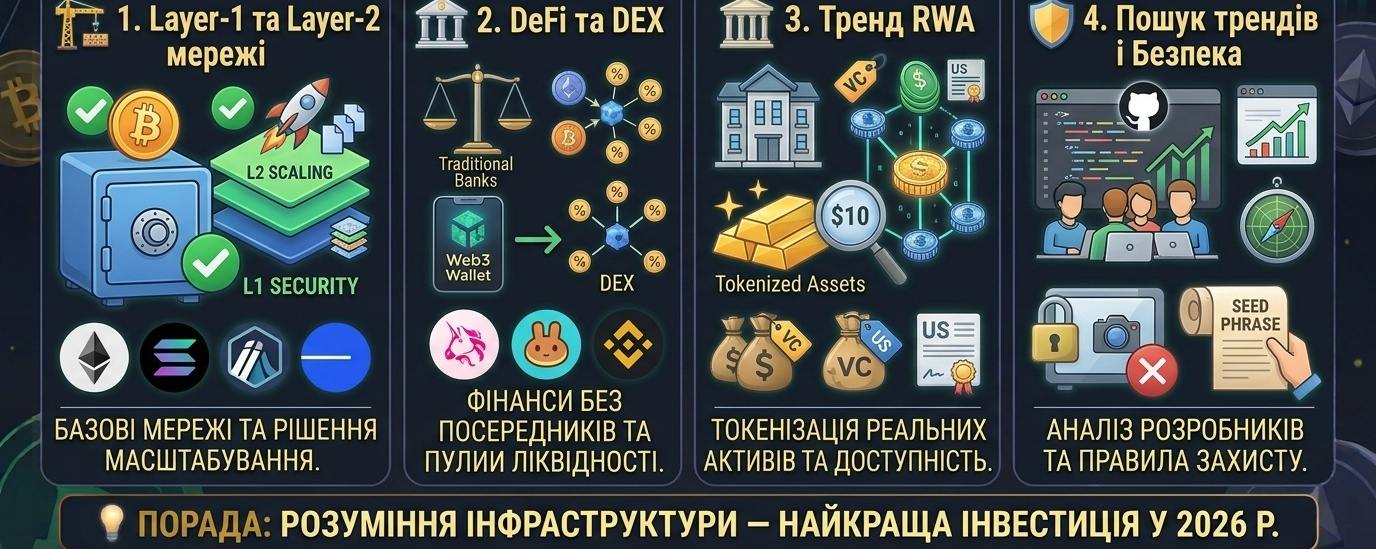

This week, we took an in-depth look at key segments of the cryptocurrency market. Let’s bring the main takeaways together in one handy guide for those who missed our weekday posts:
🏗️ 1. Layer-1 and Layer-2 Networks
Base blockchains (L1s, such as Ethereum) guarantee security but suffer from high fees. Layer-2 networks (L2s, such as Arbitrum or Base) solve this problem by enabling fast, low-cost transactions.
🏦 2. DeFi and decentralized finance
This is finance without intermediaries or banks. Thanks to liquidity pools on DEXs (Uniswap, PancakeSwap), anyone can swap assets directly from their Web3 wallet or become a liquidity provider.
🏛️ 3. The RWA (Real World Assets) trend
Tokenizing real-world assets (real estate, bonds, gold) is blurring the lines between the traditional economy and blockchain, opening access to global markets starting at $10.
🚀 4. Tracking trends and staying safe
Success in crypto requires analyzing the activity of venture capital funds and developers (GitHub). But remember what matters most: keep your seed phrase offline, beware of malicious smart contracts, and spread your capital across wallets.
💡 Conclusion: The crypto industry is evolving rapidly. Understanding the infrastructure and basic security is the best investment of your time in 2026.
👇 Which topic this week was the most useful to you? Share in the comments!