
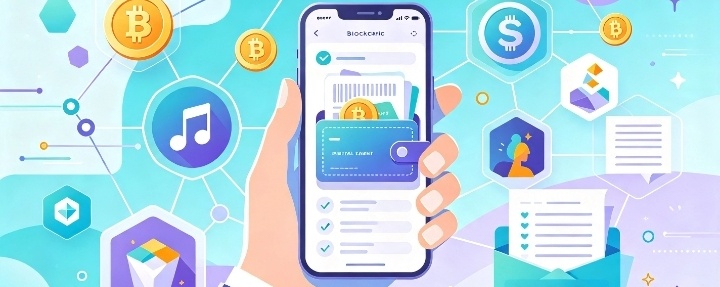

From Web1 to Web3 — The Journey of the Internet

Imagine walking along a highway that keeps changing shape. Twenty years ago, it was a one-way street: you could only view information prepared by others. This is what we call Web1 — a static internet where we read pages but can’t write on them ourselves. Then came Web2, a two-way street. You could not only read, but also write, share photos, send messages, and interact. But something didn’t feel right: the big companies running that street also held the keys to your identity, data, and even your words. Web3 is the next version of the internet — one that belongs to no one, but is controlled directly by its users.
Simply put, Web3 is a vision of the internet built on decentralized networks. Instead of data being stored on servers owned by a single giant company, information is distributed across thousands of computers around the world. No single party has the authority to block your account, unilaterally change the rules, or sell your data without permission. You alone have full control over your presence in the digital world. The concept sounds simple, but its impact is so profound that it is often described as the next revolution in the history of technology.
Understanding the Core Principles of Web3
Data and Identity Sovereignty
In the Web2 era, your identity actually belongs to the platform where you signed up. The social media account you’ve built over many years could disappear in an instant if the platform decides to deactivate it. In Web3, your identity takes the form of a set of codes whose keys only you hold. You’re free to move from one service to another without signing up again, and no one can revoke your access as long as you keep those keys safe.
Decentralization Is More Than Just a Buzzword
Many people misunderstand this term. Decentralization doesn’t mean having no rules; it means that rules are made collectively and enforced openly. Decisions aren’t made behind closed doors by a handful of executives, but through agreements that are recorded and can be verified by anyone. This changes the balance of power: service providers become equal partners, not rulers who determine their users’ fate.
A Programmable Internet
Web3 is designed not only to present information, but also to execute logic and agreements automatically. If Web2 is a book that people can read and write together, Web3 is a book that can also carry out the agreements written in it without needing an intermediary. This opens up a wealth of opportunities — from independent financial systems to digital copyrights that are automatically enforced anywhere.
The Role of Crypto — More Than Just Digital Money
A common misconception is that Web3 and cryptocurrency are exactly the same thing. In reality, they complement each other but serve different functions. Web3 is a broader internet ecosystem, while crypto assets are one of the important tools that help it function properly. Let’s look at the practical roles they play.
As the Network’s Engine
Every decentralized network needs incentives for people to be willing to contribute computing power and maintain its security. This is where crypto tokens come in.

When someone helps validate transactions or provides storage space, they receive a reward in the form of these digital assets. This mechanism keeps the network running—not because a company pays salaries, but because an incentive system operates independently.
A Unit of Value and Proof of Ownership
On an internet without intermediaries, we need a way to prove that something truly belongs to someone without relying on a third-party institution. The technology behind crypto assets provides this solution. Proof of ownership is recorded permanently and can be verified by anyone in the world. When you own a particular digital asset, you essentially hold proof recognized by the entire network, not just by a single company.
Collective Governance
Many projects in the Web3 ecosystem give their token holders voting rights. The more someone contributes to or invests in that ecosystem, the greater their say in determining its future direction. Of course, this system isn’t perfect and is still evolving, but it’s a first step toward a more inclusive governance model than conventional corporate structures.
Real-World Examples of Crypto-Powered Web3
Finance Without Gatekeepers
Imagine you want to send money to someone in another country. In the traditional system, you need a bank, days of processing time, and substantial fees. In Web3, financial services run on programs that are open to anyone. As long as you have the necessary digital assets, you can send, borrow, or save money without opening an account. This doesn’t mean there are no risks, but it shows that an alternative system is real and growing.
Creative Works with Direct Value
Musicians, artists, and writers often struggle to receive their fair share for their work because intermediary platforms dominate the market. Web3 allows artists to sell their work directly to their fans, and each time the work changes hands, a percentage of the sale automatically goes to the creator’s wallet. This mechanism is powered by digital assets that ensure the rules are carried out exactly as agreed from the start.
Communities with Real Power
Have you ever dreamed of being part of an organization where every voice truly counts? Some groups in Web3 form communities with rules agreed upon collectively. Members contribute, hold tokens as proof of membership, and then decide together how resources are used. It’s like taking part in a digital cooperative that operates across national borders without needing permission from any government.
Navigating the Promise and the Challenges
Of course, the journey toward the next generation of the internet hasn’t been smooth. Major obstacles remain: the technology isn’t yet easy enough for everyday users, fluctuations in the value of digital assets sometimes obscure their original purpose, and many countries still lack a clear regulatory framework. There’s also the risk of scams, which often emerge in this still-new space — something that accompanies every growing technology.
However, we shouldn’t focus only on the shortcomings and ignore the potential. The first generation of the internet gave us unprecedented access to information. The second brought people closer together despite great distances. Web3 has the potential to return sovereignty to us as users. Here, crypto assets aren’t the main attraction — they’re the tools that keep the whole system running. Think of electricity: people don’t see electricity itself, but without it, many things around us wouldn’t work. That’s roughly the role crypto plays in the Web3 ecosystem.
It’s important to remember: you don’t have to understand every technical detail right away to take part. Just as you can enjoy the internet today without knowing how undersea fiber-optic cables work, you can start exploring Web3 one step at a time. Learn first, understand the risks, don’t rush into spending money, and make decisions based on what you truly understand.
Conclusion
Web3 represents a shift from an internet controlled by a handful of parties to one owned and managed collectively by its users. Crypto isn’t Web3 itself, but rather the fuel and identity tool that keeps the system running honestly and independently. It provides proof of ownership, secures the network, and allows us to make agreements without intermediaries. The future of this internet hasn’t fully taken shape, and we are all witnesses to and participants in its creation.

If you found this article useful, feel free to share it with your close friends! The more people who understand this concept correctly, the more wisely we can embrace the changes taking place.