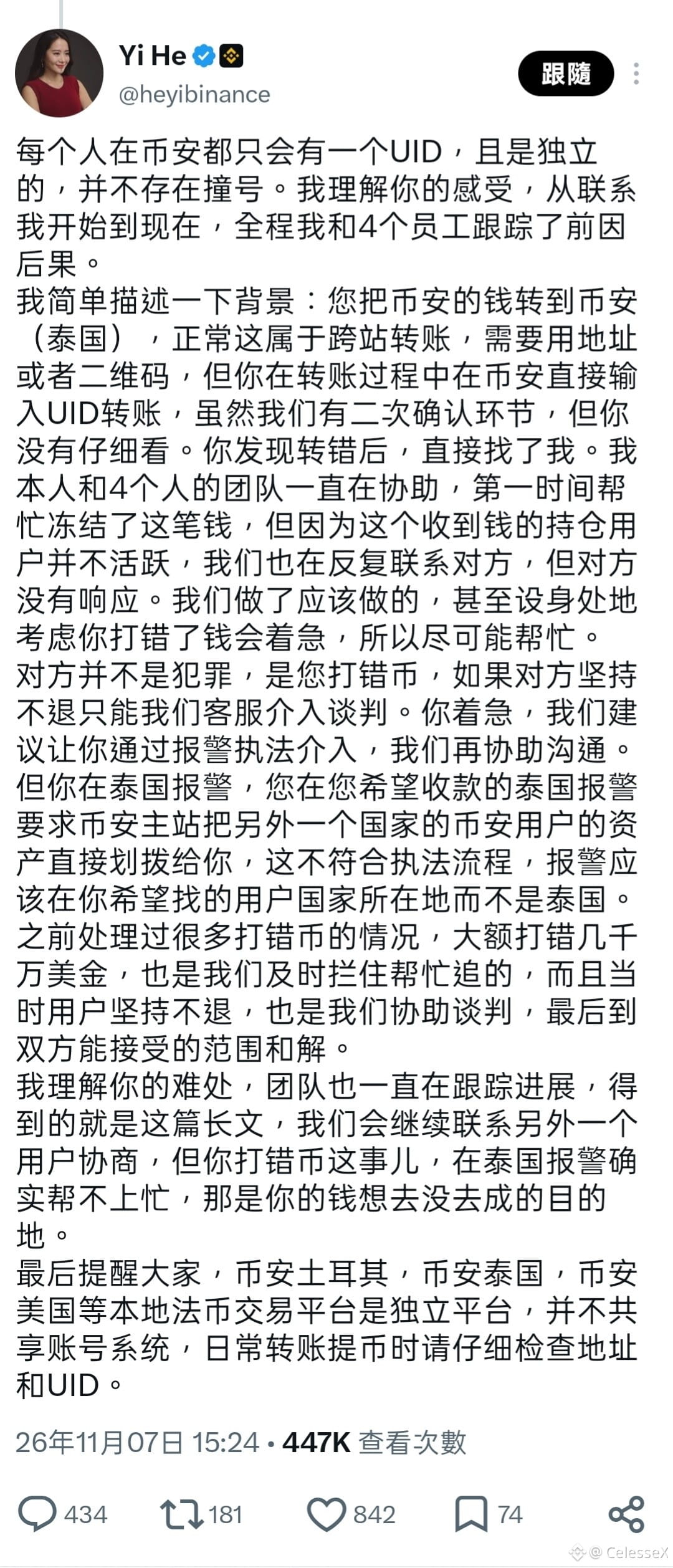
Binance’s main platform has a UID: 12345. Binance US has a UID: 12345, and Binance Thailand also has a UID: 12345. But the problem is that you can only transfer funds by UID between accounts on the same platform: Binance’s main platform can only transfer to Binance’s main platform, Binance US can only transfer to Binance US, and Binance Thailand can only transfer to Binance Thailand—the UID systems of the three platforms are not connected.
So if a friend on Binance Thailand tells you, "My UID is 12345," but you have an account on Binance’s main platform, your funds will end up in a completely unrelated account when you make the transfer.
This isn’t actually a product design bug, but a branding strategy failure. Binance’s main platform is Binance, but Binance US isn’t Binance, and Binance Thailand isn’t Binance either—they are independent operating entities, completely unrelated in terms of their legal and financial systems. Yet Binance insists on calling all these independent entities "Binance," giving them a shared brand identity.
It’s like trying to transfer money to someone on WeChat, only to be given their Alipay account. But WeChat and Alipay have completely separate account systems, so this kind of mix-up simply wouldn’t happen. Binance’s problem is precisely that its unified branding leads users to assume all "Binance" platforms are one and the same.
No matter how you look at it, Binance is definitely at fault this time. Product and brand design must not cause users to lose money based on common assumptions. Before this incident, I didn’t know Binance was designed this way either—if someone on Binance US or Binance Thailand told me their UID, I’d probably transfer the money without giving it a second thought.