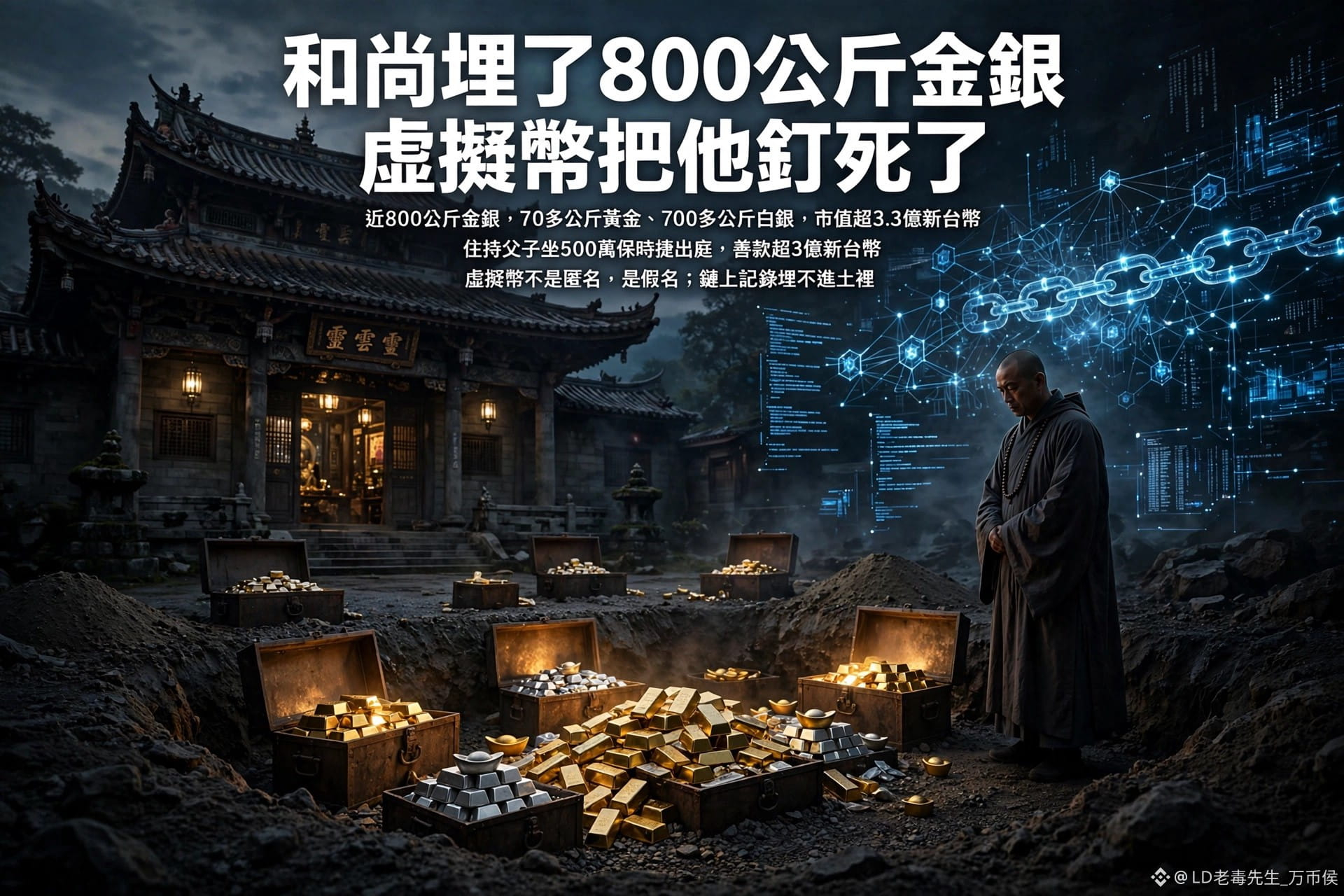

《A Monk Buried 800 Kilograms of Gold and Silver—Cryptocurrency Sealed His Fate》
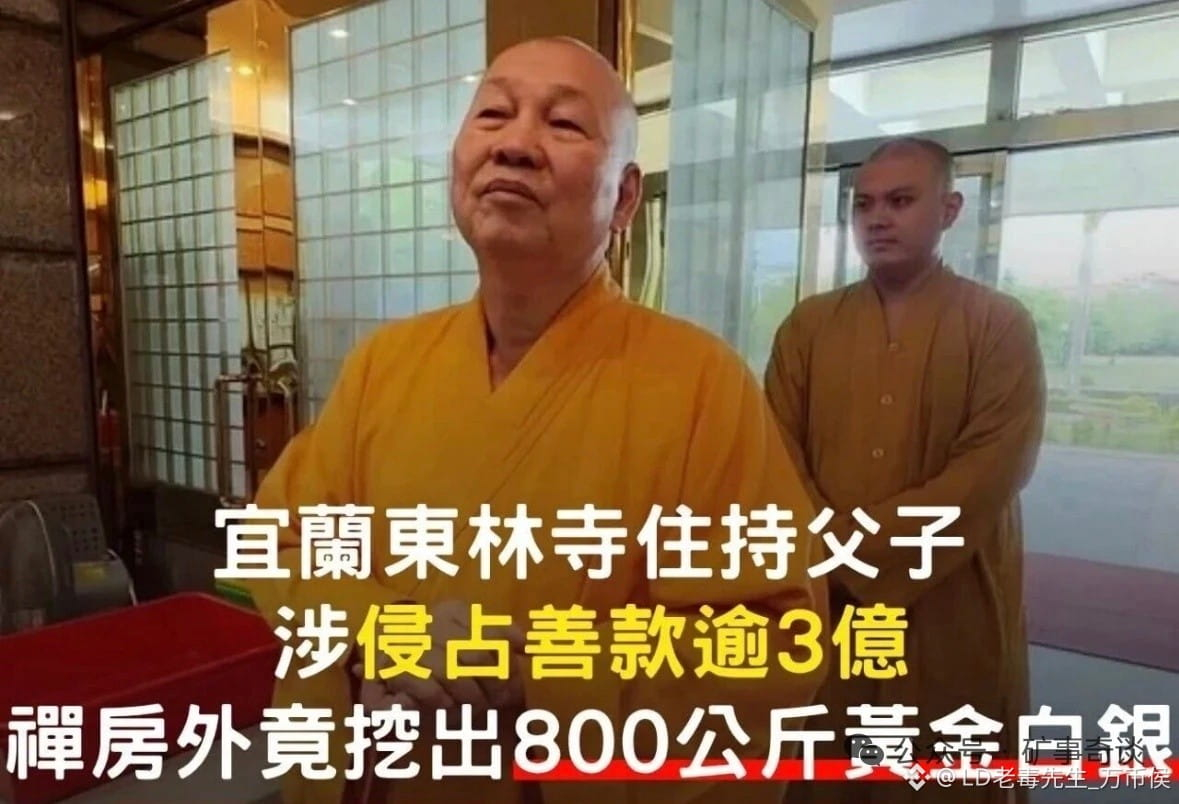
Nearly 800 kilograms of gold and silver, worth more than NT$330 million, were dug up outside a monk’s meditation room.
At Donglin Temple in Yilan, Taiwan, abbot Zhang Qingyu and his son Zhang Weifu, who became a monk, are suspected of embezzling more than NT$300 million in donations from followers. On November 2, prosecutors dug up more than ten iron chests from the gravel outside the meditation room: over 70 kilograms of gold and over 700 kilograms of silver, with a market value of more than NT$330 million—equivalent to RMB 67.24 million.
In August this year, the father and son arrived at court in a Porsche worth NT$5 million, and argued that all the donations had been made voluntarily by followers.
The most ironic thing isn’t that monks drive Porsches; it’s the tool they used to launder money: cryptocurrency.
The investigation found that they transferred donations into private accounts, bought cryptocurrency, moved funds between multiple wallets and across chains, thinking that a long enough trail would make them impossible to trace. Then they cashed out, bought gold and silver, and buried them in the ground. Invisible online, hoarding gold offline—they thought they’d covered their tracks perfectly. #
Cryptocurrency isn’t anonymous; it’s pseudonymous. There are no names behind the addresses, but every transfer is permanently etched on the blockchain—it can’t be deleted or changed. Once funds pass through an exchange or any channel requiring identity verification, the entire money trail can be uncovered. Blockchain forensics can cluster addresses and map fund flows; even after a hundred transfers, investigators can identify the source.
They thought moving funds through a few more addresses would make them invisible. In fact, every transfer was like writing their own confession.
Gold can be buried in the ground, but blockchain records can’t. The 800 kilograms of gold and silver have been dug up, and every transaction on the blockchain is still there. #
So stop believing the nonsense that “a few cryptocurrency transfers make funds untraceable.” Public blockchains are the most transparent ledgers in the world. Someone can see every transaction you make.
Special mentions:
$BTC: This case was cracked thanks to the permanent record left by the public blockchain. BTC is the most transparent and tamper-proof ledger; its value lies not in anonymity, but in trust.
$ARKM: Arkham specializes in blockchain forensics—clustering addresses and mapping fund flows. The demand for compliant tracking will only continue to grow.
$PAXG: The monk hoarded more than 700 kilograms of physical gold and still buried it in the ground. On-chain, there’s the compliant gold-backed token PAXG, pegged 1:1 to physical gold—no digging required to hoard gold.
#Bitcoin #BTC #Gold #老毒先生