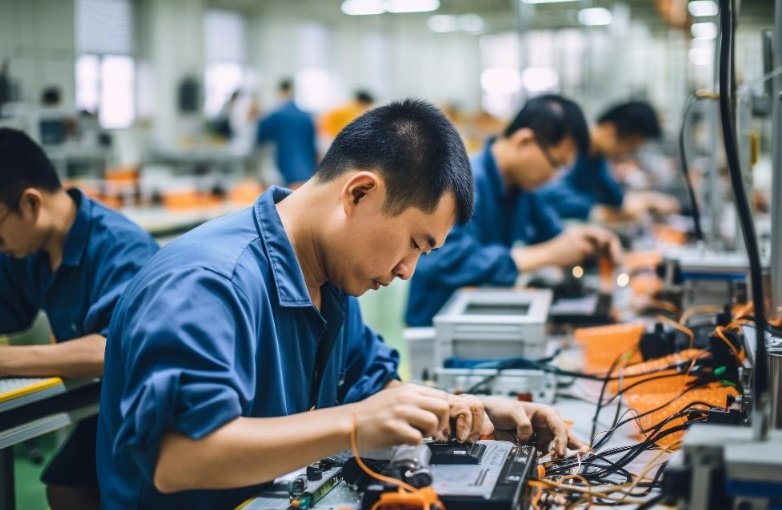

Let’s be honest: for many small-time crypto traders, the hardest part isn’t losing money. It’s working hard every day, earning just 4,000 or 5,000 yuan a month, scrimping and saving—and then watching it all disappear in just a few candlesticks. Today, I’m sharing a submission from one of our followers. He’s 29 and used to work on an assembly line at an electronics factory, standing for 12 hours a day and earning around 4,500 yuan a month. Now he’s paid off his debts and built his account up to over a million yuan. But don’t think this is a story of effortless success. Quite the opposite: the painful lessons he learned in crypto were far worse than most people can imagine.
I. His first taste of profit made him think he’d finally turned his life around
He started working right after graduating from middle school, tightening screws, assembling parts, and inspecting products. Wherever an assembly line needed workers, that’s where he went. While others went out drinking after work, he stayed in his dorm scrolling on his phone and thinking about how to save a little more. In 2020, a coworker in the dormitory talked about BTC and ETH every day. At first, he thought the whole thing was a scam. But when he saw his coworker actually making money, he couldn’t resist putting 20,000 yuan in himself. He got lucky and entered during a bull market: BTC and ETH kept climbing, and his account peaked at nearly 450,000 yuan. If you earn 4,500 yuan a month and suddenly see hundreds of thousands in your account, I think many retail traders know exactly how that feels. At the time, he thought he’d finally escaped a lifetime of tightening screws in a factory.
II. What really tripped him up wasn’t the market—it was greed
After making 450,000 yuan, he started getting carried away. Spot prices rose too slowly, and he thought futures were where the real money was. At first, he went long with 10x leverage. After several wins in a row, he thought he’d figured out the market. Then he quit his job and started trading full-time. The first major market reversal wiped out over 100,000 yuan. He refused to accept it, convinced it was just bad luck, so he kept adding to his positions—even borrowing money to top up his margin. But the market gave him no chance to win it back. After several bad calls in a row, his 450,000 yuan was down to less than 30,000, and he owed friends tens of thousands more. He said the hardest part wasn’t watching his account shrink. It was going home for Lunar New Year and having his parents ask when he was going to buy a house, while he couldn’t come up with a decent answer. This is what life is really like for many retail traders: when they’re winning, they think they’re geniuses; when they’re losing, they can’t bear to admit defeat. In the end, trading becomes a life-or-death gamble.
III. The real turning point: going back to the factory and learning to see trading differently
Later, he got another job at an electronics factory. He worked during the day and studied candlestick charts at night. He said that was actually when he grew the fastest, because having no money stopped him from opening reckless trades. Gradually, he developed his own set of trading rules. First, he focused only on BTC and ETH and stopped dabbling in every altcoin. Liquidity and market structure mattered more than the promise of a sudden price surge. Second, he used the 4-hour chart to identify the trend and the 1-hour chart to look for entry points. If the direction wasn’t clear, he stayed out. He’d rather miss an opportunity than chase a rally or panic-sell. Third, position sizing always came first. No matter how promising the market looked, he wouldn’t let a single trade determine his fate. Especially with futures, leverage doesn’t magnify your dreams—it magnifies your risk. Fourth, he set a stop-loss in advance for every trade. If his analysis was wrong, he accepted it. He wouldn’t add to a losing position and hope for the best, or rush to take revenge on the market after a loss. Fifth, he learned to wait. Not opening a position for a day didn’t mean he lacked skill; a real opportunity might only come along a few times a week. Later, he told me something that really stuck with me: “I used to watch the charts every day so I could hurry up and win back what I’d lost. Now I watch them to wait for the market to give me a price worth acting on.” Those are two completely different mindsets.
IV. A close call taught him once and for all what it means to manage risk
Once, following the 4-hour trend, he went long on BTC after a pullback signal appeared on the 1-hour chart, entering with a small position. Then the market suddenly plunged, and his account showed a substantial unrealized loss. In the past, he would have added to his position, or even increased his leverage to bet on a rebound. But this time, he didn’t. When the price hit his preset stop-loss, he closed the trade immediately. That night, BTC fell even further. As he watched the market, he actually felt relieved. He’d lost some money, but he’d protected the capital he needed to keep trading. Over time, he came to understand that the most important thing in trading isn’t winning every time. It’s having enough left to stay in the game when you make a mistake. After that, he slowly built up his account with small amounts of capital. Over several market cycles, it grew to more than 1 million yuan, and he paid off the debts he’d accumulated. Of course, that doesn’t mean everyone can get the same results by following his example. What’s really worth learning from is the discipline he developed.
V. From a 4,500-yuan monthly salary to finally having the means to choose how he lives
He’s since left the factory assembly line, renovated his parents’ home in his hometown, and started thinking about buying a house. He keeps some of his money in conservative assets and continues to trade with the rest. He’s also planning to open an electronics repair shop. He says the biggest change isn’t how much money is in his account. It’s that he no longer has to work overtime on an assembly line until late at night just to earn a few dozen yuan more. In all my years of trading, I’ve seen plenty of people start with very little capital—and plenty of others make a lot of money only to lose it all again. At the end of the day, the market never runs out of opportunities. What’s rare is someone who can stay calm when those opportunities arise.
**A final word for everyone still finding their way in the market:** There’s no shame in having little capital or starting from the bottom. What’s truly dangerous is getting carried away after a small win, or losing your head after a small loss. Don’t treat futures as your last lifeline for turning your life around. Learn to manage your position size first, then learn to wait for opportunities, and only after that focus on improving your returns. If you’re also finding your feet in crypto and want to avoid some of the common pitfalls, come join our trading group and share ideas. I regularly share my market outlook, technical analysis, and hands-on trading experience. You’re also welcome to bring your own trade records for discussion. The market opens every day, but you can’t earn your capital back every day. We’re not competing to see who gets rich overnight. We’re competing to see who can survive longer and go further in this market.$CYBER $HUMA $CKB